
A guide
Choosing your props
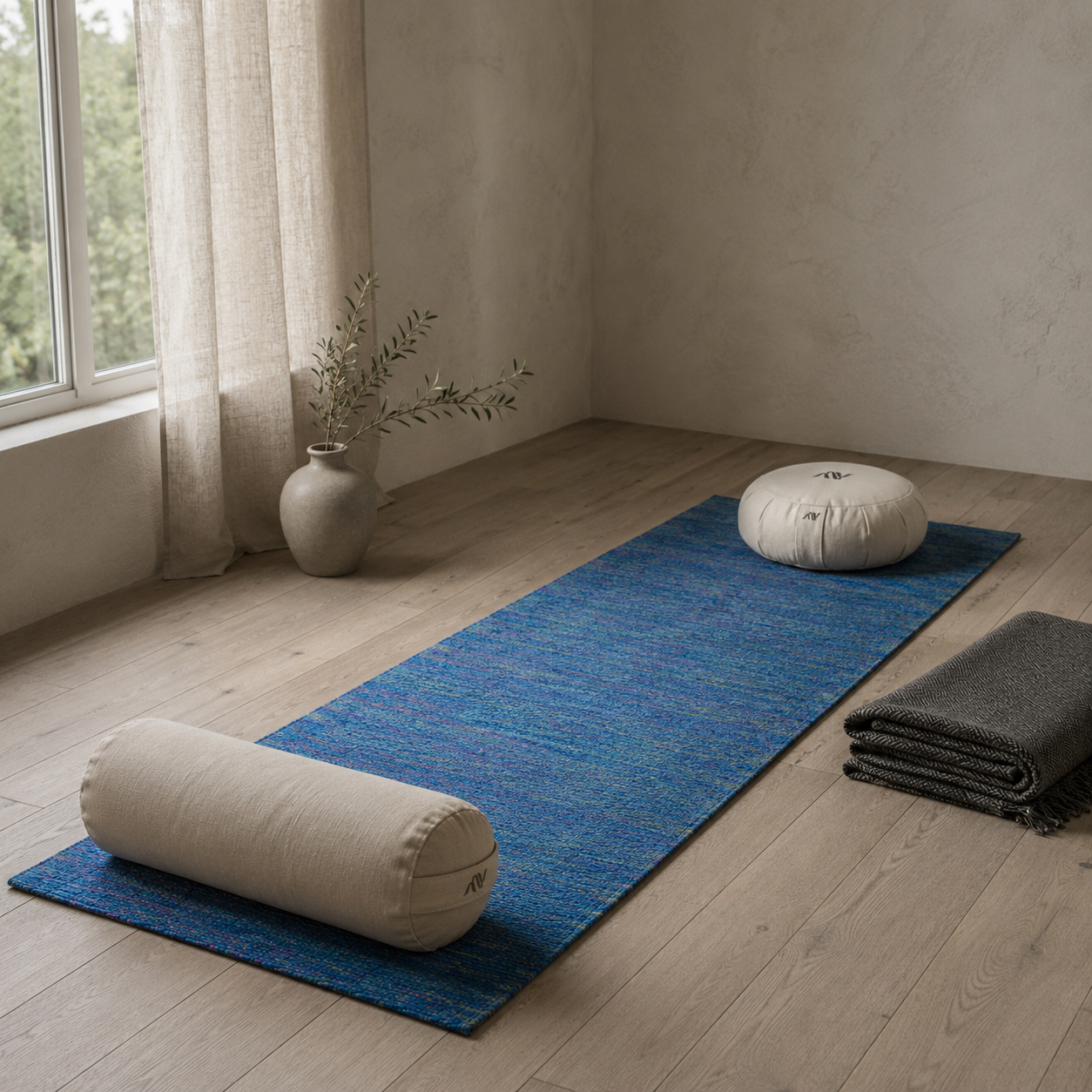
The right support lets the body stop working. Bolsters hold your weight in reclining and restorative shapes; cushions lift the hips so the spine can stack in seated practice. Here’s how each shape differs.
Bolsters
Support for reclining and restorative shapes.
- Rectangular
Broad, firm, flat-based so it never rolls. The most versatile, and the one most reach for first — props the spine in backbends, opens the chest, supports the knees in long holds.
Shop - Round
The highest profile, for the deepest opening. Laid lengthwise it lifts the chest and ribcage more than any other shape — for deep restorative work and yoga nidra.
Shop - Oblong
Between round and rectangular: contours to the spine and side body, giving lift without a hard edge. For side-lying poses, supported fish, and chest openers.
Shop - Pranayama
Long and low, supporting the spine from tailbone to head so the ribs can open for breath. For pranayama, yoga nidra, and extended Savasana.
Shop
Cushions
A seat that lifts the hips so the spine can stack.
- Round Zafu
The classic firm disc; tilts the pelvis forward so the spine stacks on its own. Cross-legged, Burmese, or kneeling — the reliable first cushion.
Shop - Crescent Zafu
A curved cutout makes room for the thighs to drop and the knees to ground lower. A gentler seat for tighter hips and longer sits.
Shop - Moon
The softest, widest, lowest shape — closest to the floor. For pranayama support, yin hip openers, and easing into seated practice.
Shop - Meditation
Flatter and wider than a zafu: a lower seat with a broad, stable base. For those who find a zafu too high, or who prefer to sit closer to the ground.
Shop