


NotesPractice
The Neck in Shoulderstand
The single most important prop setup in yoga, and the reason shoulderstand has a bad reputation it half deserves. Blanket height, exactly.
Contents
Sarvangasana is a valuable pose with a bad reputation, and the reputation is half deserved — not because of the pose, but because of how it is set up. Almost every problem with shoulderstand comes down to one thing: what is under your shoulders.
The problem
In an unsupported shoulderstand, the shoulders and the back of the head are both on the floor. The neck is therefore forced into extreme flexion — the chin is pressed hard into the chest — while bearing a substantial share of your body weight.
The cervical spine has seven small vertebrae designed to support a five-kilogram head and permit a lot of movement. It is not designed to be a load-bearing column at the end of its flexion range. Held there for minutes, repeatedly, over years, that is a genuine mechanism for injury.
This is not a theoretical concern. Cervical problems attributed to shoulderstand are among the better-documented yoga injuries.
The solution, exactly
Raise the shoulders and leave the head on the floor.
That is the whole thing. If the shoulders sit ten centimetres above the head, the neck is not forced to its end range and it does not carry the load. The angle at the neck becomes moderate instead of extreme.
The setup
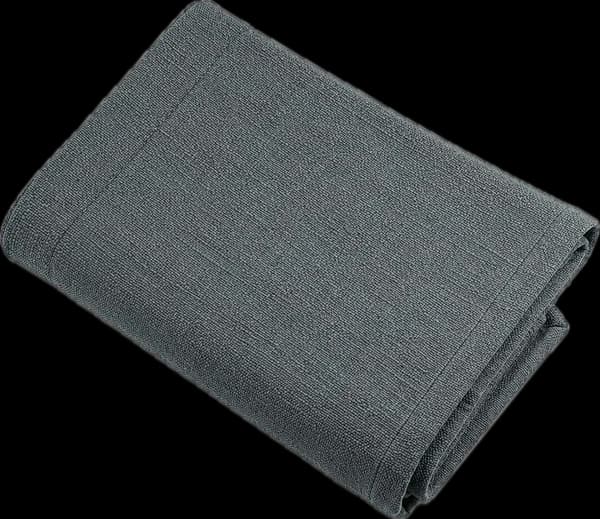
1. Fold two or three blankets to exactly the same size. A firm rectangle, roughly 60 cm by 45 cm. Stack them neatly. The stack should be eight to twelve centimetres high.
Precision matters here. Blankets of different sizes, or a sloppy fold, produce an uneven surface and an uneven load.
2. Place the stack on your mat with the folded edge — the clean, straight edge — towards where your head will be.
3. Lie down with your shoulders on the stack and your head off it, on the floor. The tops of your shoulders should be within two or three centimetres of the folded edge.
4. Check: the back of your head and your neck are on the floor. Your shoulders, upper arms and elbows are on the blankets. There should be a clear space under your neck — you should be able to slide a hand under it easily.
5. Arms alongside you on the blankets, palms down.
Getting into it
Do not throw your legs over your head. Momentum entries are how people land badly on their neck.
1. Knees bent, feet on the floor.
2. Draw the knees towards your chest.
3. Press the arms down and roll the pelvis up, bringing the knees over your face.
4. Bend the elbows and place the hands on your back, as high up towards the shoulder blades as you can. Elbows shoulder-width, not splayed — if they splay, use a strap around the upper arms.
5. Straighten the legs upward, one at a time.
While you are in it
Do not turn your head. Not once. The neck is in flexion and under some load; rotating it in that position is where acute injuries happen. If you need to look at something, come out.
Weight in the shoulders and upper arms, not in the neck. Press the upper arms and elbows down into the blankets and lift the whole body away from the floor.
Chest towards the chin, not chin towards the chest. The lift comes from the torso rising, not from the head pressing down.
Look at your chest, and keep the gaze soft.
Breathe. The chest is compressed, so the breath will be smaller. Direct it into the back of the ribs.
Coming out
1. Bend the knees back towards your forehead.
2. Hands back to the floor.
3. Roll down slowly, vertebra by vertebra, keeping the head where it is.
4. Lie flat for at least a minute before doing anything else. Do not sit straight up.
Counter-pose: a mild backbend, but not immediately and not strongly. Lie flat first, then, after a minute, a gentle supported bridge or Fish over a rolled blanket for a minute. Never a strong backbend directly after.
How long
Start at thirty seconds. Build over months to two or three minutes. Five minutes is a substantial hold and plenty for anyone.
Frequency matters more than duration. Two minutes several times a week is better than ten minutes once.
The alternatives
Shoulderstand is not compulsory, and there are two positions that deliver much of the value with none of the neck load.
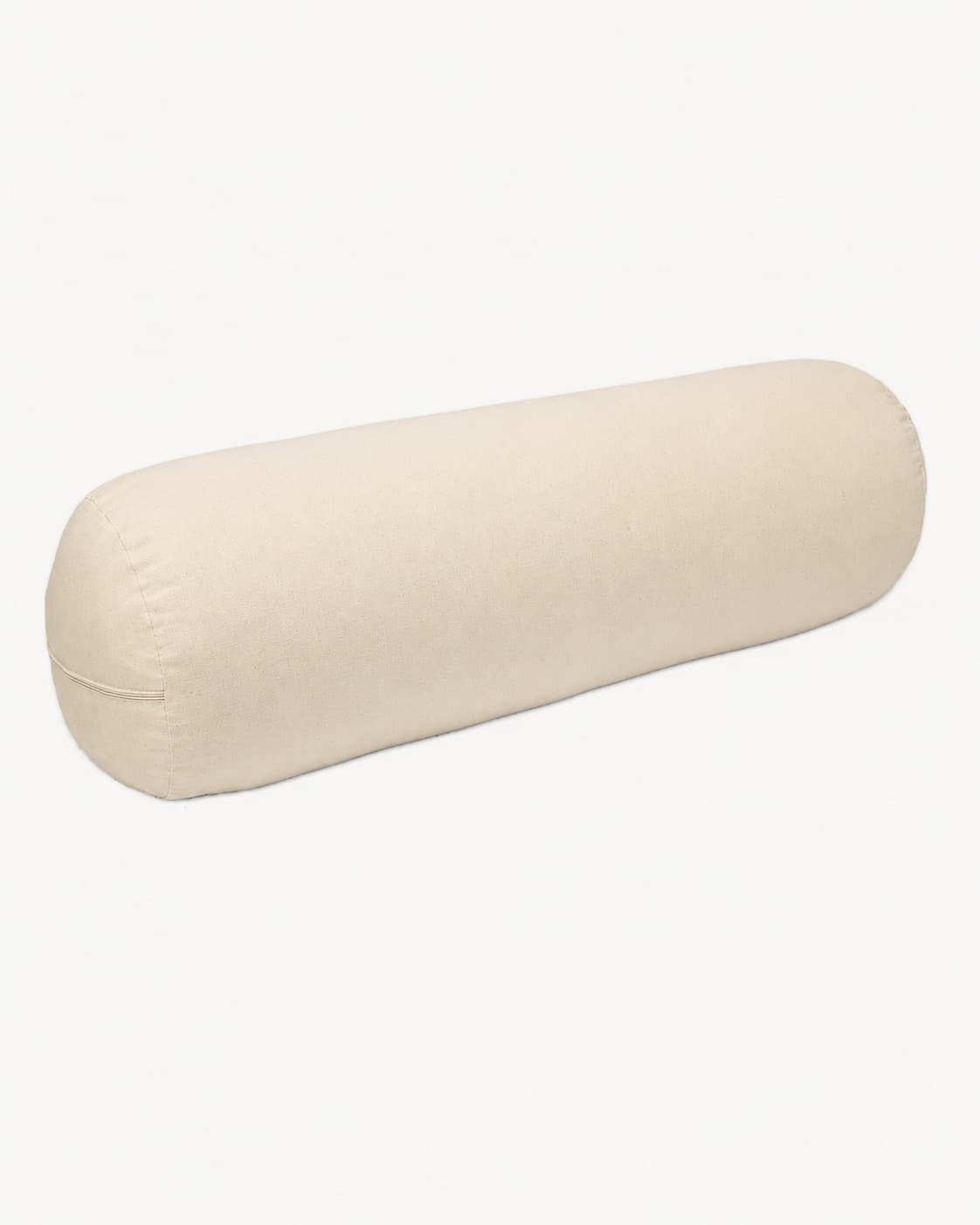
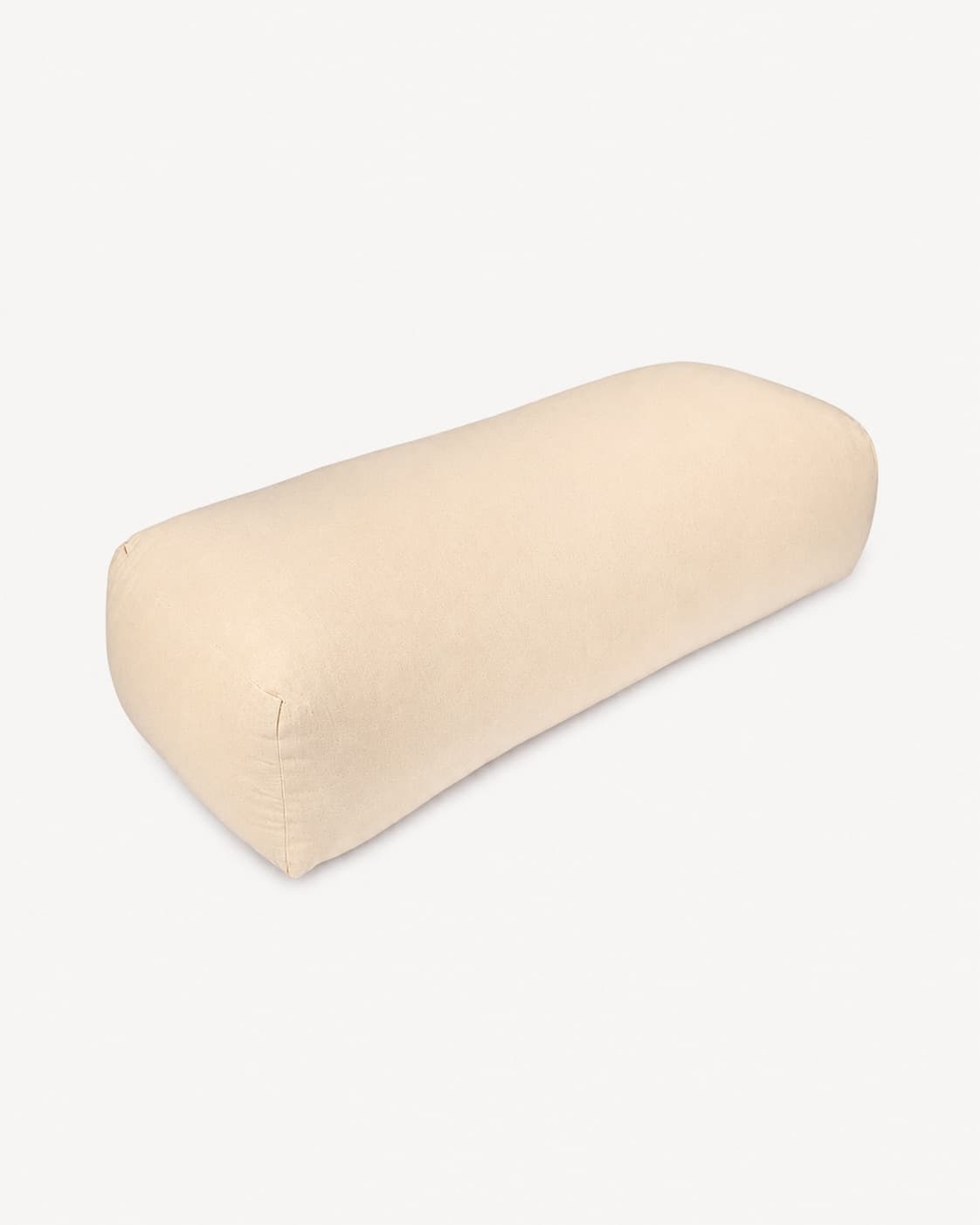
Legs up the wall with the hips raised on a bolster. A mild inversion, no neck involvement at all, and it can be held for fifteen minutes.
Supported half-shoulderstand over a chair. Shoulders on a bolster on the floor, legs up onto a chair seat, hips supported. The traditional Iyengar setup, and considerably safer than the free pose.
If you have any neck history at all, use one of these and do not do the full pose.
When not to
Skip shoulderstand entirely, and ask someone qualified before attempting it, if you have:
- Any neck injury or history of cervical problems. This is the main one.
- Uncontrolled high blood pressure.
- Glaucoma or retinal problems.
- Pregnancy, unless it was an established part of your practice beforehand and you have guidance.
- Menstruation — traditionally omitted, and views differ.
- Recent surgery of any kind in the neck, shoulders or abdomen.
- An ear infection.
The single rule
If you do not have the blankets, do not do the pose.
Not "do a modified version." Do legs up the wall instead. A shoulderstand on a bare floor is not a lesser version of the pose; it is a different and worse pose that loads a structure that should not be loaded. There is no urgency about this — the pose will still be there when you have three blankets.