


NotesGuides
Eye Pillows and Darkness
Why a small weight on the eyes changes the nervous system, how heavy it should be, and where else the same trick works.
A small weight over the eyes changes the state of the nervous system faster than almost anything else you can do without moving. It is one of the more disproportionate effects in the whole practice.
Why it works
Darkness removes a processing load. Even with the eyes closed, light passes through the eyelids and the visual system continues to process it. Covering them fully stops that. In a lit room the difference is immediately noticeable.
Light pressure on the eyes slows the heart. There is a well-described reflex involving the nerves around the eye which, when gentle pressure is applied, produces a slowing of the heart rate. It is why pressure on the eyes feels settling, and it is a real physiological pathway rather than a feeling about darkness.
It stops the eyes moving. Under closed lids, the eyes keep tracking — following thoughts, scanning. A light weight discourages it, and settling the eyes settles a surprising amount of the rest.
It marks a boundary. A small ritual that signals to the body that the working part is over. Trivial-sounding and genuinely effective as a conditioned cue after a few weeks.
What to look for
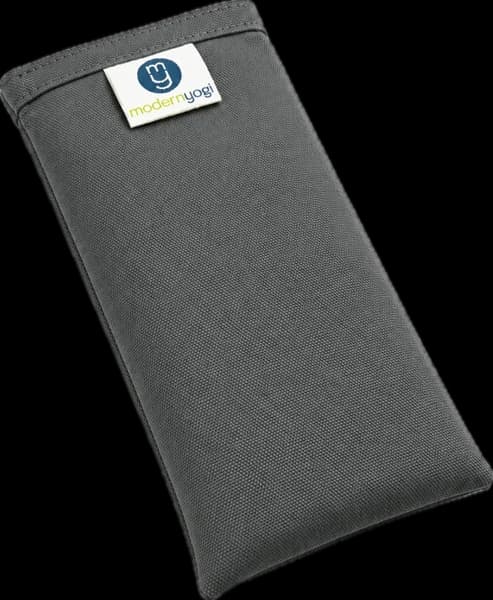
Weight: 200 to 350 grams. Light enough to be unnoticed, heavy enough to be felt. Under 150 g does not produce the pressure effect; over 400 g becomes uncomfortable and can be genuinely unpleasant on the eyes.
Fill: flaxseed is the standard. It is fine-grained, conforms to the shape of the face, holds a moderate weight in a small volume, and does not shift about. Rice works and is heavier and coarser. Buckwheat hulls are lighter and noisier.
Shape: it should cover the eyes and extend onto the temples and the bridge of the nose. A pillow that only covers the eye sockets lets light in at the sides.
Cover: removable and washable. It sits on your face for ten minutes at a time, and after a year an unwashable one is not something you want near your eyes.
Fabric: cotton or silk. Both breathe. Synthetic gets clammy within a few minutes.
Scent: lavender is traditional, and it is a preference rather than a requirement. Some people find any scent distracting; some find it a strong part of the effect. If you are unsure, buy unscented — you can add a drop of oil to the outside of the cover and cannot take it away.
How to use it
In Savasana. The standard use. Place it after you are settled, not before, so you do not have to move afterwards.
In any supine restorative shape. Supported bridge, supported reclining bound angle, legs up the wall.
In seated meditation, if you sit with the eyes closed and the room is bright. It stays on if your head is level.
During pranayama. Particularly useful for practices where attention is meant to be internal.
Lying down for ten minutes in the middle of a day. Not a yoga practice, and one of the more effective uses of the object.
For a headache. Lie down, eye pillow on, twenty minutes. Frequently helps.
Where else the same trick works
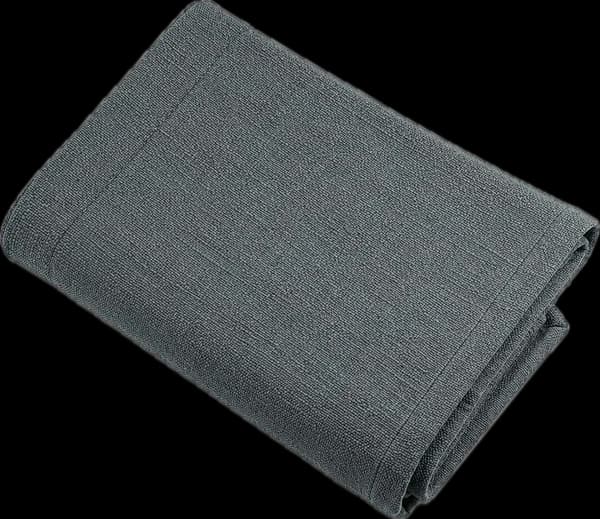
A folded cloth does most of the job. Any small towel or a folded scarf across the eyes. Less weight, so less of the pressure effect, but the darkness is the larger part.
Your own hands. Palming — heels of the hands resting lightly over the closed eyes, fingers on the forehead, for a minute or two. A traditional practice for tired eyes, and it works well after screen work.
A sleep mask gives darkness without weight. Fine, and less effective for the same reason.
On the belly. An eye pillow resting on the lower abdomen in Savasana gives the breath something to move against and something to feel. A useful attention anchor for people who find breath awareness slippery.
On the forehead, if pressure on the eyes is unwelcome. Most of the settling effect, none of the pressure.
When not to
- After eye surgery, or with glaucoma, a detached retina, or any eye condition — no pressure on the eyes. Ask someone qualified; a pillow on the forehead instead.
- With contact lenses in. Take them out first.
- An eye infection, or conjunctivitis.
- If it makes you anxious. Covering the eyes is not comfortable for everyone, and there is no requirement. Darkness in the room and closed eyes achieve most of it.
Care
Wash the cover, never the inner. Flaxseed will swell, rot and smell if it gets wet. Every eye pillow worth owning has a removable cover.
Air the inner occasionally in the shade.
Replace the inner every few years. Flaxseed eventually goes rancid, and you will notice — it acquires a faintly oily smell. Two to five years is typical.
Do not heat it in a microwave unless the maker says the fill is intended for it. Flaxseed can scorch and the oil in it can ignite.