


NotesHome
Practising in a Small Flat
Under two metres of floor, low ceilings, a rug you cannot move. Constraints, and the sequences that work inside them.
Contents
Constraints, and what works inside them. This is not a compromise practice — there are practitioners who have done all their best work in less than two square metres.
Measure first
Before deciding your space is too small, get the actual numbers. Three measurements:
Floor length. From the wall to the nearest obstruction. You need your mat plus roughly fifty centimetres — so about 2.4 metres for a standard mat, less if you are short.
Floor width. An arm span, roughly 1.5 metres, is comfortable. You can work in a metre.
Ceiling height. Stand and reach both arms up. Add thirty centimetres if you want to work towards a shoulderstand or headstand.
Now compare that to the space beside your bed, the strip of floor at the end of a sofa, the hallway. Most flats contain at least one viable rectangle and it is rarely where people first look.
What fits in 2 × 1.5 metres
Everything except: jumping transitions with any lateral travel, wide-armed shapes if you are very tall, and cartwheeling entries into arm balances.
That leaves: all standing poses, all seated work, all forward folds, all backbends, all twists, all restorative shapes, all breath work, sun salutations without the jump, and every inversion.
It is a complete practice. What you lose is dynamic travel, which is a stylistic preference rather than a requirement.
Working with a low ceiling
The constraint is arms-overhead standing poses — Warrior I, Upward Salute, Tree with the arms up, Crescent.
Three workarounds:
Arms forward instead of up. Reach the arms straight ahead at shoulder height. You lose the shoulder flexion but keep the leg work and the spinal extension, which is most of what those poses are for.
Prayer position. Hands together at the chest, elbows wide. Fine for Warrior I and Crescent, and it lets you focus on the pelvis, which is the hard part anyway.
Practise kneeling versions. Almost every arms-overhead pose has a kneeling equivalent that fits under a lower ceiling.
If the ceiling is under about 210 cm, plan the practice around floor and standing-arms-low work, and accept that shoulderstands happen elsewhere.
Working against a wall
A small space usually means a wall is close, which is a gift rather than a limitation.
Legs up the wall needs a wall and a metre of floor. Nothing else.
Standing poses with the back against a wall — Warrior II, Triangle, Half Moon — turn a balance problem into an alignment lesson. You get immediate feedback on whether your body is in one plane.
Downward Dog with the hands on the wall, at hip height, is a legitimate version that fits in a corridor and is arguably better for the shoulders than the floor version.
Handstand and headstand preparation all happen at a wall anyway.
Supported backbends over a bolster, with the feet on the wall.
Sequences that suit a small space
The standing sequence. Tadasana, Warrior II, Extended Side Angle, Triangle, Half Moon at the wall, both sides. Twenty-five minutes, uses two square metres, and is a complete practice.
The floor sequence. Cat-cow, Downward Dog, low lunges, pigeon or the supine figure-four, seated twists, supine twists, reclining hamstring work with a strap, Savasana. Thirty minutes, uses the mat and nothing more.
The wall sequence. Standing poses with the back to the wall, then Downward Dog at the wall, then legs up the wall for five minutes, then Savasana. Restorative, quiet, no floor travel.
Sun salutations without the jump. Step back, step forward. Slower, more controlled, and honestly better for learning the shapes than jumping.
Storage
Four objects, and they need to live where they are used or they will not be used.
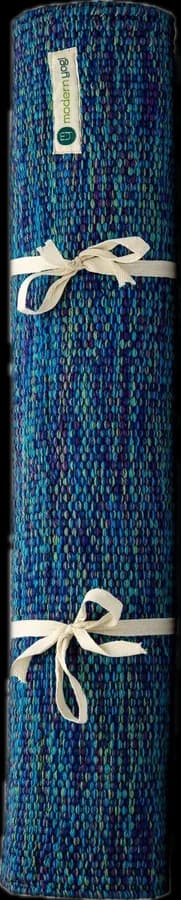
- Mat: rolled, standing on end in a corner or against a wall. Not in a cupboard behind other things.
- Blanket: folded, on a shelf or the arm of a sofa. It reads as a blanket, so it can live in plain sight.
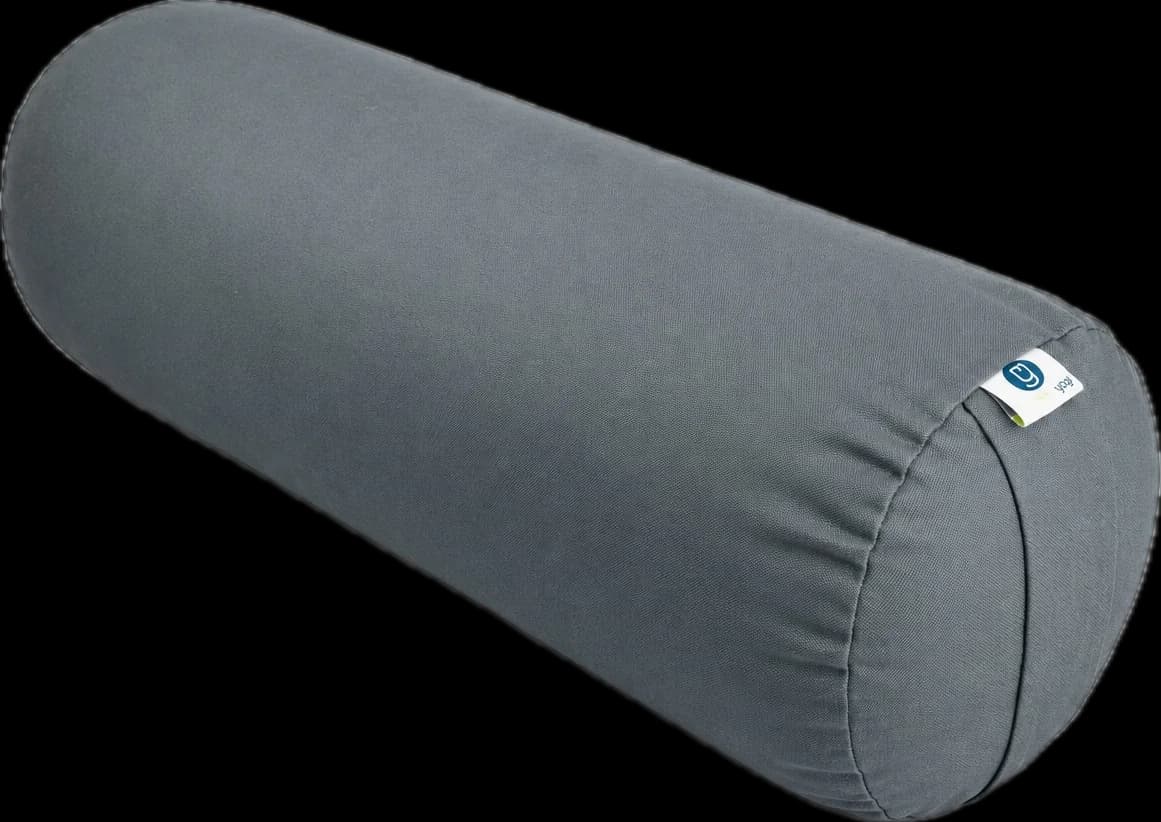
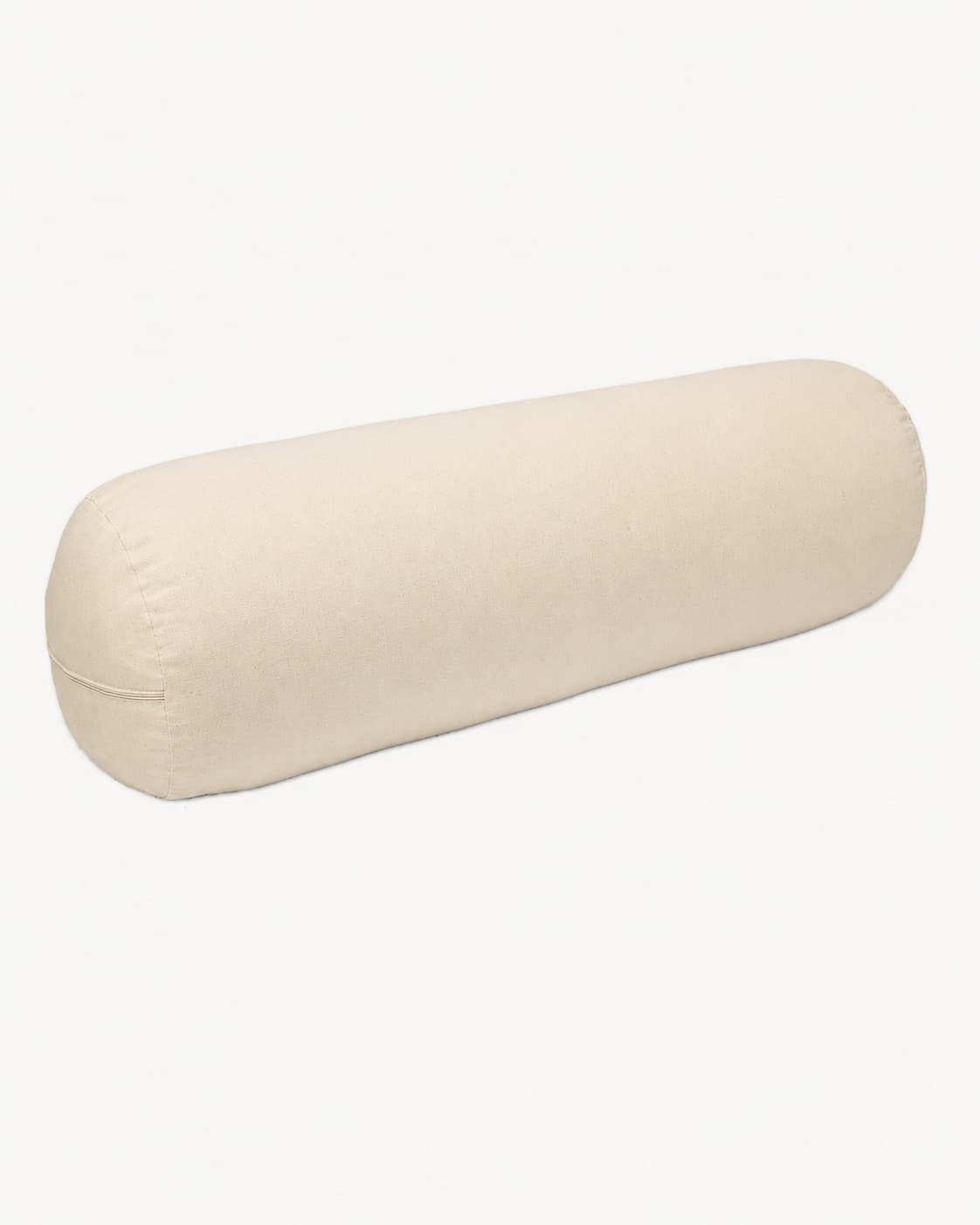
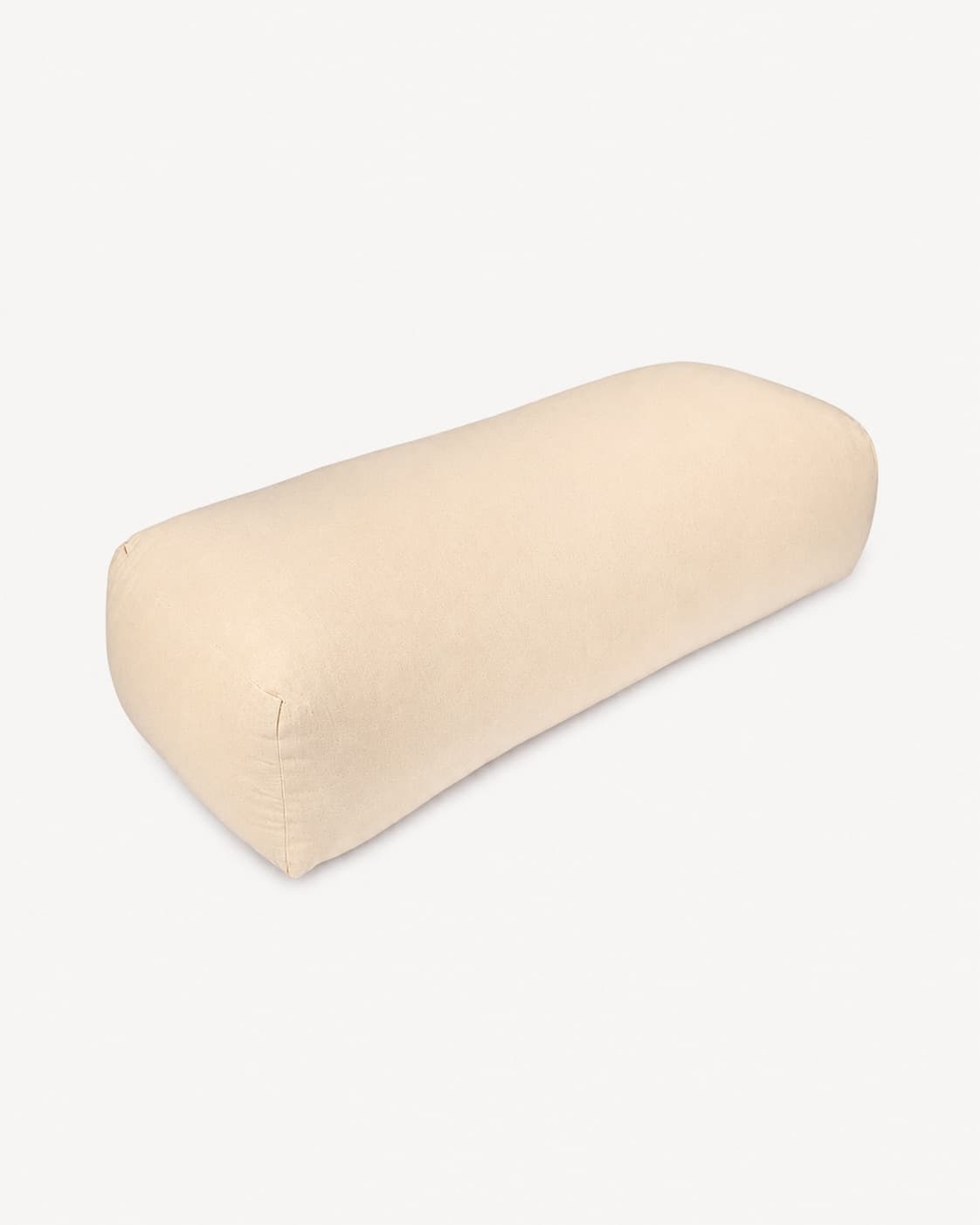
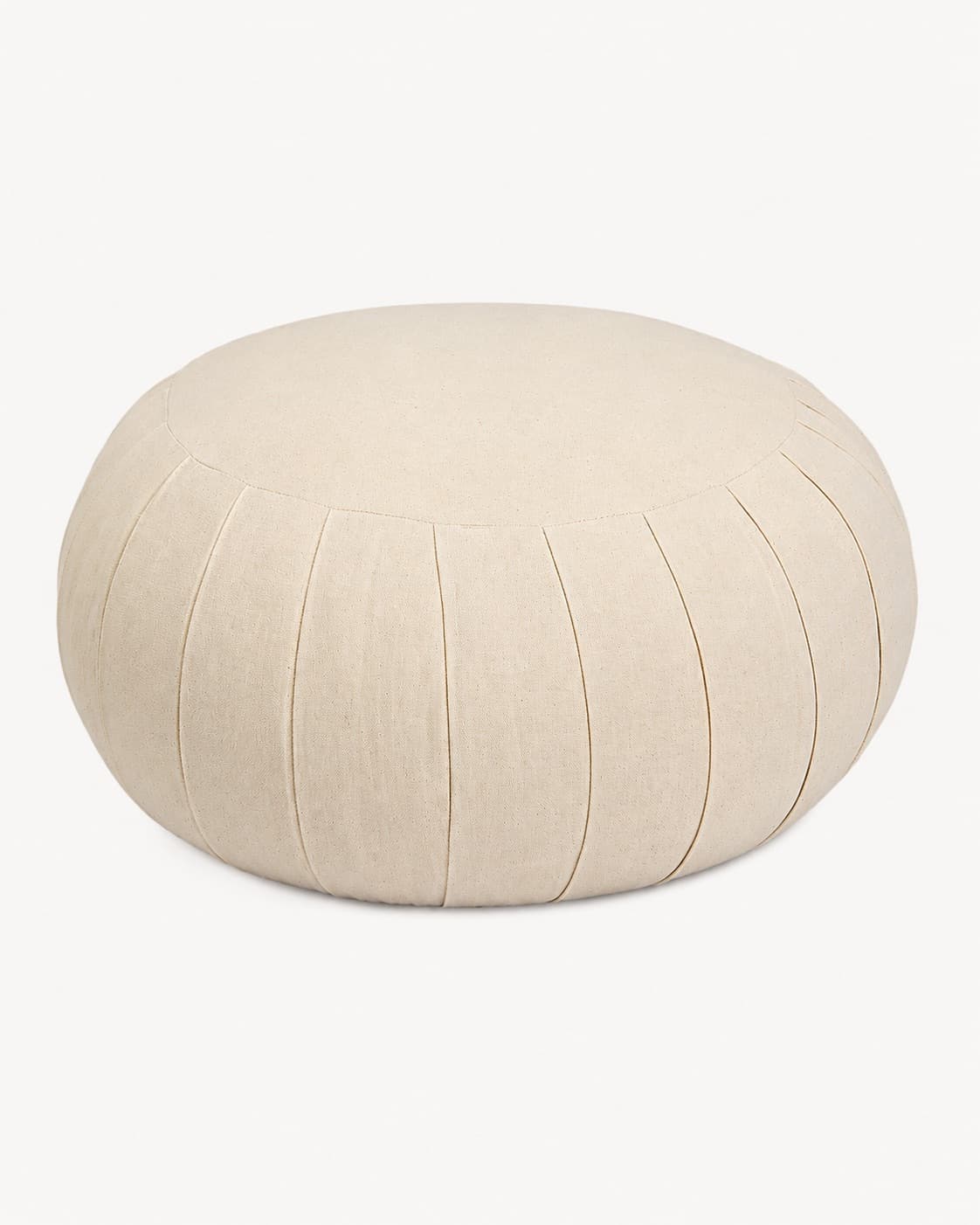
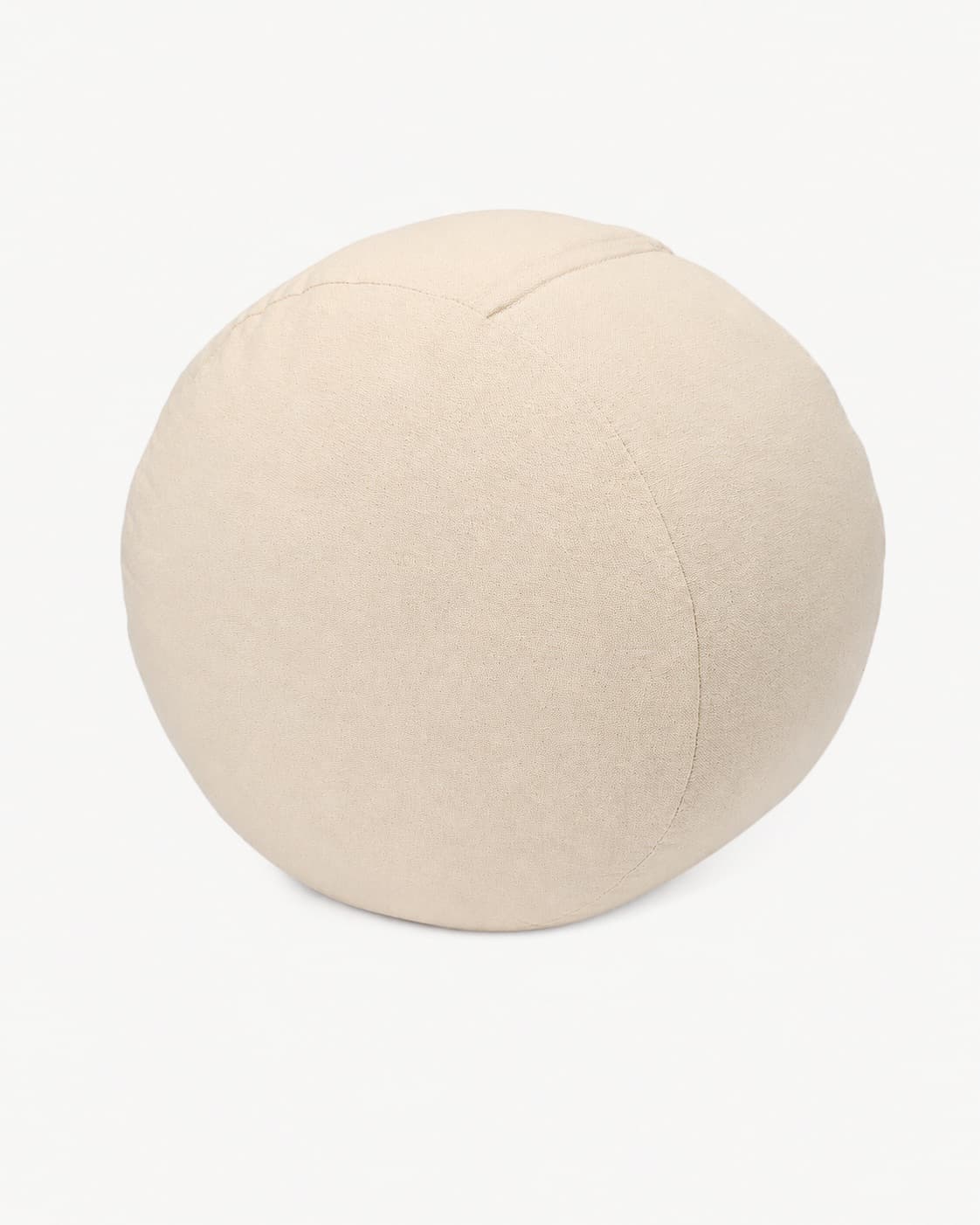
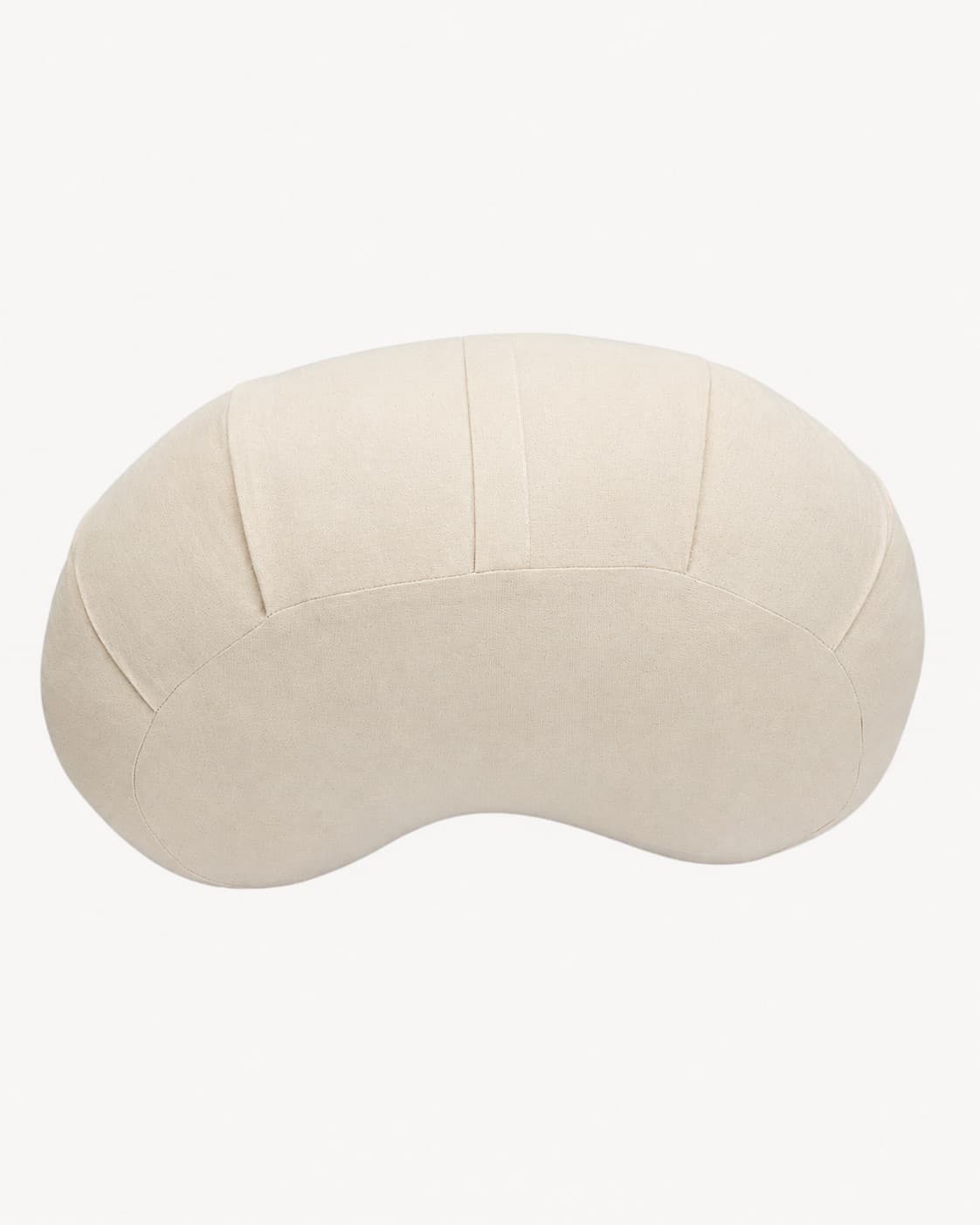
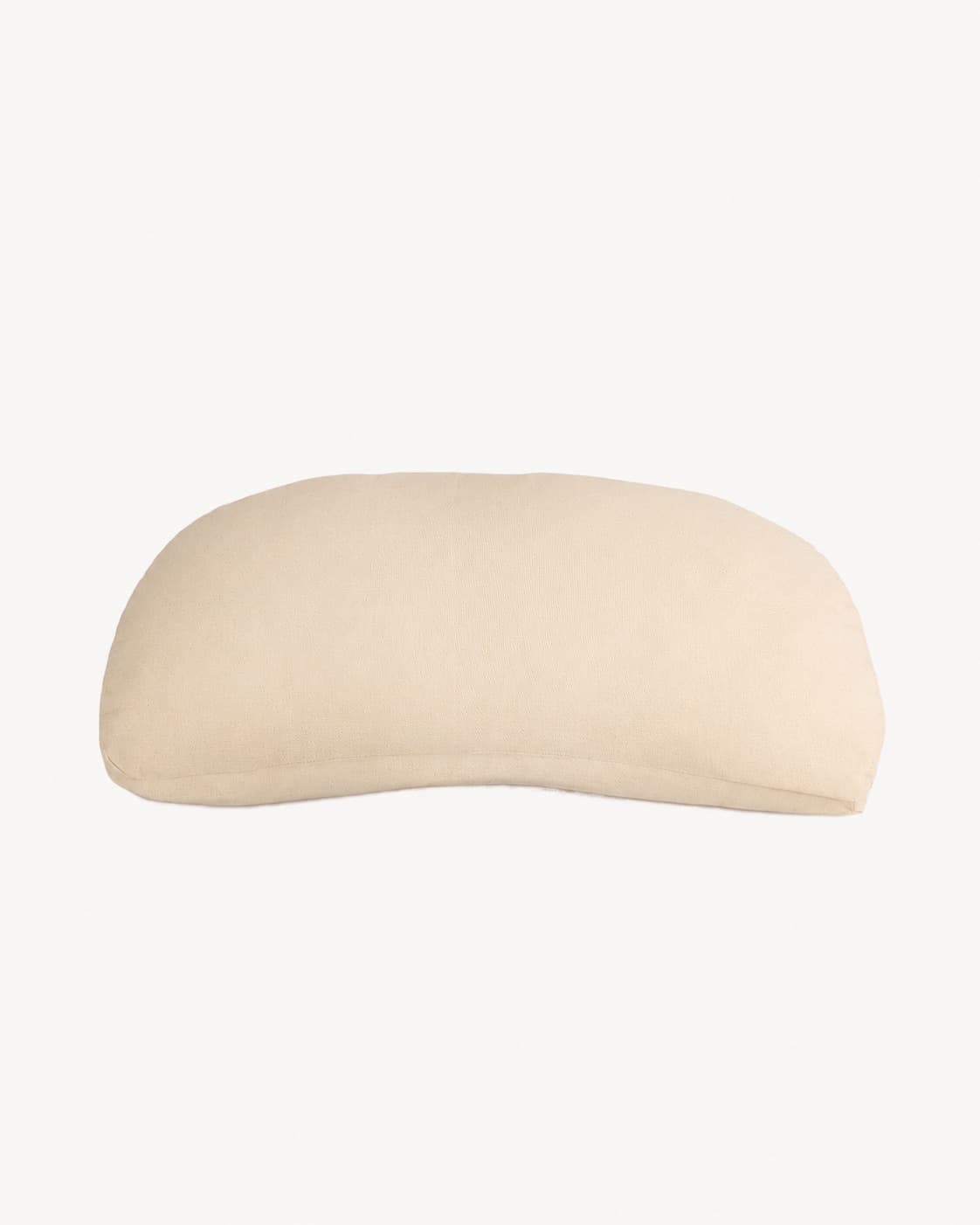
- Bolster: the awkward one. It works as a sofa cushion or a floor cushion, and most bolsters in small flats live as furniture between practices.
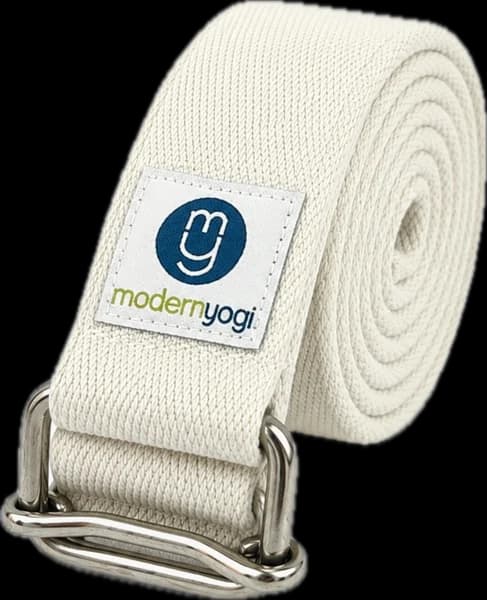
- Strap and blocks: a basket, or under the sofa.
The test is the same as always: can the practice start in under thirty seconds? If a prop is in a cupboard under a suitcase, you will not use it, and it may as well not exist.
Noise and neighbours
If you are above someone: no jumping, and be aware that a hard exhale in a quiet building carries. Step-back sun salutations solve the first entirely.
If you share the flat: this is a scheduling problem, not a space one, and it is usually solved by practising when the other person is out or asleep rather than by negotiating.
The advantage nobody mentions
A small space forces a slower practice, and a slower practice is generally a better one. You cannot travel, so you stay. You cannot flow between shapes at speed, so you hold them.
Most people's practice improves when they lose the room to rush.