


NotesGuides
Props for Larger Bodies
Specific, practical propping for bodies that standard cueing does not fit. Wider stances, higher supports, different entries.
Specific, practical propping for bodies that standard cueing does not fit. This is not about modification in the sense of doing less; it is about the geometry being different, and the standard instruction assuming a body it is not.
The general principle
Most cueing assumes a particular proportion — limb length relative to torso, and torso depth. When the proportions differ, the standard instruction produces a shape that does not work, and the honest response is to change the geometry rather than to try harder at an instruction that does not apply.
Three adjustments cover most of it: wider stances, higher supports, different entries.
Wider
Feet wider in every standing pose. Hip-width becomes wider than hip-width. In forward folds, wide enough that the torso has somewhere to go between the thighs.
Knees wider in child's pose, so the torso fits between them rather than being pressed against the thighs.
Knees wider in a squat.
Arms wider in any pose where the hands come together or the arms cross — Eagle, and any bind. A strap between the hands, always, rather than forcing a clasp.
In Downward Dog: feet wider than usual, and hands wider than shoulder-width. The narrow version compresses the front of the body and makes breathing hard.
Higher
Blocks at the tallest setting, or two blocks, or a chair, in every standing pose where a hand goes towards the floor. Triangle, Half Moon, Side Angle, standing forward fold.
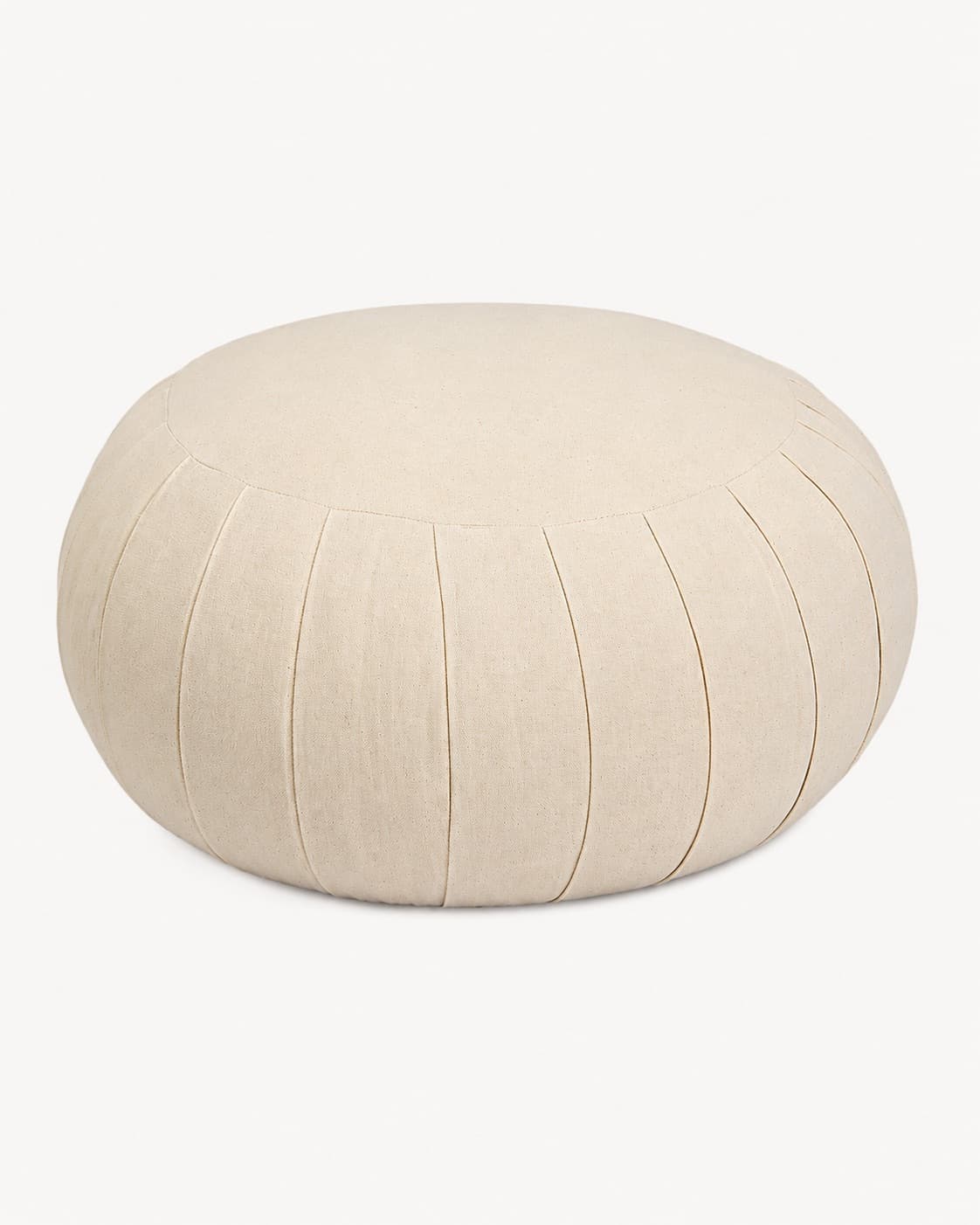
Higher seat for all seated work. Twenty centimetres is not unusual and there is no maximum. Sitting on the front edge, thighs sloping down.
Higher support in forward folds. A bolster across the thighs to rest the torso on, or a chair in front to rest the forearms and head on.
A bolster or two under the torso in any prone shape.
Support under the knees in every seated position, so the legs are resting rather than held.
Different entries
Getting down to and up from the floor is a real part of the practice and it is rarely taught.
Down: from standing, step one foot back into a lunge, back knee to the floor onto a blanket, hands to a block or the floor, then turn and sit. Reverse to get up.
Or use a chair as a halfway point — sit on the chair, then move to the floor from there, and back.
Practise this deliberately. It is a movement pattern like any other and it improves.
In a class: stay at the level you are at rather than moving up and down repeatedly. If a sequence goes from standing to floor to standing four times, do the floor version each time and skip the standing, or vice versa. There is no requirement to follow every transition.
By pose
Downward Dog. Hands on blocks or on a wall at hip height. The wall version is a legitimate pose, not a lesser one, and it is better for the shoulders than a compressed floor version.
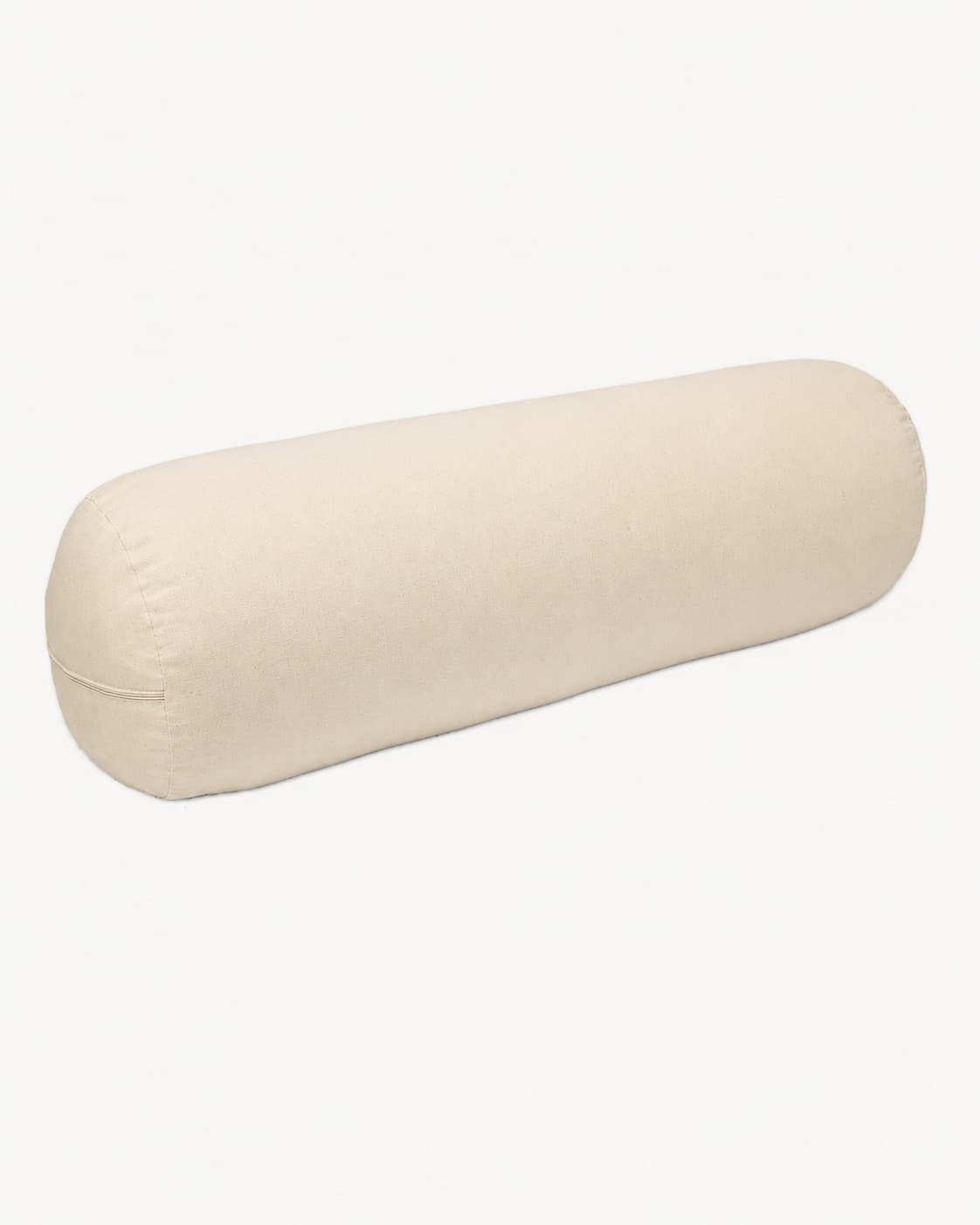
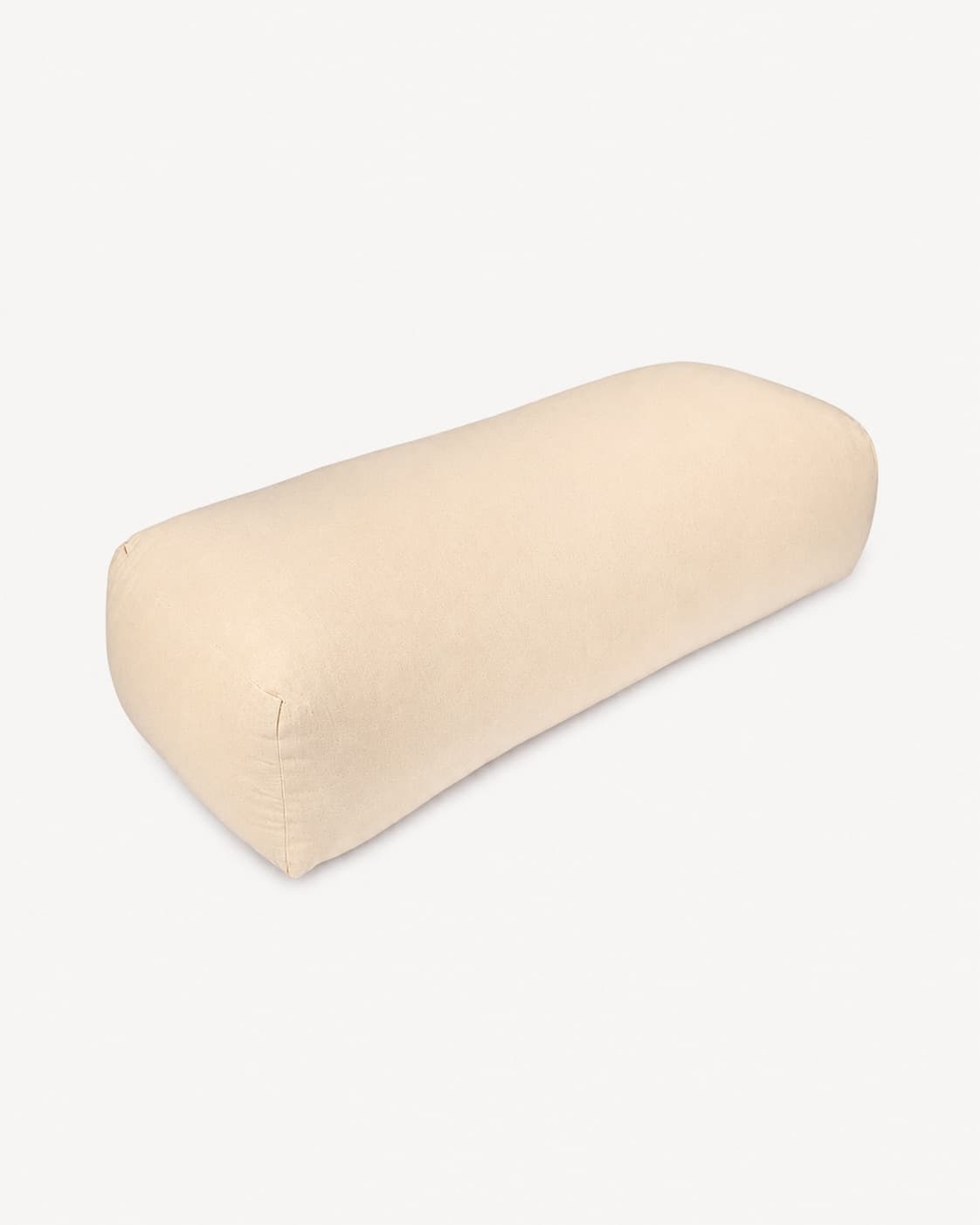
Child's pose. Knees very wide, bolster lengthwise between the thighs to rest the torso on, blanket between the heels and buttocks if the hips do not reach.
Forward folds, seated. High seat, knees bent, strap around the feet, and a bolster or chair to rest the torso and head on. The fold is at the hip; the distance travelled is not the point.
Twists. Space is the issue — the standard "elbow outside the knee" often does not fit. Instead, take the twist with the hand on the outside of the thigh rather than the elbow, or do the twist with the knees apart, or use a supine version with the knees on a bolster.
Chaturanga and plank. Knees down, and a blanket under them. Or the whole vinyasa done at a wall — hands on the wall, lower the chest towards it, press back.
Savasana. A bolster under the knees, generously. A folded blanket under the head. If lying flat is uncomfortable, a side-lying position with a bolster between the knees is entirely valid.
Breath work. Sitting up is important here, because a compressed abdomen restricts the diaphragm. Sit high, or sit in a chair, or do it lying with the upper body inclined on a bolster.
The kit
- A chair. The most useful prop here and the one most often overlooked. It brings the floor up, it is a support for standing poses, it is a seat, and it is a transition point to and from the floor.
- Two blocks, cork, and use the tall setting.
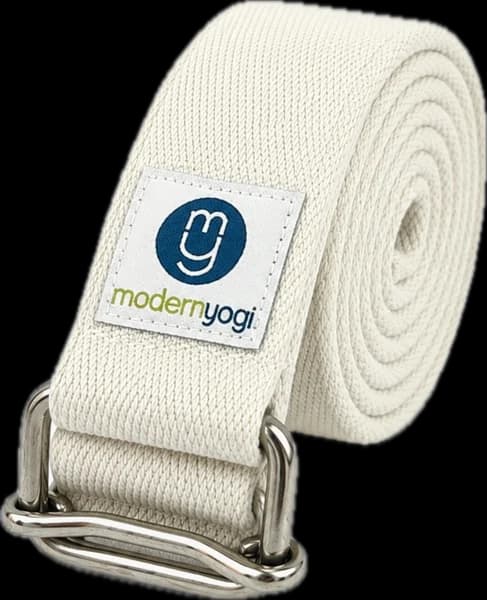
- A strap, 2.4 m or longer. Every bind, every reach.
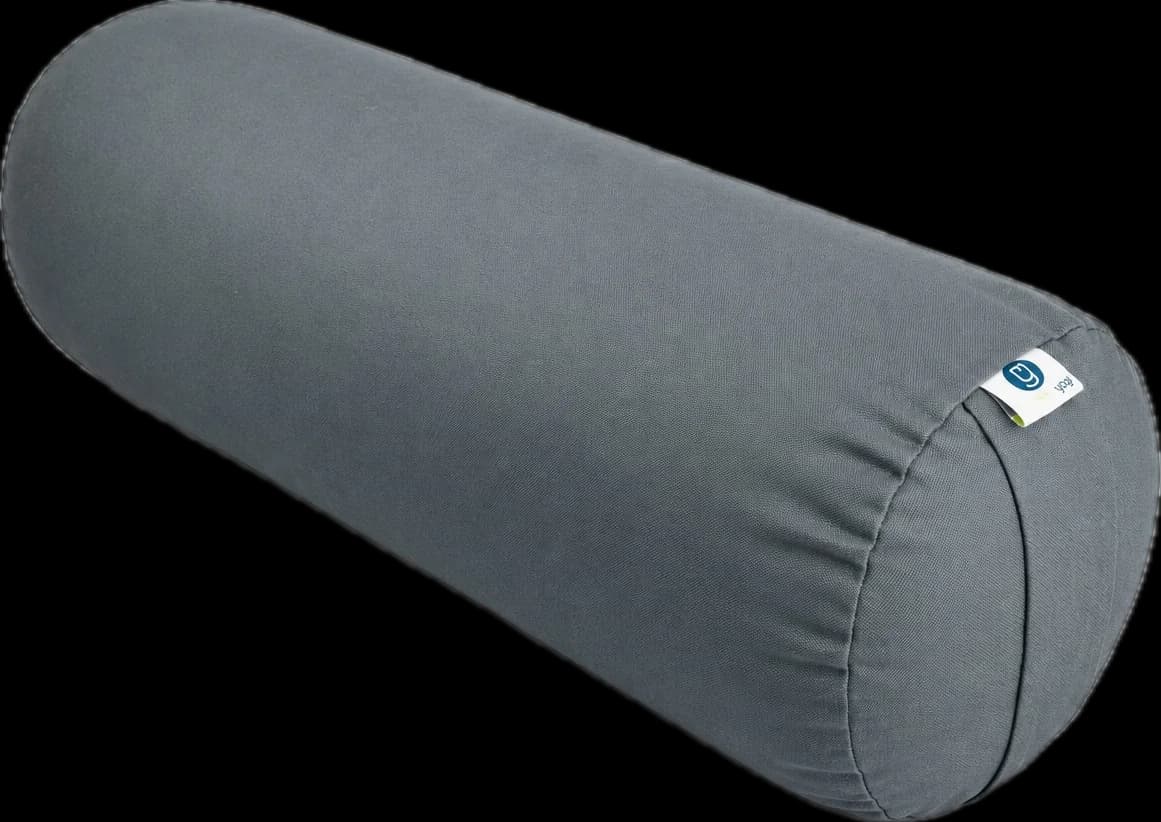
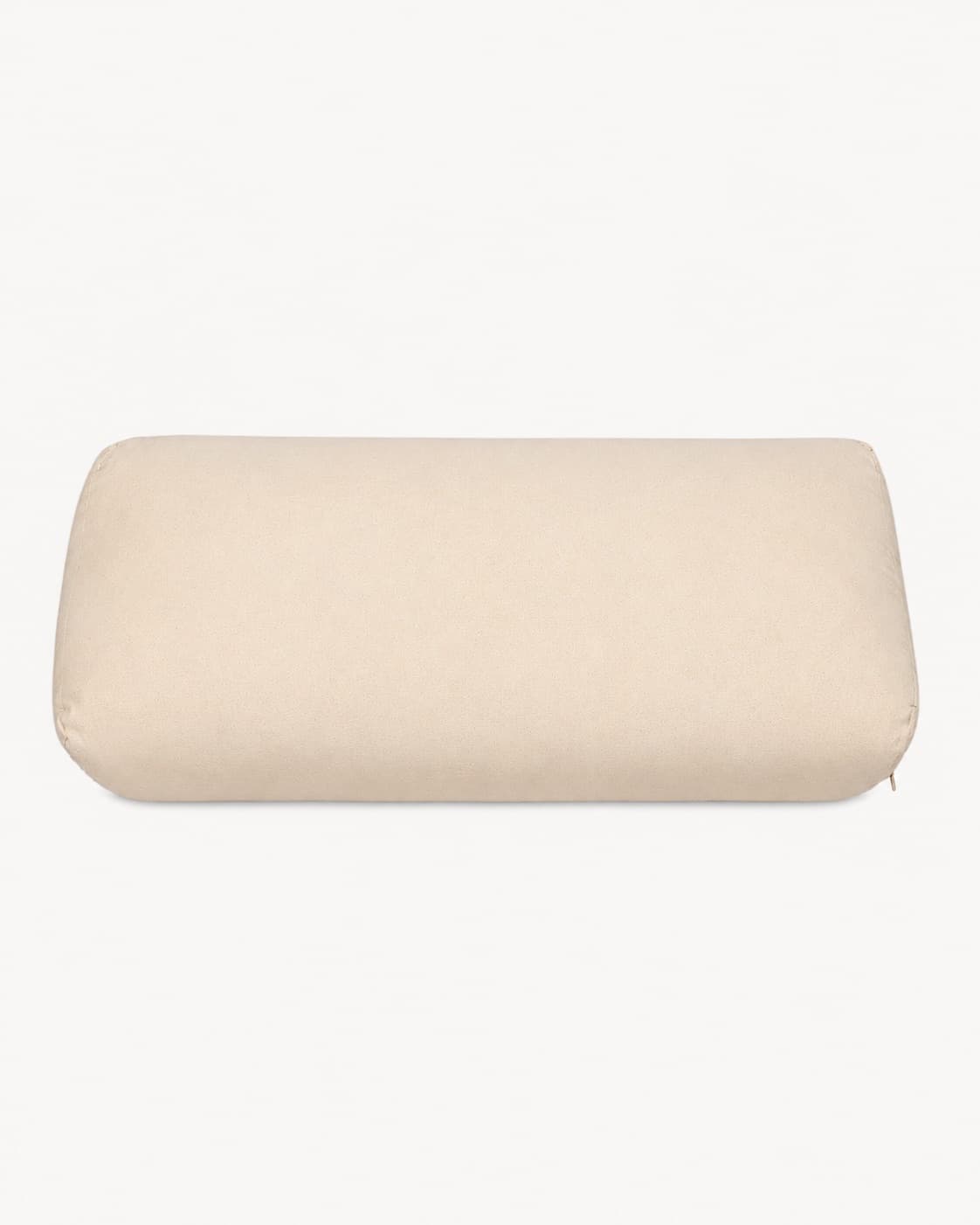
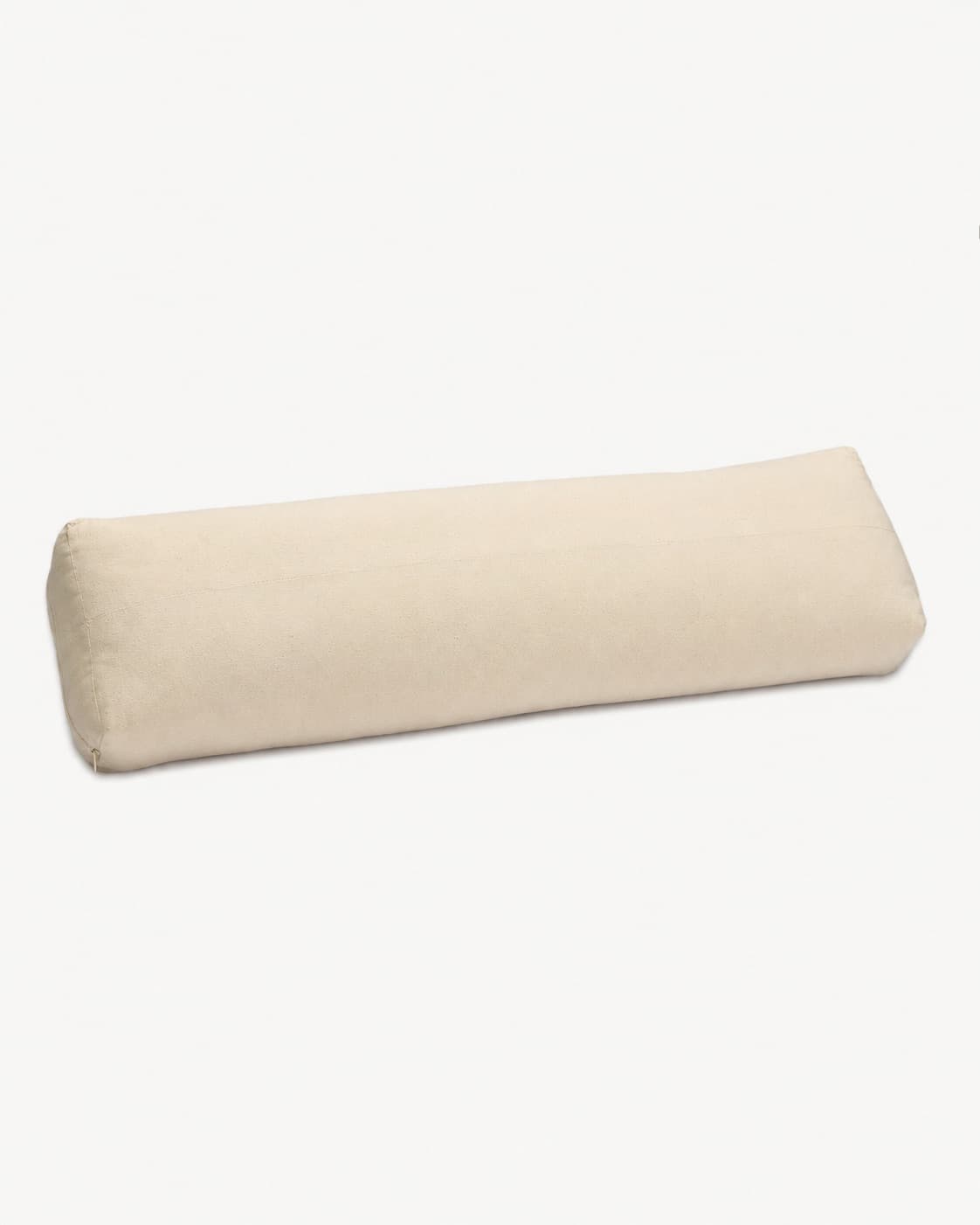
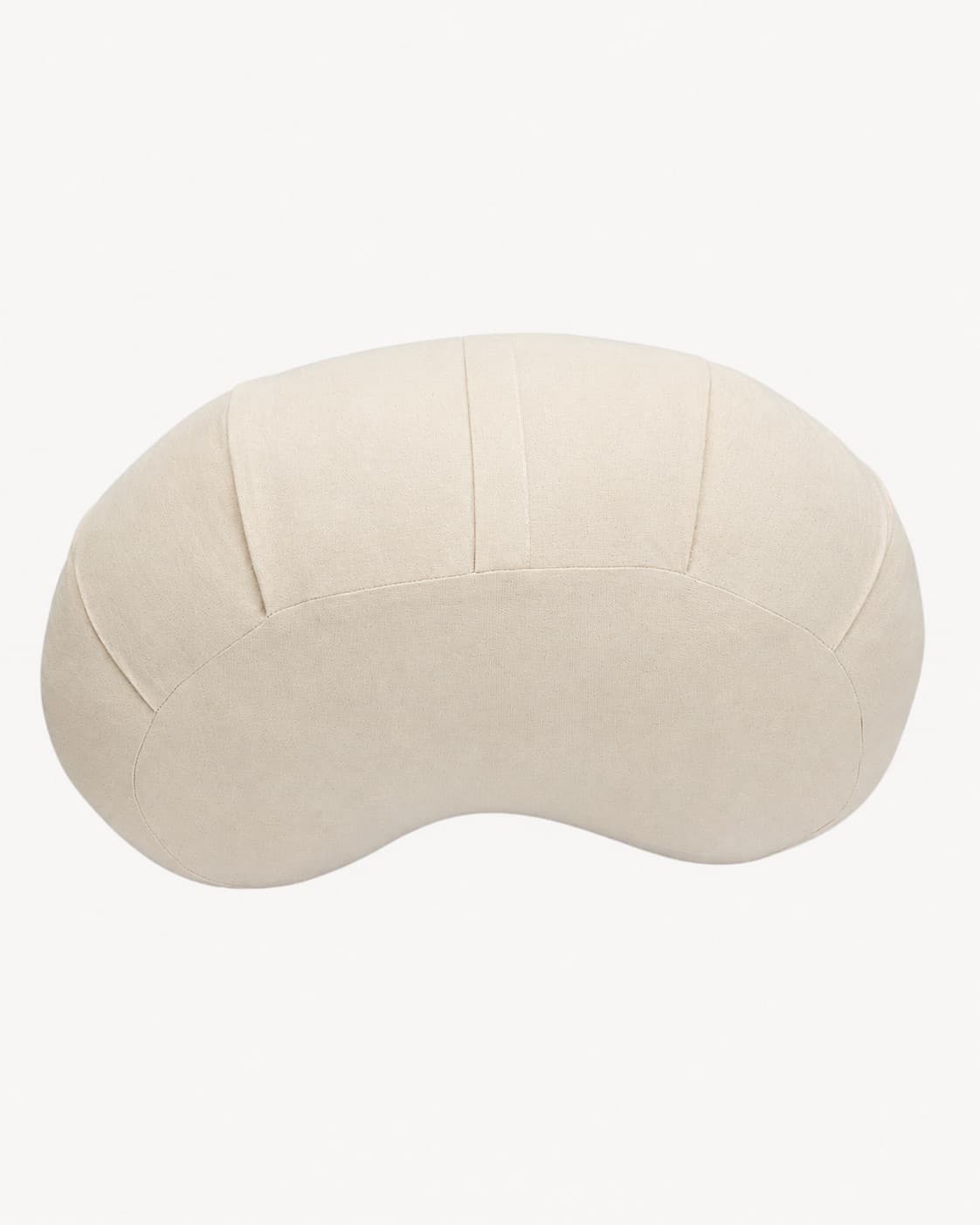
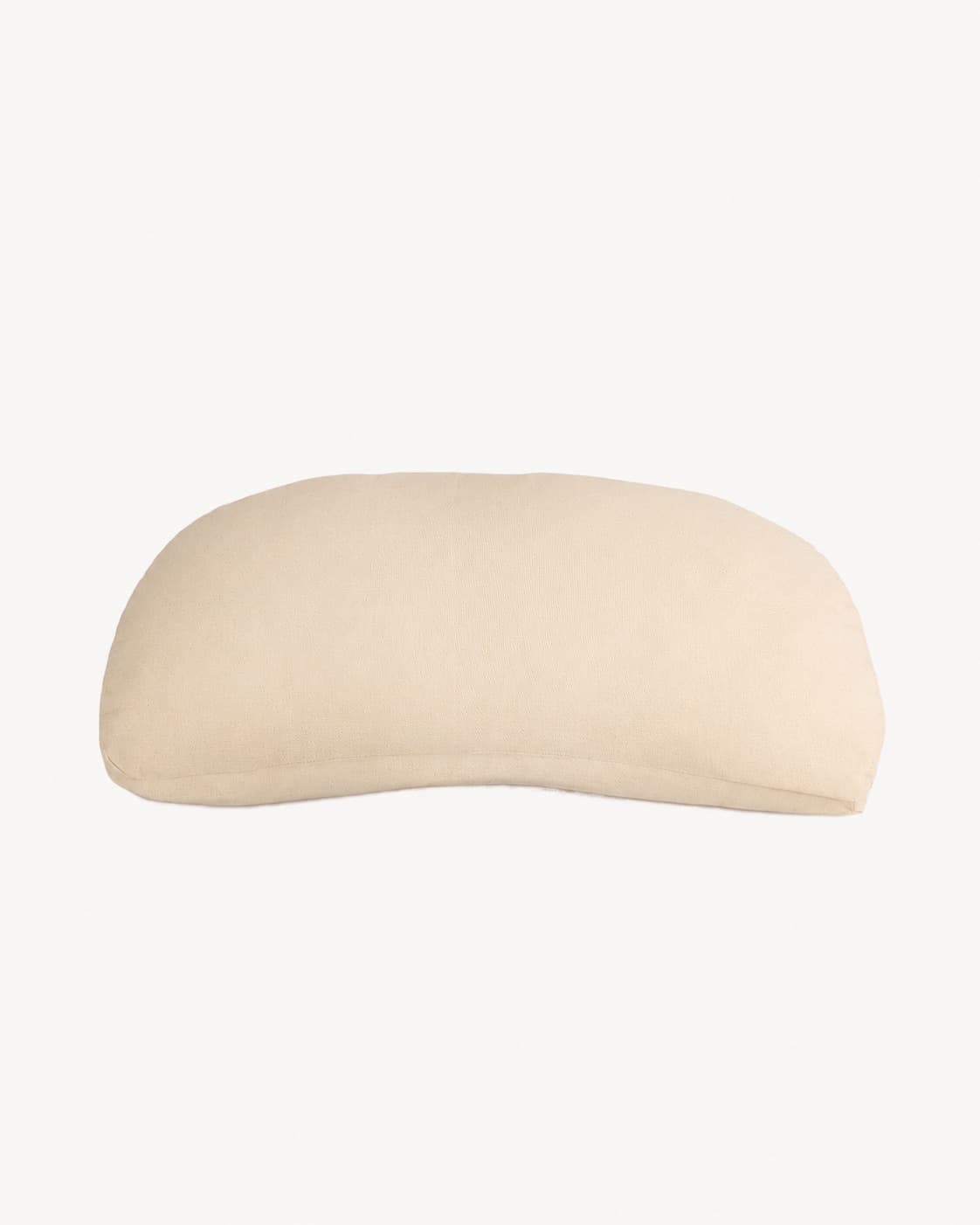
- A bolster, firm. Or two.
- Two or three blankets.
On the language
Some things worth saying plainly.
A propped pose is not a modified pose. It is the pose, arranged for the body doing it. The most experienced practitioners in the Iyengar tradition use more equipment, not less.
"Beginner" and "advanced" are not sizes. Nothing on this page is about capability.
A teacher who cannot offer these adjustments is a teacher with a gap in their training, not a signal about you. It is reasonable to look for one who can.
Breath is the measure, here as everywhere. If the shape compresses the abdomen or the chest enough that the breath goes short, the shape needs more space — wider, higher, or a different entry — regardless of what it looks like.