


NotesGuides
How Thick Should a Yoga Mat Be
Thickness protects the joints on the floor and taxes the joints balancing on top. A straight answer for each kind of practice.
Contents
Thickness is the specification people fixate on and the one most often chosen backwards. Thicker is not better and it is not more advanced. It buys one thing and costs another, and the right answer depends entirely on which of the two you need more.
What thickness buys
Padding for the joints that press into the floor. In practice, that is a specific list:
- Kneecaps, in every kneeling pose and every lunge with the back knee down.
- The outer shin and ankle in Pigeon and half-lotus positions.
- The sitting bones, in any seated practice held for more than a couple of minutes.
- The spine, in supine twists and rolling movements.
- The forearms and elbows, in Dolphin and forearm work.
- The head, in headstand preparation.
If any of those is what limits your practice, thickness is what you need.
What thickness costs
Stability, and it is not a small effect.
Balance is maintained by very fast, very small corrections at the ankle, driven by pressure information from the sole of the foot. A soft surface compresses unevenly under load and blurs that information. The correction arrives late and larger than it needed to be, which reads as a wobble.
You can test this in twenty seconds. Stand in Tree Pose on your mat, then step off and do it on bare floor. On the floor you will be noticeably steadier, and the difference grows with mat thickness.
Thickness also costs weight and bulk — a 7 mm full-size mat is two to three kilograms and does not pack small — and, in thicker foam mats, longevity, since more material means more material to compress permanently.
The ranges
1–2 mm. Travel-only. Essentially a layer of grip with no padding. Folds into a suitcase. Unpleasant for anything on the knees.
3–4 mm. The standard for movement-heavy practice. Stable, packs down, light enough to carry daily. Enough padding for a strong practice on a wooden floor; not enough for extended kneeling. This is what most experienced practitioners in flowing traditions use.
5–6 mm. The genuine middle. Reasonable padding, still stable enough that balance is not a fight. If you do not know what you want, this is the safe answer.
6–8 mm. Comfort-first. Right for anyone with sensitive knees, for practices with a lot of floor work, for restorative and yin, and for beginners at home who spend a lot of time kneeling. Noticeably less stable in one-legged balance.
10 mm and above. This is a Pilates or exercise mat. Standing balance becomes genuinely difficult and standing poses feel unstable in a way that is not useful.
Choosing
Ask which of these you meet more often:
"My knees hurt in kneeling poses." Go thicker — 6–8 mm.
"I wobble in Tree and Warrior III." Go thinner — 3–5 mm.
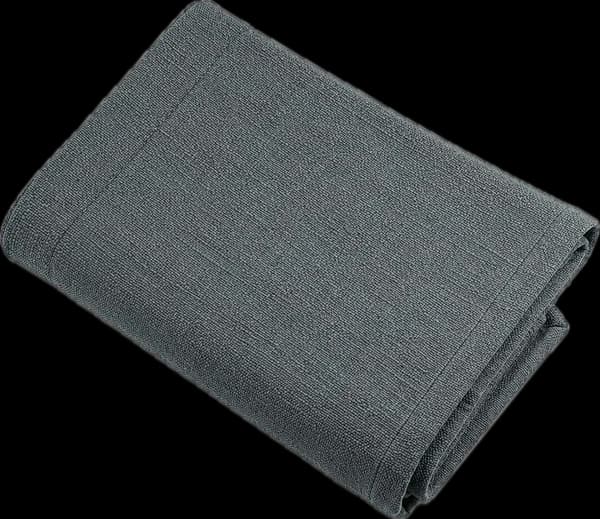
"Both." Take the thinner mat and fold a blanket under your knees when you kneel. This is what most teachers do, and it is strictly better than a thick mat, because you get stability by default and padding exactly where and when you want it, at the height you want.
That last point is worth sitting with. A thick mat gives you padding everywhere, permanently, including under your standing foot where it is actively unhelpful. A blanket gives you padding in one place, at a height you choose, for the two minutes you need it. The blanket is the more precise tool.
Two things that are not thickness
Firmness. Two mats of the same thickness can feel completely different. A dense 5 mm rubber mat is firmer underfoot than a soft 5 mm foam one, and firmer is generally more stable. If you can, press your thumb into a mat before buying: it should resist, not sink.
Compression set. Cheap foam does not spring back. A 6 mm mat that has been practised on daily for a year may be 4 mm where your hands and feet go and 6 mm everywhere else, which is worse than either. Denser materials — rubber, good PVC, woven cotton — hold their gauge.
The short answer
If you are buying one mat and want to stop thinking about it: 5–6 mm on a hard floor, 3–4 mm if you carry it or your practice is mostly standing, and a folded blanket in the cupboard for your knees either way.