


NotesGuides
Props You Already Own
A wall, a doorway, a stack of books, a dining chair, a bath towel. What each substitutes for, and where the substitution breaks down.
Contents
A wall, a doorway, a stack of books, a dining chair, a bath towel. What each substitutes for, and where the substitution breaks down.
The wall
Substitutes for: nothing. It is not a substitute — it is the best prop you own and it is free.
Legs up the wall. Alignment checks in standing poses. Downward Dog at hip height. Hamstring work with a foot on the wall. Handstand and forearm preparation. Supported squats. Something to push a foot against in supported backbends.
Where it breaks down: stud partition walls will not take a handstand. Knock and listen.
A doorway
Substitutes for: a shoulder-opening apparatus.
Forearm flat on the frame, elbow at shoulder height, turn your body away. Change the elbow height to reach different parts of the chest and front shoulder. More precise than a strap and more precise than a partner.
Where it breaks down: nowhere. This is genuinely the best way to do it.
A dining chair
Substitutes for: blocks at a height no block reaches, a support in standing poses, a meditation seat, and a transition point to and from the floor.
Hands on the seat in a standing fold. Hand on the back in balance poses. Lower legs on the seat as an alternative to legs up the wall. Seat as a support for the torso in a seated fold. Legs on the seat in a supported half-shoulderstand.
Where it breaks down: it moves. Put it against a wall for anything weight-bearing, and never use one with castors.
A stack of books
Substitutes for: blocks.
Hardbacks, stacked, are firm and do not compress. Adjust the height by adding or removing one.
Where it breaks down: they slide against each other under a hand in Half Moon. Fine for sitting on, fine under a head, unreliable under a weight-bearing hand. Put them on a mat, not a bare floor, and do not trust them laterally.
A bath towel
Substitutes for: a strap, a thin blanket, a mat topper.
Rolled and twisted, it is a strap — though a short one, and it stretches. Folded, it is a low support under the head or the knees. Laid over a mat, it is an absorbent surface.
Where it breaks down: as a strap, the length is the problem; you cannot loop it around a foot and hold it with straight arms. As a mat topper, it bunches and slides. As a blanket, it compresses to nothing under weight — a towel folded under the sitting bones will be flat within two minutes.
Cushions from a sofa
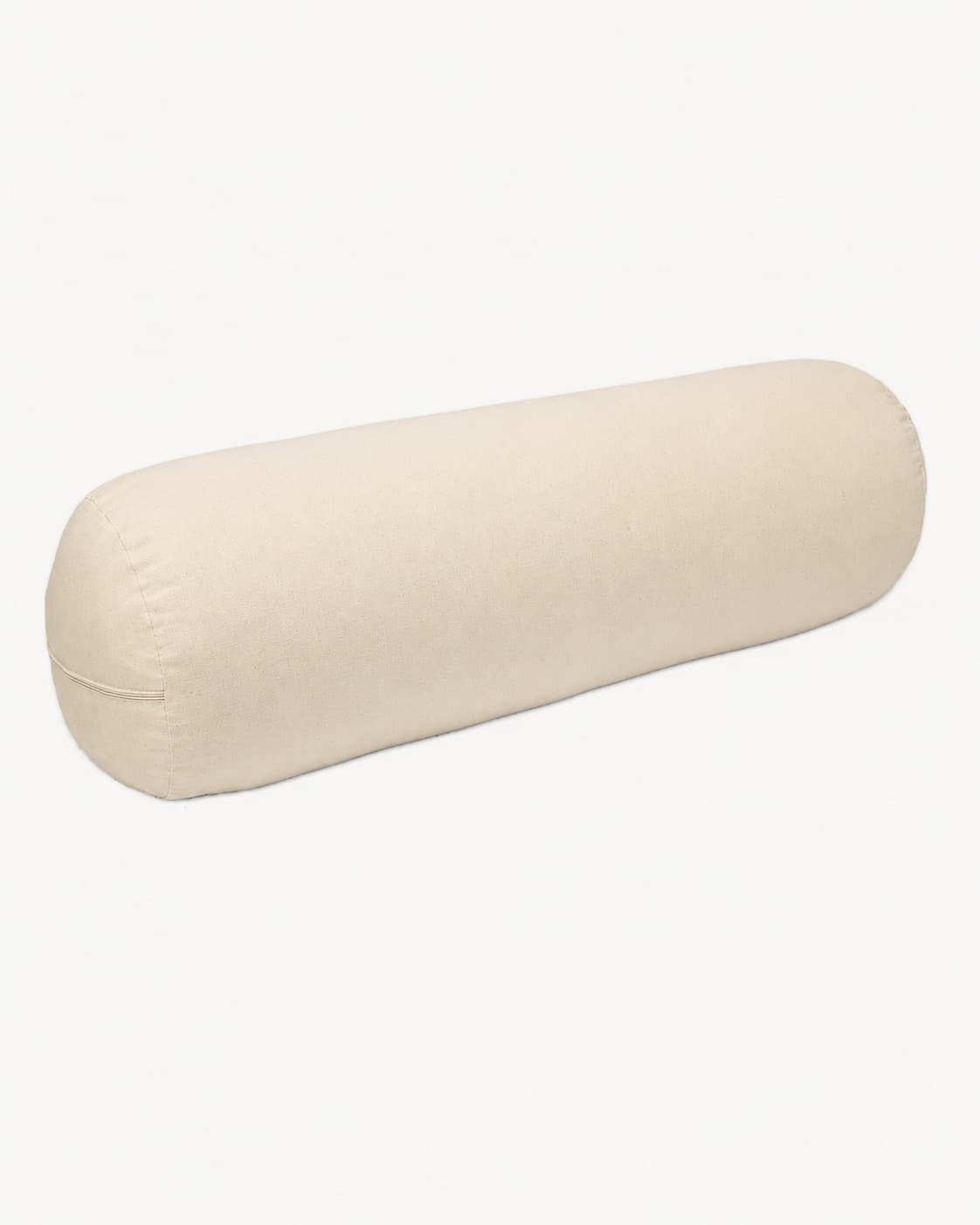
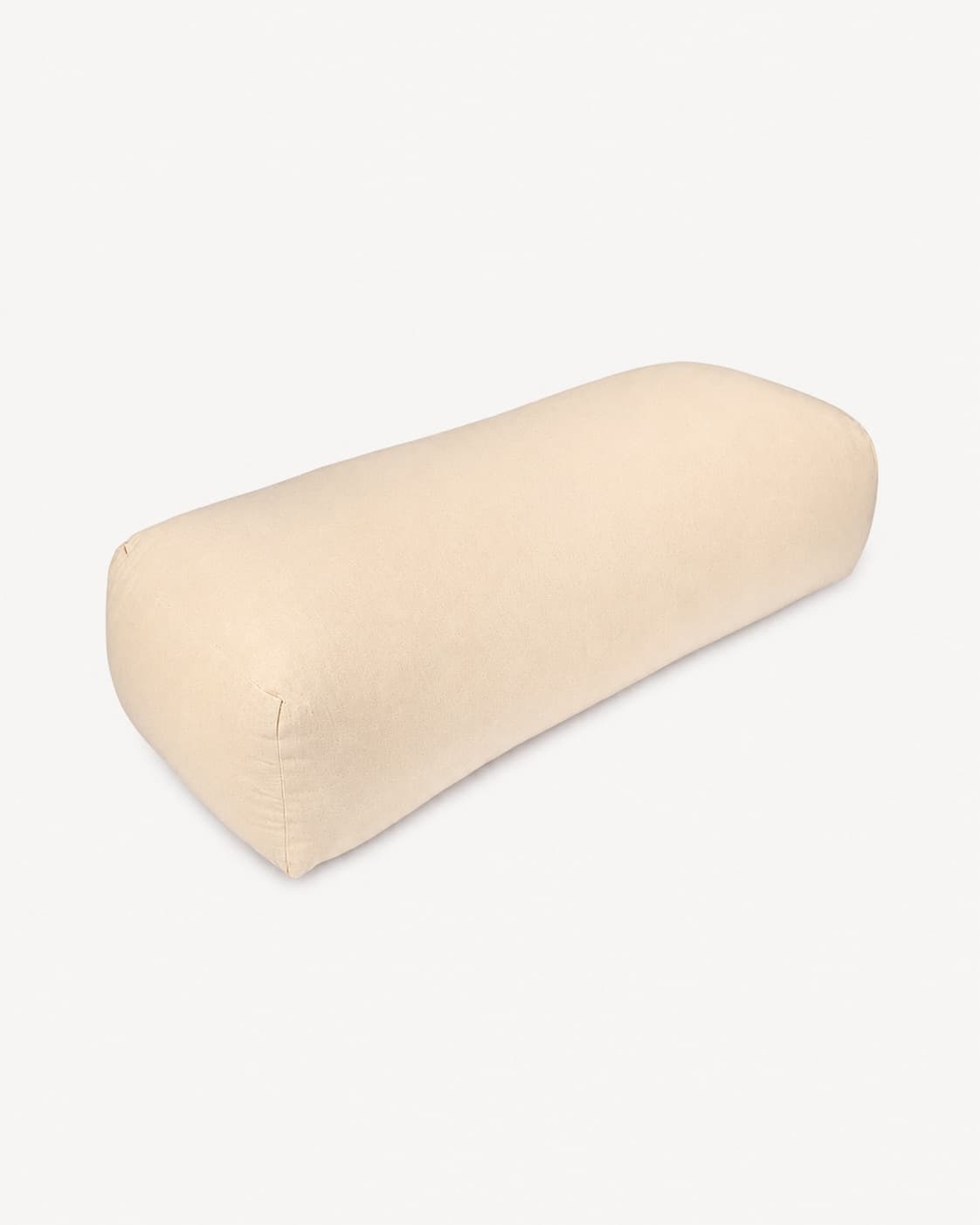
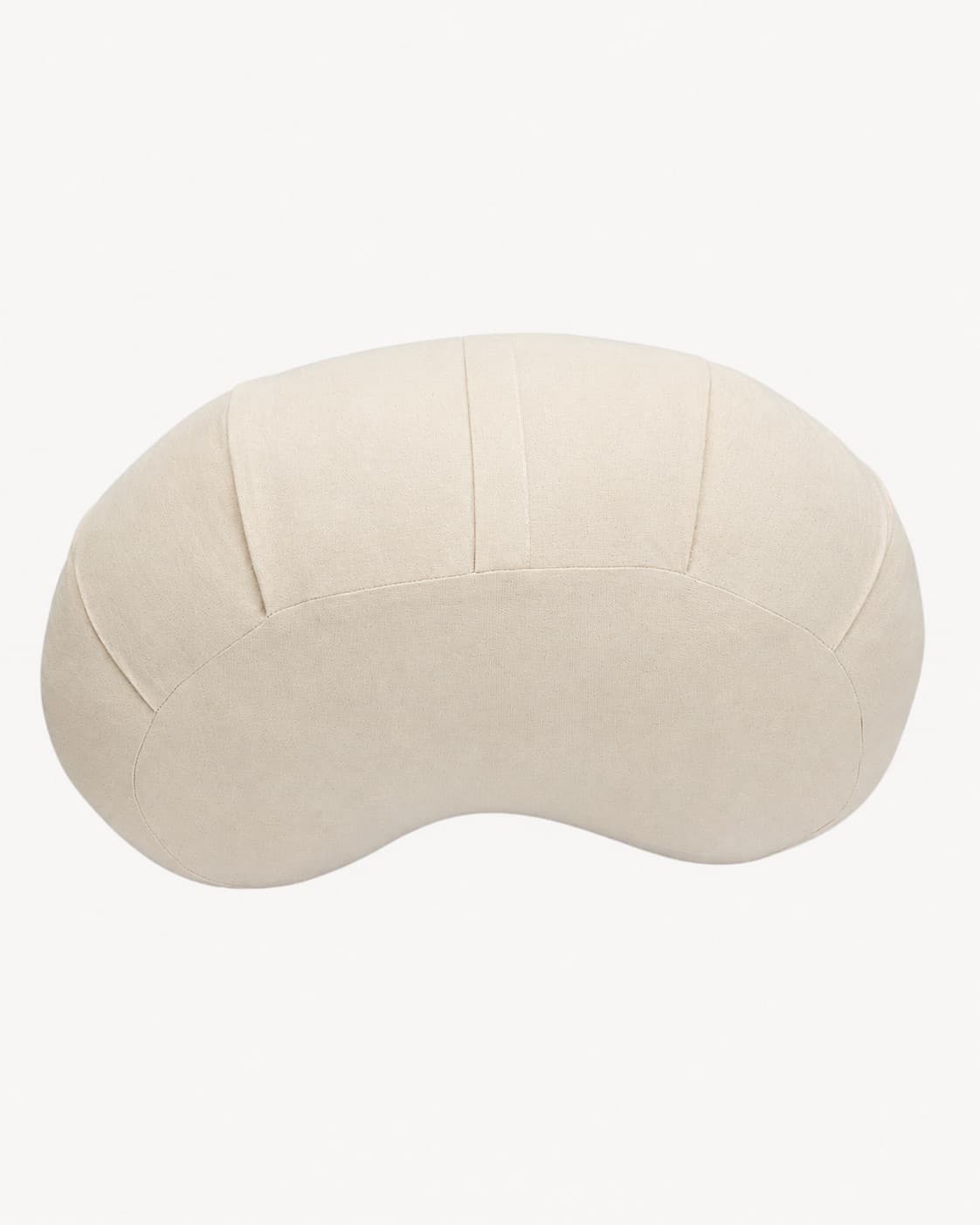
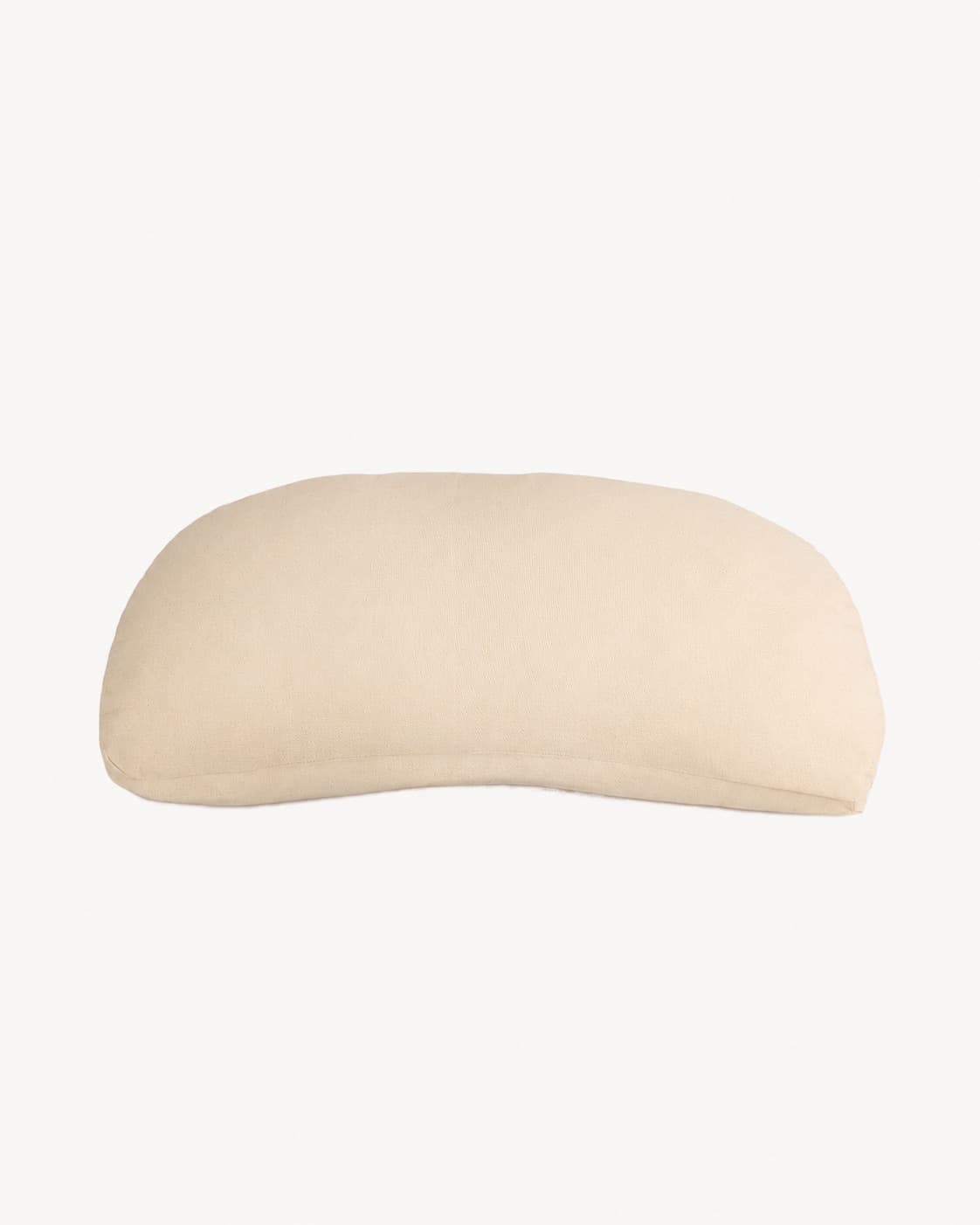
Substitutes for: a bolster.
Where it breaks down: almost immediately, for the use that matters. A sofa cushion compresses under body weight, which means it is not supporting you, which is the entire point of a bolster. Fine under the knees in Savasana. Not fine for a supported backbend where you need firm support at a specific height for five minutes.
A rolled duvet or a firm blanket
Substitutes for: a bolster, better than a cushion does.
Rolled tightly and bound with a belt, a firm blanket approximates a bolster. Tightly is the operative word.
Where it breaks down: it loosens over five minutes and you spend the pose adjusting.
A belt or a dressing-gown cord
Substitutes for: a strap.
A dressing-gown cord is the best household strap substitute — long enough, does not stretch much, and it will not cut into the hands.
Where it breaks down: a leather belt has a buckle that will dig in, and most belts are too short to loop around a foot with straight arms. Length is the constraint.
A pillow
Substitutes for: a head support.
Where it breaks down: most pillows are too high. The requirement in a supine pose is two to five centimetres, so the chin sits just below the forehead. A standard pillow is double that and it pushes the head forward.
Fold a towel instead, or fold the pillow's stuffing to one side.
A tennis ball
Substitutes for: nothing in the prop category, and it is genuinely useful.
Roll it under the arch of each foot for a minute. Releases the plantar fascia and restores sensation, and it improves every standing pose. Also useful against a wall for the upper back and the outer hip.
A bag of rice
Substitutes for: a sandbag.
A kilogram or two of rice in a bag, placed on the thighs in Savasana or reclining bound angle, or on the sacrum in child's pose. The weight is settling in the same way an eye pillow is.
Where it breaks down: it will burst eventually. Double-bag it, or use a pillowcase.
What has no household substitute
A yoga mat, on a hard floor. Nothing else provides grip on both sides. A towel slides, a rug bunches, and a carpet destabilises.
Blankets for a shoulderstand. You need two or three matched, firm, dense, folded identically. Duvets and throws will not do it, and this is a pose where the setup is a safety requirement rather than a comfort. If you do not have the blankets, do legs up the wall.
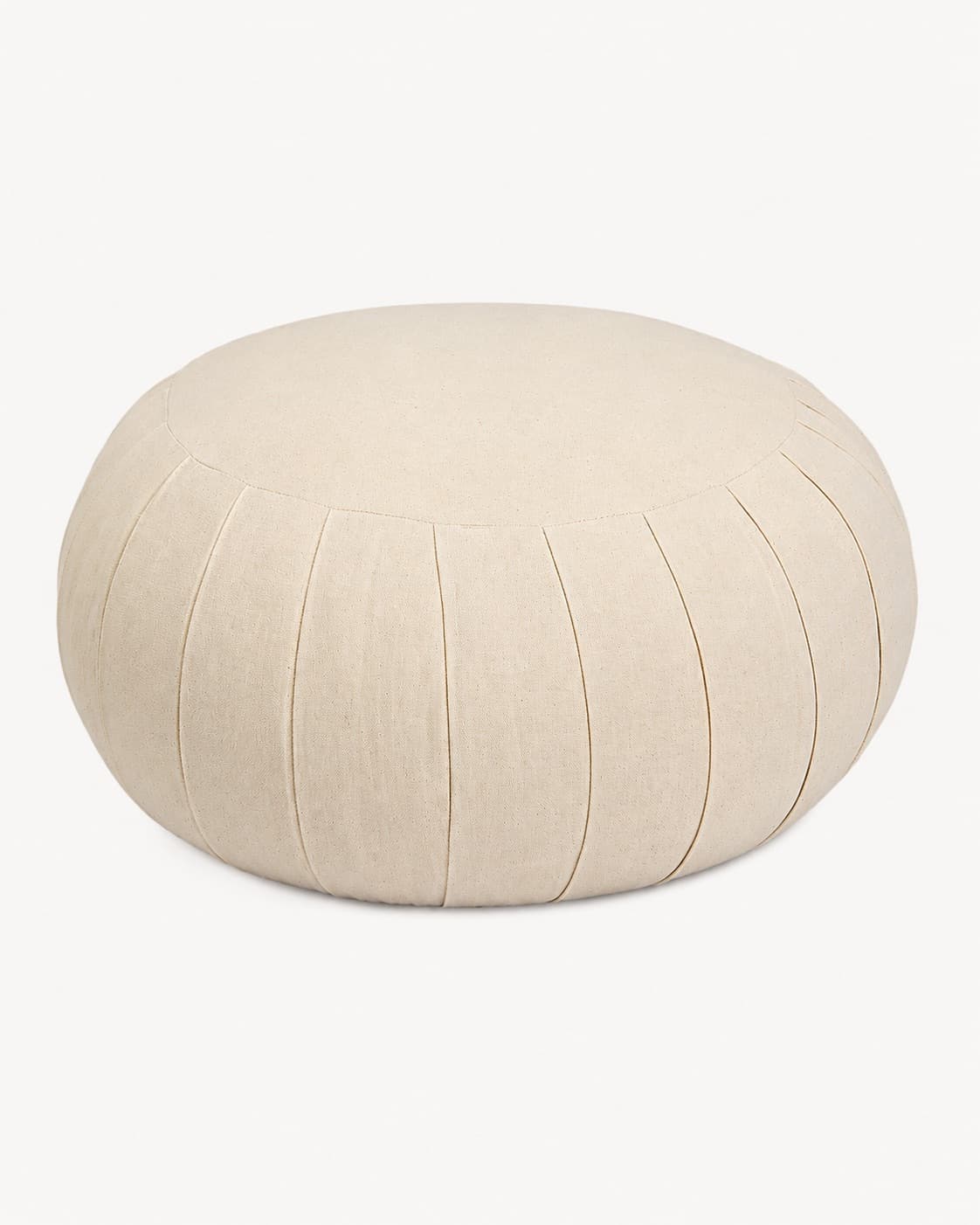
A firm meditation cushion, for long sits. Household cushions compress within two minutes.
The order to buy real ones
If the substitutions are working and you want to buy something, the order that unlocks the most: two blankets, then a strap, then two blocks, then a bolster.
And note that the two best props on this page — the wall and the doorway — are already in your house, and most people use neither.