


NotesPractice
Learning to Invert Safely
Headstand and shoulderstand carry real risk done badly. The preparation, the setup, and the honest contraindications.
Contents
Headstand and shoulderstand carry real risk done badly, and both are worth doing done well. The preparation, the setup, and the honest contraindications.
The shared principle
In both poses, the head and neck should carry very little weight.
Headstand: the arms carry the majority; the head is a reference point, not a pedestal.
Shoulderstand: the shoulders carry it, raised on blankets so the neck is not forced to its end range.
Every serious injury from these poses comes from violating that principle. The cervical spine has seven small vertebrae designed to support a five-kilogram head and permit movement. It is not a load-bearing column.
Shoulderstand: the setup is the pose
The blankets are not optional. If you do not have them, do legs up the wall instead — not a "modified shoulderstand."
The setup:
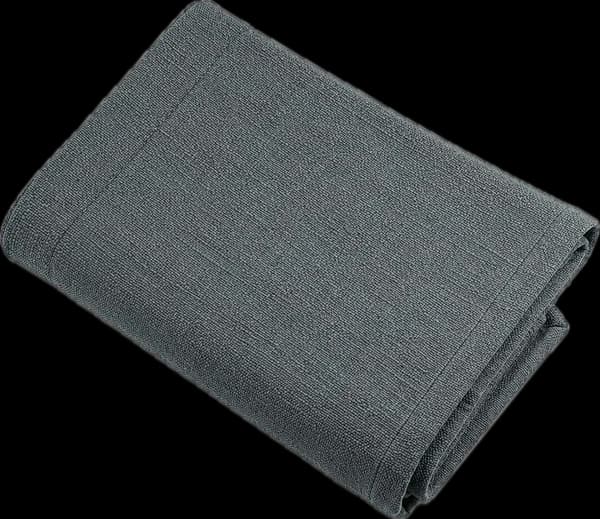
- Two or three blankets folded to exactly the same size, roughly 60 × 45 cm, stacked neatly. Eight to twelve centimetres high total.
- The clean folded edge towards the head end.
- Lie with your shoulders on the stack and your head off it, on the floor. Tops of the shoulders within two or three centimetres of the folded edge.
- Check: you should be able to slide a hand easily under your neck.
Getting in: knees bent, feet on the floor. Knees to chest. Press the arms down and roll the pelvis up. Hands to the back, high towards the shoulder blades. Elbows shoulder-width — use a strap around the upper arms if they splay. Straighten the legs one at a time.
Never throw the legs over. Momentum entries are how people land badly.
While in it: do not turn your head. Not once. Rotating a neck that is in flexion under load is the acute injury mechanism.
Weight in the shoulders and upper arms, pressing down into the blankets. Chest towards the chin, not chin towards the chest.
Duration: start at 30 seconds. Build over months to two or three minutes.
Coming out: knees to forehead, hands to the floor, roll down slowly, head staying where it is. Lie flat for a minute. Then, after a pause, a mild backbend — never a strong one immediately.
Headstand: the preparation is a year
Prerequisites, all of them:
- Dolphin held for two minutes. If you cannot, you do not have the shoulder strength for a headstand and the load will go into your head.
- Full shoulder flexion — arms overhead without the ribs flaring.
- Hollow-body hold for sixty seconds. The trunk shape the pose requires.
- A solid propped shoulderstand, comfortable for two minutes.
Most people attempt headstand having none of these.
The preparation, at a wall, for months:
Forearms on the floor, elbows shoulder-width, hands clasped or flat. Crown of the head lightly on the floor between the hands. Hips up. Walk the feet in towards the elbows.
Stay there. Practise pressing down through the forearms and lifting the weight out of your head. You should be able to nod slightly — that is how you know the head is not bearing the load.
Build to a minute in that position with the weight in the arms. Then lift one leg. Then the other, slowly, together.
Never kick up. Kicking teaches the body to arch the back to catch the balance, and it puts sudden load through the neck.
Duration when you get there: 30 seconds. Build slowly. Five minutes is a substantial hold and there is no benefit in more.
Coming out: slowly, both legs together, with control. Then child's pose for a minute — do not stand straight up.
The alternatives, which are genuinely good
If the full poses are not for you — for reasons of neck history, preference, or time — these deliver most of the benefit.
Legs up the wall with the hips raised on a bolster. A mild inversion, no neck load at all, holdable for fifteen minutes.
Supported half-shoulderstand over a chair. Shoulders on a bolster on the floor, legs up onto a chair seat, hips supported. The traditional Iyengar arrangement, and considerably safer than the free pose.
Downward Dog and standing forward folds. Inversions in the literal sense — head below heart — with none of the risk.
Dolphin. All the shoulder work of headstand preparation, none of the head loading.
Nothing in yoga requires you to balance on your head. The benefits attributed to inversions — venous return, a change in perspective and pressure, a settling effect — are available from the supported versions.
The honest contraindications
Skip the head-loading inversions entirely, and ask someone qualified, if you have:
- Any neck injury or history of cervical problems. The clearest one.
- Cervical disc problems, past or present.
- Uncontrolled high blood pressure.
- Glaucoma, retinal problems, or recent eye surgery.
- An ear infection, or any inner-ear condition.
- Osteoporosis or reduced bone density.
- Pregnancy, unless it was already established in your practice and you have guidance.
- Recent surgery of any kind in the head, neck, shoulders or abdomen.
- A heart condition.
Menstruation is traditionally listed and views differ; there is no evidence of harm and no reason to if you do not want to.
The one rule
If the neck is bearing weight, stop.
In a correct shoulderstand you can slide a hand under your neck. In a correct headstand you can nod your head slightly. If either is untrue, the setup is wrong or the strength is not there, and the pose should not continue.
There is no urgency about any of this. Both poses will still be there in two years, and a neck injury acquired in pursuit of them will also still be there.