



NotesCraft
The Living Tradition of Handwoven Textiles in India
India has woven cotton, silk and wool for five thousand years. A short history of the handloom, region by region, and why it still runs.
Contents
Long before factories, power looms and synthetic fibres, India was already known as one of the world's great weaving civilizations.
For thousands of years, cotton, silk and wool moved through the hands of spinners and weavers, becoming garments, household textiles, ceremonial fabrics and objects used in daily life. Every region developed its own techniques, patterns and materials, shaped by climate, geography, trade and culture.
Even today, many of these traditions continue much as they have for generations. The rhythm of a handloom remains one of the oldest living crafts in the country—where every shuttle thrown carries knowledge passed from one generation to the next.
A History Woven Through Millennia
India's relationship with textiles stretches back over 5,000 years to the Indus Valley Civilization. Archaeological discoveries at Mohenjo-daro and Harappa include spindle whorls, dyed cotton fragments and evidence that cotton was already being cultivated and woven around 2500 BCE.
As trade routes expanded across Asia, the Middle East and Europe, Indian textiles became highly sought after. Fine muslins from Bengal were prized for their extraordinary softness, colourful cottons from western India travelled by sea to Africa and Arabia, and intricate silks reached royal courts across the world.
By the medieval period, weaving had become one of India's largest and most respected industries. Entire towns specialised in particular fabrics, and many of those centres continue to produce textiles today.
A Country of Many Looms
One of the remarkable aspects of Indian weaving is that no single tradition defines it. Every region has developed techniques that reflect its environment and culture.

North India
The northern states are known for warm textiles suited to mountain climates. Kashmir produces some of the world's finest pashmina and kani shawls, while Himachal Pradesh and Uttarakhand weave durable woollens using sheep and goat wool from the Himalayas.
Punjab's khes weaves, traditionally made from cotton, have long been used as everyday household coverings. Rajasthan combines weaving with block printing, producing cotton fabrics designed for both the desert climate and vibrant local traditions.
West India
The western states are home to some of India's most recognisable weaving traditions.
Gujarat is celebrated for mashru, patola and sturdy cotton fabrics produced for generations by artisan communities. Maharashtra has the famed Paithani silk tradition alongside practical cotton weaves designed for everyday life.
Kutch, with its rich history of pastoral communities, remains one of India's most diverse centres for handwoven cotton and wool textiles.
East India
Eastern India developed some of the finest cotton ever woven.
The legendary muslin of Bengal became famous for its almost weightless feel, while Jamdani weaving introduced intricate supplementary patterns directly into the loom.
Odisha is known for ikat weaving, where threads are resist-dyed before weaving, allowing complex geometric designs to emerge naturally on the loom.
Assam produces muga silk, unique for its natural golden colour and remarkable durability.
South India
Southern India has long been one of the country's strongest weaving regions.
Tamil Nadu, Karnataka, Andhra Pradesh and Kerala together produce an extraordinary range of cotton and silk textiles. From Kanchipuram silks to Chettinad cottons, from Ilkal sarees to Kasavu borders, the region demonstrates exceptional technical mastery.
Yet alongside these celebrated textiles exists another, quieter tradition—one centred not on clothing but on the woven surfaces used every day in homes.
That tradition lives in Karur.
Karur: India's Home of Handwoven Cotton Mats
Located on the banks of the Amaravathi River in Tamil Nadu, Karur has been associated with weaving for centuries.
The region became an important textile centre because of its access to cotton-growing areas, abundant water and generations of skilled weaving communities. While Karur is now recognised internationally for home textiles—including table linen, kitchen textiles, cushions and furnishings—it has also preserved a longstanding tradition of weaving durable cotton floor coverings and mats.
These are not decorative rugs.
They are functional textiles designed for everyday living.
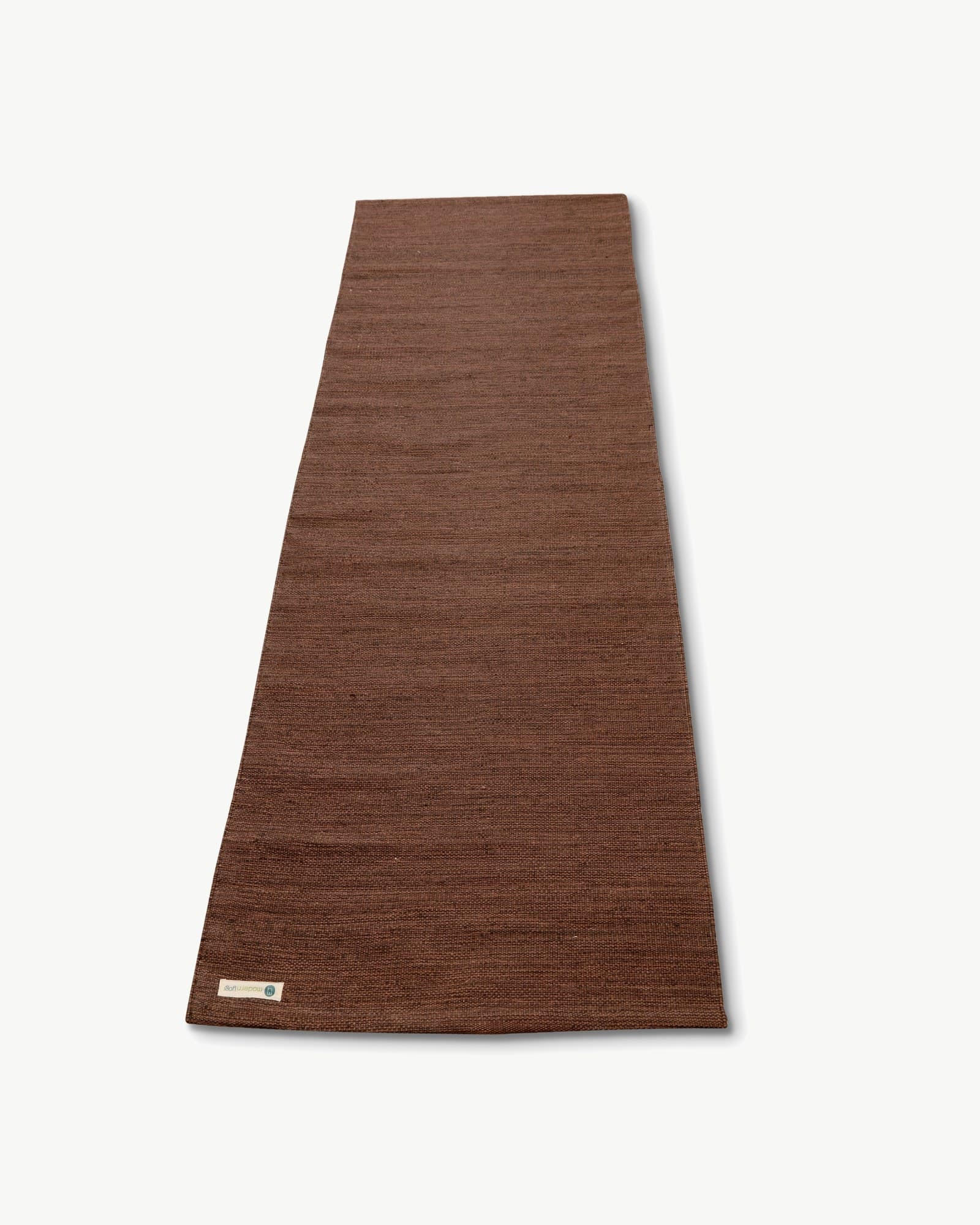
Traditionally woven on pit looms and frame looms, cotton mats from Karur were made to withstand years of daily use. Their tightly packed weave, balanced structure and breathable cotton construction made them suitable for sitting, resting, sleeping and working on the floor—an integral part of life across much of India.
Unlike mass-produced floor coverings, every handwoven mat reflects subtle variations created by the individual weaver. Slight differences in texture, density and rhythm are not imperfections but evidence of the human hand guiding every pass of the shuttle.
A Surface Made for Practice
Long before modern yoga studios existed, people across India practised meditation, prayer and daily routines on woven natural fibres.
Grass mats, cotton rugs, wool blankets and woven floor coverings have all been used throughout history as practical surfaces for sitting and movement. Ancient yogic texts often recommend natural materials placed between the practitioner and the ground.
Modern yoga mats are a relatively recent invention.
The tradition of practising on woven textiles is much older.
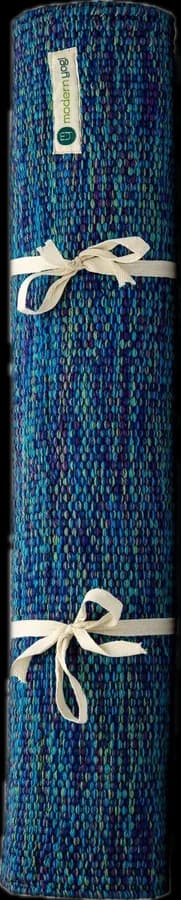
That history inspires the handwoven cotton mats we create at Modern Yogi.
Our mats are woven in Karur using techniques that have evolved over generations. While the design has been refined for contemporary yoga practice—with improved structure, comfort and durability—the foundation remains the same: a tightly woven cotton surface created on a loom rather than manufactured in a mould.
Every mat represents hours of weaving by skilled craftspeople whose knowledge has been shaped through decades, often inherited across generations within the same family.
We do not see our mats as nostalgic objects or museum pieces.
They are built for today's practice.
The same weaving traditions that once produced durable textiles for Indian homes now create surfaces that support movement, breath and stillness.
Carrying Tradition Forward
India's textile heritage is not simply a story of the past.
It continues every day in weaving communities across the country—from the wool weavers of the Himalayas to the silk looms of Karnataka, from the cotton weavers of Bengal to the handloom workshops of Tamil Nadu.
These traditions survive because they continue to serve a purpose.
At Modern Yogi, our purpose is not to preserve weaving for its own sake. It is to make products that quietly support daily practice.
When you unroll one of our handwoven cotton mats, you are stepping onto a surface shaped by centuries of knowledge, refined through generations of weavers, and designed for one simple purpose:
To create a steady foundation for practice.