



NotesPractice
Twists, Explained
Where a twist actually happens in the spine, why the lower back is the wrong place to look for it, and how to stop cranking with your arm.
Contents
Twists are the most over-cued and least understood category in a general class. "Twist deeper" is the standard instruction and it is the one that causes the harm.
Where a twist actually happens
The spine has three regions, and they rotate very differently.
The neck (cervical spine) — the most rotation of the three, roughly eighty degrees. This is why you can turn your head so far.
The mid-back (thoracic spine) — the workhorse. Roughly thirty-five degrees of rotation. This is where a twist belongs, and it is the region most people cannot access, because it is stiffened by sitting and by shallow breathing.
The lower back (lumbar spine) — almost none. Around five degrees total across all five vertebrae. The joints in the lumbar spine are oriented in a plane that permits flexion and extension and specifically resists rotation.
So: a twist is a mid-back movement. The lower back contributes almost nothing and is not supposed to.
Why this matters
When you crank a twist — hand on the knee, elbow outside the thigh, pulling — the mid-back gives what it has and then stops. The force does not disappear. It goes to the two places that will yield: the lumbar spine, which is not built for it, and the sacroiliac joint at the back of the pelvis.
The lumbar spine forced into rotation under load is a genuine mechanism of injury. The SI joint, for people who are on the mobile end of normal, can be irritated for weeks by a single hard twist.
This is not an argument against twisting. It is an argument for twisting in the right place.
How to twist properly
1. Get the pelvis level and settled first.
Sitting: on a blanket, both sitting bones on the ground, pelvis upright. If one sitting bone lifts as you turn, you are rotating the pelvis rather than the spine, and the twist has left the spine entirely.
Standing or in a lunge: set the hips before you turn, and keep them.
2. Lengthen before you rotate.
A compressed spine will not rotate. Grow tall on the inhale — genuinely lift the ribcage away from the pelvis — and then turn on the exhale. Repeat that cycle: lengthen, turn, lengthen, turn. Each round of length buys a little more rotation.
3. Start the turn from the middle, not the shoulders.
The common error is turning the head and shoulders and leaving the ribcage behind, which produces a twisted neck and an unchanged spine.
Initiate from the bottom of the ribcage. Feel the lower ribs on one side move forward and the ones on the other side move back. Let the shoulders follow, and let the head go last, and only as far as the rest.
4. Use the arms for leverage sparingly.
An arm braced against a knee is a lever with a lot of mechanical advantage, and the muscles of the spine are not strong enough to resist it. Use the arm to maintain the position your own muscles achieved, not to force ten degrees more.
Here is a good test: let go of the leverage for one breath. If you unwind substantially, the position was borrowed. Twist to where you can hold under your own power, and let the arm hold you there.
5. Breathe into the back of the ribs.
A twist compresses the front and side of the ribcage. Direct the inhale into the back, between the shoulder blades. It is a smaller breath than usual and it is the right one.
The neck
Turn the head last, and less than feels natural.
The neck will happily rotate further than the rest of the spine, which produces the illusion of a deeper twist and puts a shear force on the cervical vertebrae. In any twist, the head should complete the line of the spine, not exceed it.
If you have any neck history at all, keep the head neutral and facing forward. You lose nothing — the neck was not the point.
What twists are actually for
Three things, and the third is not one people expect.
Mid-back mobility. Rotation is the movement the thoracic spine loses first and misses most. Restoring it improves shoulder mechanics, breathing capacity and standing posture.
Rib and intercostal length. The muscles between the ribs get stretched in a twist in a way nothing else does, and it noticeably changes how the ribcage moves with the breath.
Counter-position. After backbends and after long forward-folding work, a gentle twist restores the spine to neutral more effectively than anything else. This is why twists sit near the end of a well-built sequence.
The claim about twists wringing out organs and detoxifying the body has no mechanism behind it. Skip it; the three above are real and are enough.
Three twists worth doing well
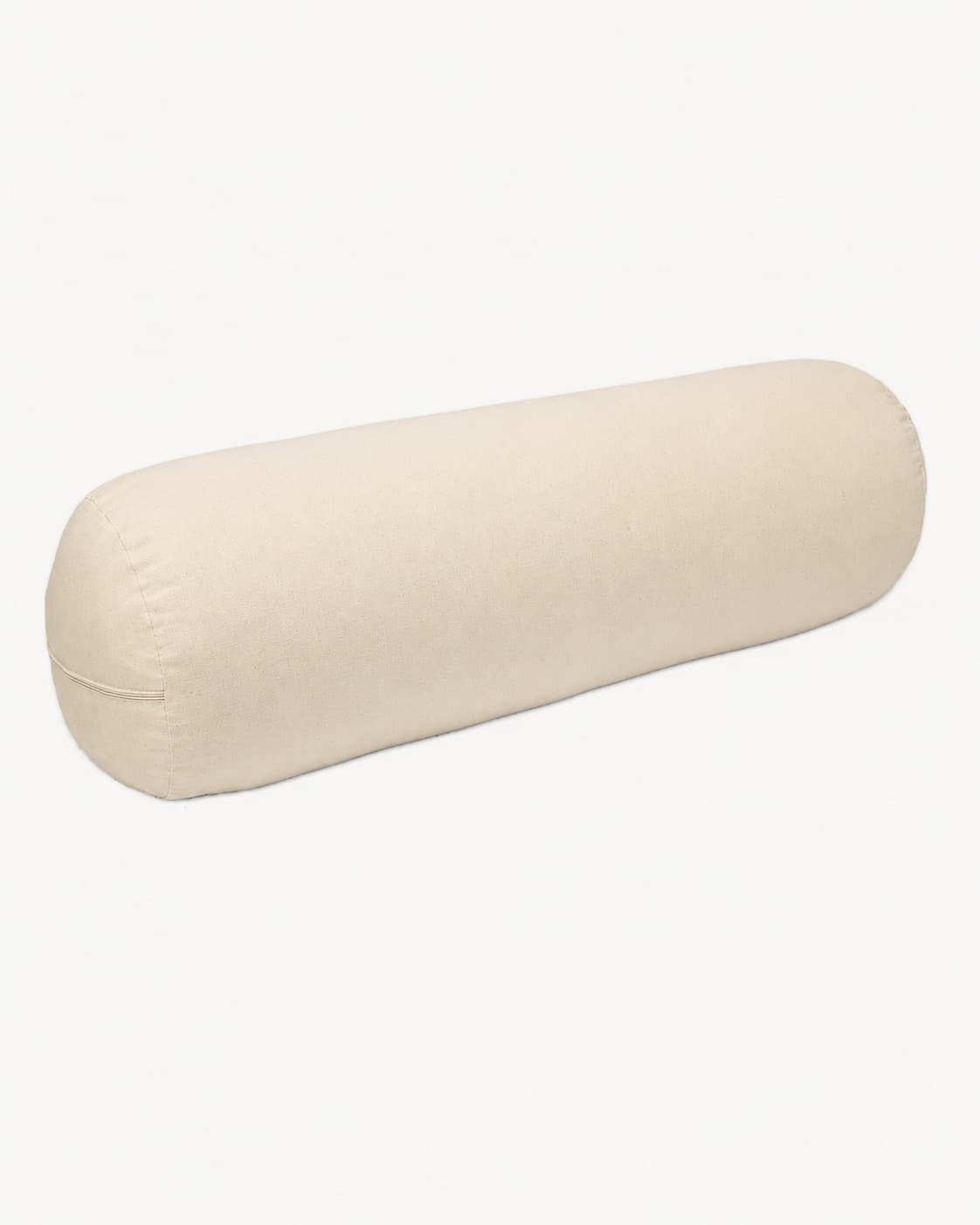
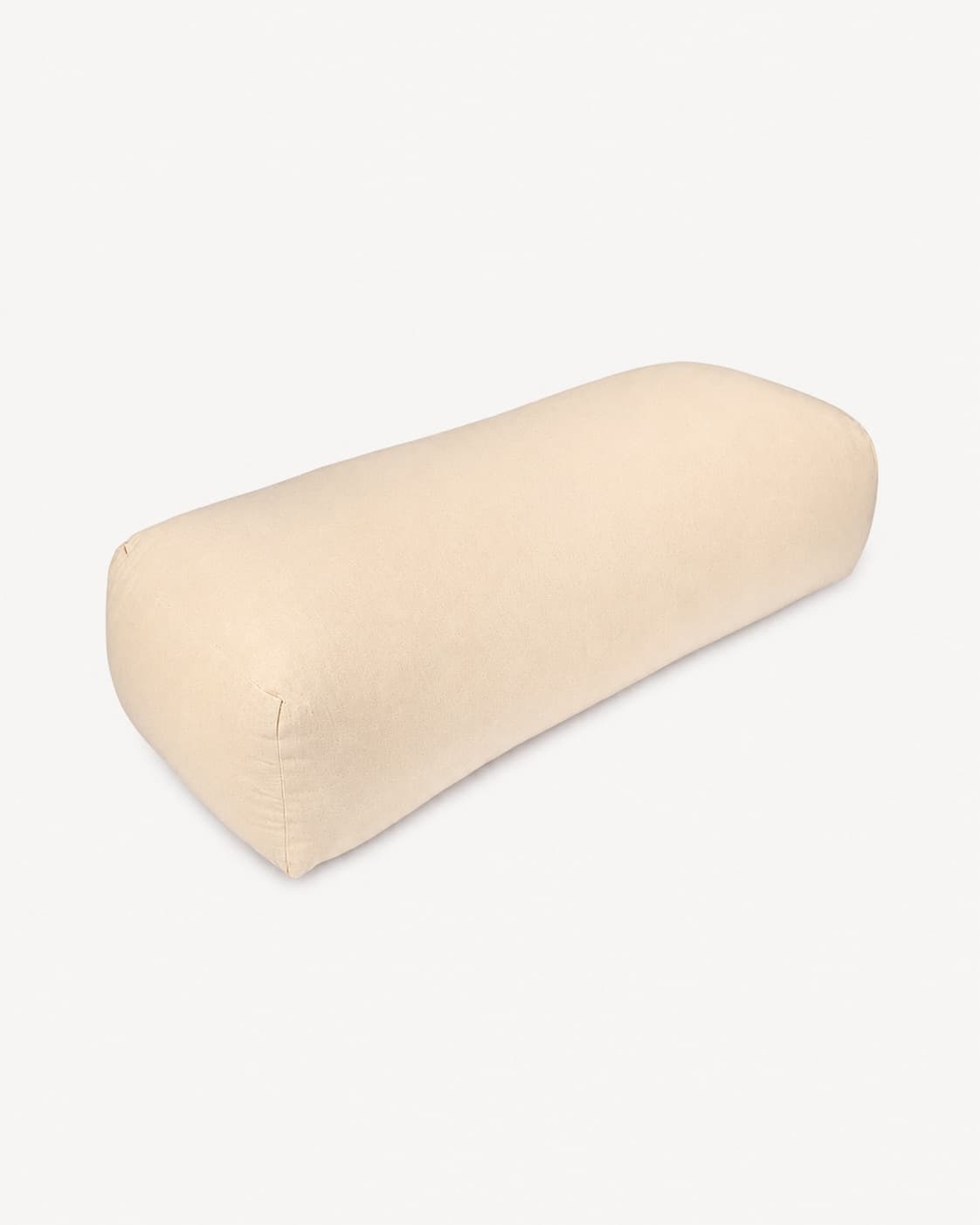
Supine twist. Lie on your back, knees drawn up, let both knees fall to one side, arms wide. The floor stabilises the shoulders. Put a bolster or cushion under the knees so they are supported rather than hanging — supported, the muscles release; hanging, they hold. Two to three minutes each side.
Seated easy twist. Sitting on a blanket, cross-legged, one hand behind, one on the opposite knee. Lengthen and turn. Minimal leverage.
Revolved lunge. The strongest of the three and the one most easily overdone. Set the pelvis first, twist from the mid-back, and keep the back leg working — if the back knee drops in, the pelvis has turned and the spine has not.
The one-sentence version
Set the pelvis, lengthen, rotate from the lower ribs, let the head go last, and never use the arms to get somewhere your own muscles cannot hold.