



NotesLiving
How to Practise Without a Teacher
What self-guided practice can and cannot give you, the four blind spots it creates, and how to check yourself against them.
Contents
- What it gives you
- The four blind spots
- Blind spot one: you cannot see yourself
- Blind spot two: you avoid what you are bad at
- Blind spot three: you do not progress
- Blind spot four: no external judgement about safety
- The structure that solves most of it
- The realistic arrangement
- The thing that is genuinely hard alone
What self-guided practice can and cannot give you, the four blind spots it creates, and how to check yourself against them.
What it gives you
Frequency. The main argument, and it is decisive. Four short home sessions a week beats one class, for strength, range and habit alike. Nobody can afford four classes a week; everybody can afford four twenty-minute practices.
Autonomy. You work on what you need rather than what the class is doing.
Attention. A class involves following instruction, which is a form of divided attention. Alone, you can put everything on one thing.
The actual skill. At some point the practice has to become yours. Learning to plan a session, notice what your body needs and adjust in real time is a skill, and it is only learned by doing it.
The four blind spots
Blind spot one: you cannot see yourself
You do not know that your front knee collapses inward, because from inside the pose it feels fine. This is the fundamental limitation and it applies to everyone, at every level.
Checks:
- Film yourself. Once a month, three or four poses, from the side and from the front. It is uncomfortable to watch and it is by far the most useful thing on this list.
- Use a wall. Standing poses with your back against a wall tell you immediately whether your body is in one plane.
- Use the mat's edges for feet, stance and symmetry.
- A class every month or two, specifically to be corrected. Iyengar if you can find one — the tradition is built around exactly this.
Blind spot two: you avoid what you are bad at
Left to yourself, you will build a practice out of what you can already do. Nobody plans this; everybody does it.
Checks:
- Write down what you practise for a fortnight, then look at what is missing. It will be obvious.
- Rotate deliberately through a fixed list: standing strength, hips, backbends, hamstrings, shoulders, balance, inversions, restorative. One per session, in order, regardless of preference.
- Notice what you have not done in a month. That is the thing to do next.
Blind spot three: you do not progress
A class supplies progression: the teacher adds something. Alone, most people practise the same twelve poses at the same intensity for years.
Checks:
- Change one variable at a time, deliberately. Longer holds, or an added pose, or a lower block, or a higher intensity — one, for a month.
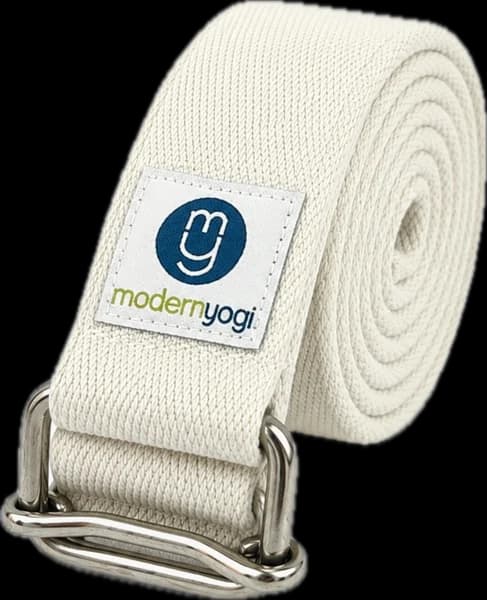
- Keep a note of the measurable things: the height of the block in Triangle, the width of your hands on the strap, how long you can hold Warrior II, how long you sit for. Four numbers, checked monthly. These move slowly enough that you will not notice them otherwise.
- Repeat sequences. You cannot improve at something you never do twice. Keep the same main sequence for two or three weeks.
Blind spot four: no external judgement about safety
A teacher stops you doing something ill-advised. Alone, the only judgement is yours, and yours is affected by ambition.
Checks:
- Do not learn genuinely risky things from a written description or a video. Headstand, long breath retentions, advanced pranayama, deep backbends. These are the things worth a teacher.
- Apply the breath rule strictly. When the breath goes ragged, the pose is over. It is the most reliable external check you have, and it does not flatter you.
- The 24-hour rule. If something aches the next day in a way that is not ordinary muscle soreness, that was too much. Note what it was.
- Be more conservative alone than in a class. Nobody is watching, which cuts both ways.
The structure that solves most of it
A repeatable seven-part shape — settle, warm the spine, warm the body, one main focus, counter, down-regulate, Savasana — with only the main focus changing.
Structure removes the decision-making from the middle of a session, which is where self-guided practice usually falls apart. It also guarantees the warm-up and the Savasana happen, which are the two things most likely to be skipped.
The realistic arrangement
For most people, the best practice is not entirely self-guided:
- Three or four home sessions a week, twenty to forty minutes, self-directed.
- One class a fortnight or a month, for correction and for the things you would not choose.
- Film yourself monthly.
- Four numbers, tracked.
That combination gives you the frequency of home practice and closes most of the blind spots, at a cost most people can manage.
The thing that is genuinely hard alone
Not the physical practice. It is the honest assessment.
A teacher tells you your Downward Dog has a rounded back. Alone, you have to notice it, admit it, and do the less impressive version for six months. That requires a specific kind of honesty, and it is the actual skill a self-guided practice develops — which is also why it is worth doing.