


NotesCraft
Kapok and Other Fills
Kapok, buckwheat, cotton batting, foam. How each behaves under weight, how each ages, and which belongs in which prop.
Contents
What is inside a bolster or a cushion determines almost everything about how it performs. Four fills, how each behaves under weight, how each ages, and where each belongs.
Kapok
What it is: a fibre from the seed pods of the kapok tree. Light, hollow, waxy, and water-resistant. Harvested from pods that fall from the tree.
Under weight: firm, and it resists compression well for a fibre. It packs down under sustained load and then holds that packed density rather than continuing to sink.
How it ages: it compacts over the first months and then stabilises. A kapok bolster is slightly firmer and slightly smaller at year two than at week one, and then largely unchanged for many years.
Properties: very light for its bulk, naturally water-resistant because of the waxy coating on the fibre, and resistant to mould for the same reason. Biodegradable.
Downsides: it cannot be washed — it clumps and does not recover. It compacts, so a bolster may need topping up after some years. The fibres are fine and dusty when handled.
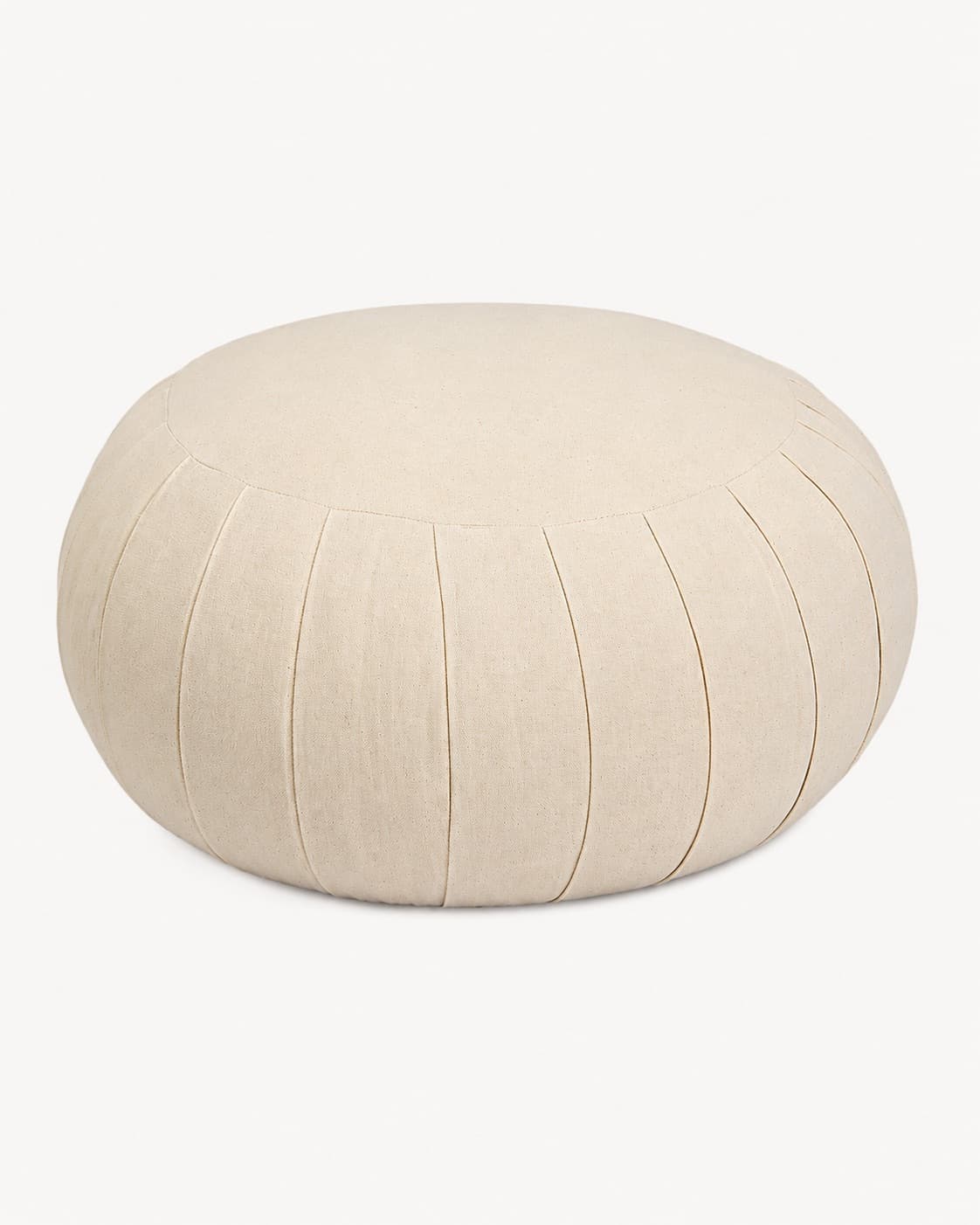
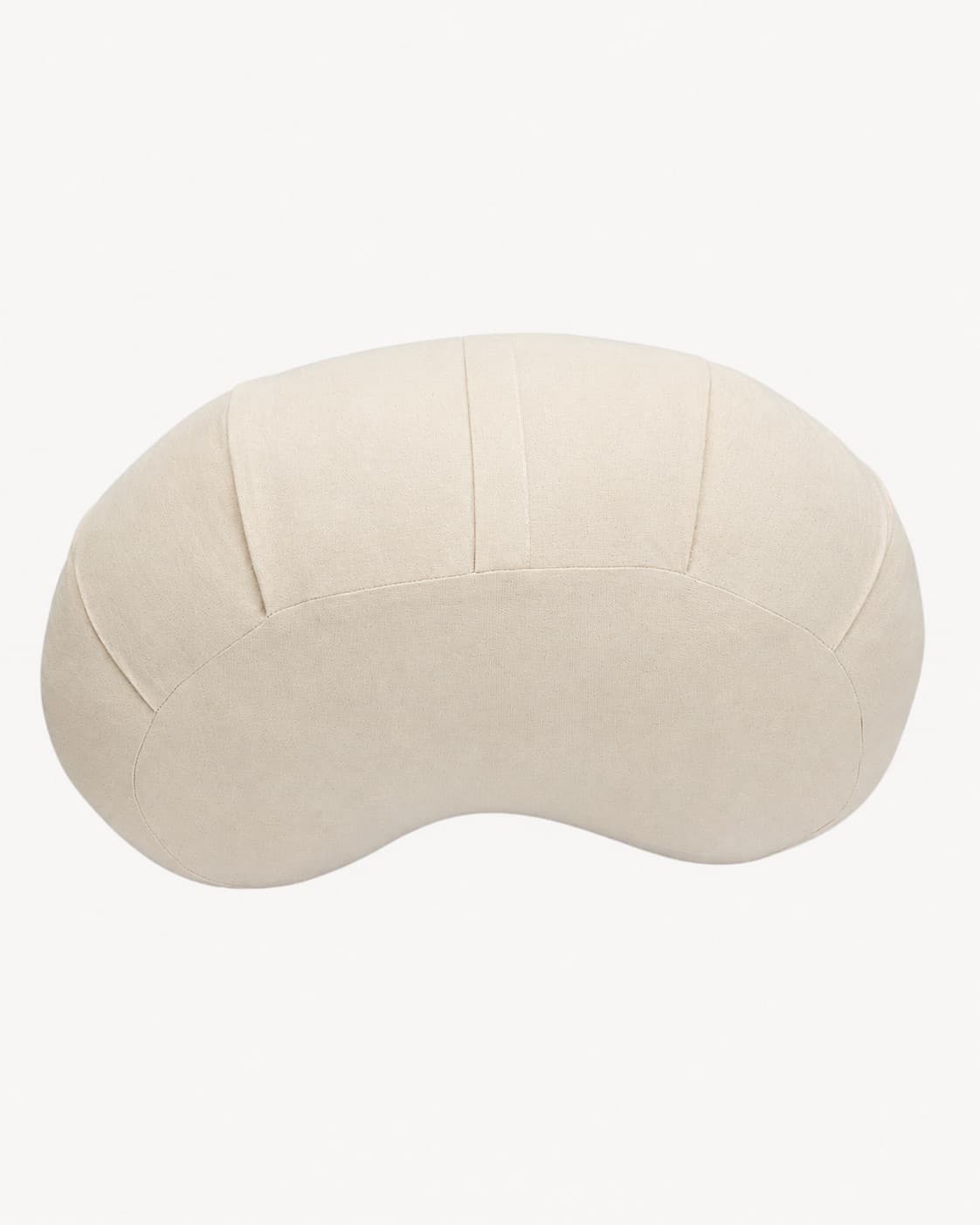
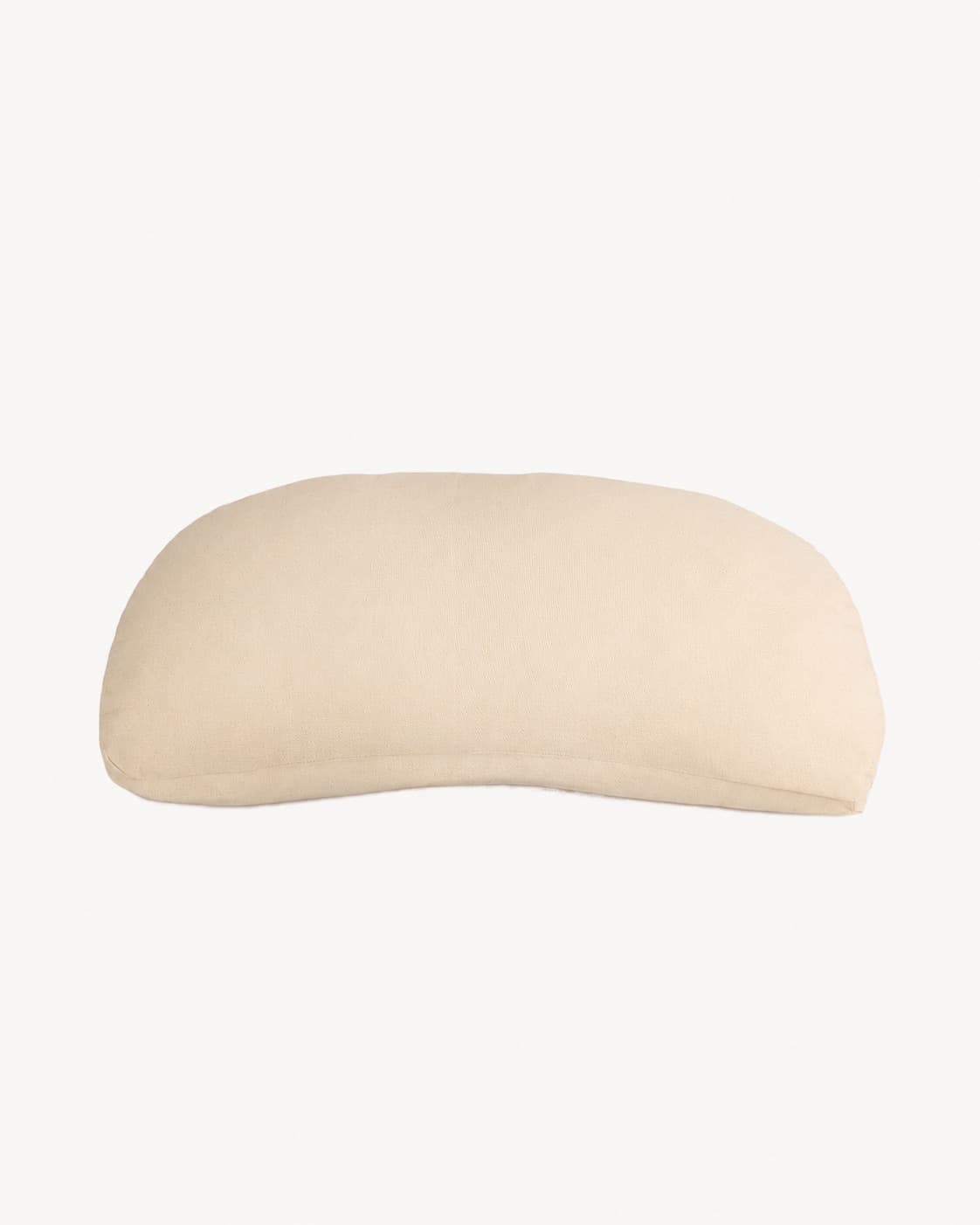
Where it belongs: bolsters and meditation cushions, where you want firm support at low weight. It is the traditional fill for a reason.
Buckwheat hulls
What it is: the hard outer casings of buckwheat seeds, a by-product of food processing.
Under weight: it flows and then locks. The hulls move to conform to your shape and then, once settled, hold that shape without further compression. The firmest and most stable support of any fill here.
How it ages: the hulls slowly break down into dust over several years. They can be replaced.
Properties: heavy — a buckwheat zafu is two or three times the weight of a kapok one. Adjustable, since you can remove hulls to change the height. Excellent air circulation, so it does not get warm.
Downsides: the weight, which matters if you carry it. The noise — it rustles audibly when you shift. And it absorbs moisture, so it must stay dry.
Where it belongs: meditation cushions, where the conforming-then-locking behaviour is exactly right and the weight does not matter.
Cotton batting
What it is: carded cotton fibre in sheets or loose fill.
Under weight: softer than kapok, and it compresses more.
How it ages: it compacts substantially and does not recover. A cotton-filled bolster loses height noticeably over a couple of years and needs re-fluffing or topping up.
Properties: breathable, natural, and it can in principle be washed and re-carded, though nobody does.
Downsides: it absorbs moisture and holds it, which is a mildew risk in a humid climate. And the compaction is real.
Where it belongs: softer bolsters, and as a layer over a firmer core. Not ideal as the sole fill in something you need to hold a specific height.
Foam
What it is: polyurethane, in various densities, either as a solid block or as shredded pieces.
Under weight: entirely dependent on density. High-density foam is firm and consistent. Low-density foam compresses immediately and takes a permanent set.
How it ages: it yellows, it hardens, and it eventually crumbles. Cheaper grades take a permanent compression set within a year or two.
Properties: consistent shape, cheap, light, and it can be cut precisely — which is why commercial bolsters are often foam-cored.
Downsides: not breathable, so it gets warm and slightly clammy under sustained contact. Petroleum-derived and not biodegradable. Off-gasses when new.
Where it belongs: blocks, and inexpensive bolsters where a consistent shape matters more than the material.
Shredded latex
What it is: shredded natural rubber foam.
Under weight: springy and conforming, and it pushes back more than any other fill here.
Properties: durable, resilient, breathable, naturally antimicrobial, biodegradable.
Downsides: expensive. Heavy. And it is latex, which rules it out for anyone with that allergy.
Where it belongs: premium cushions, where the resilience is worth the cost.
Choosing, by object
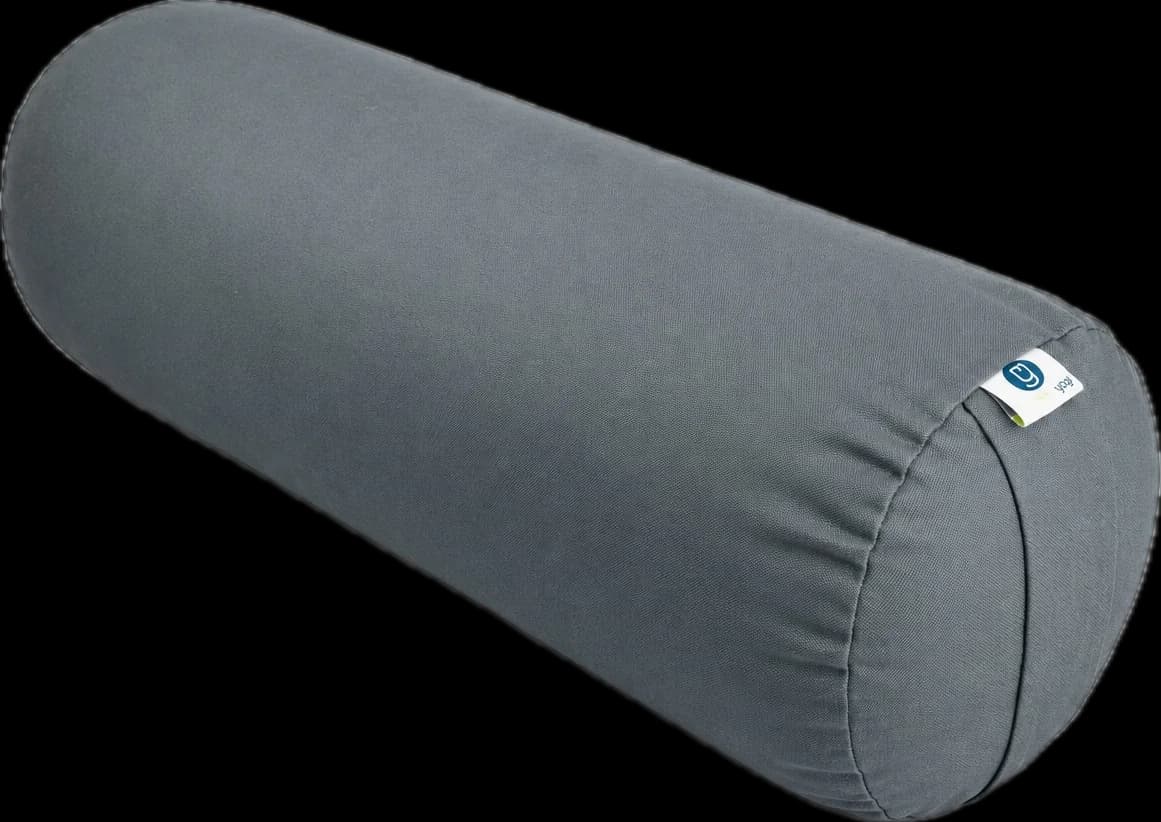
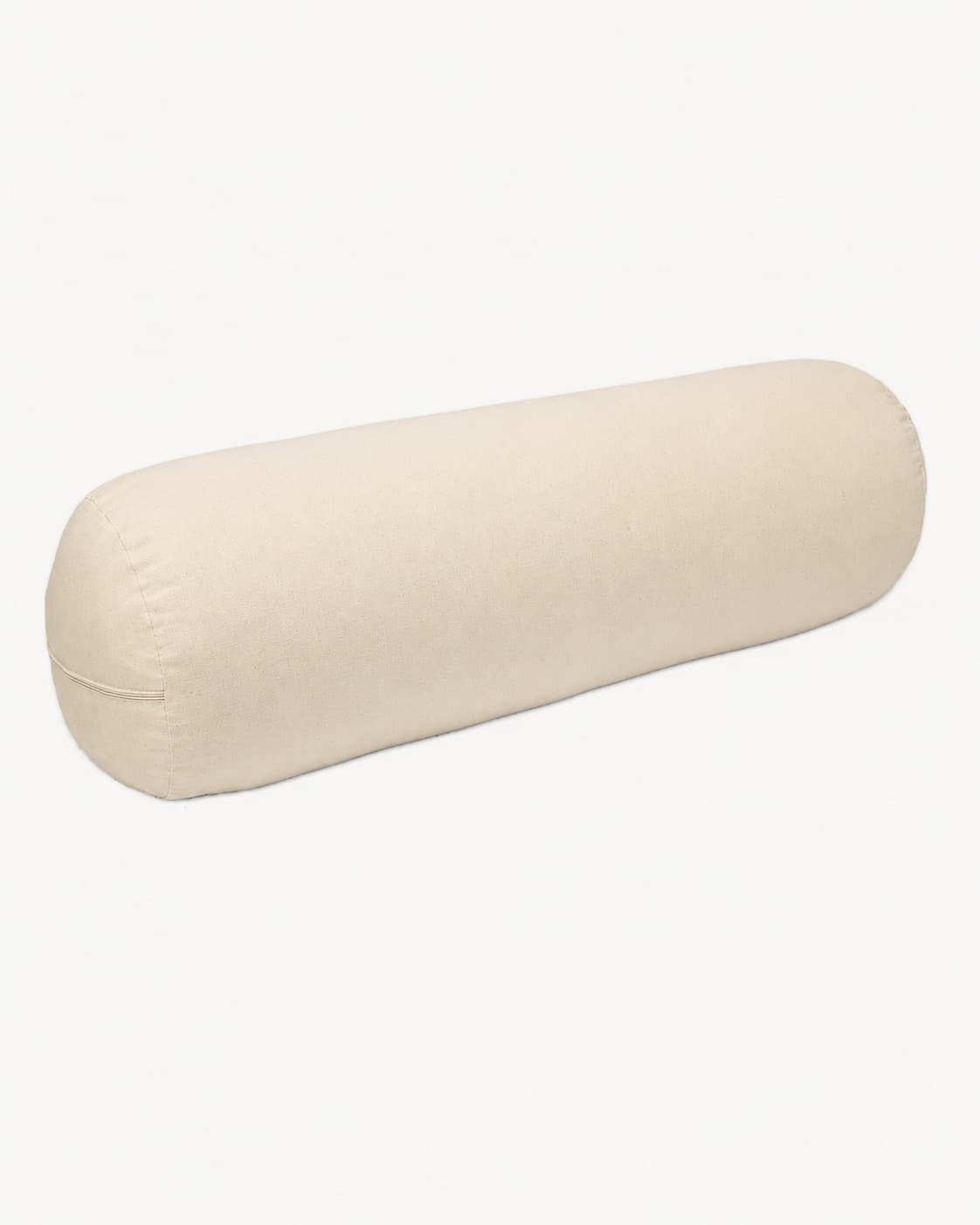
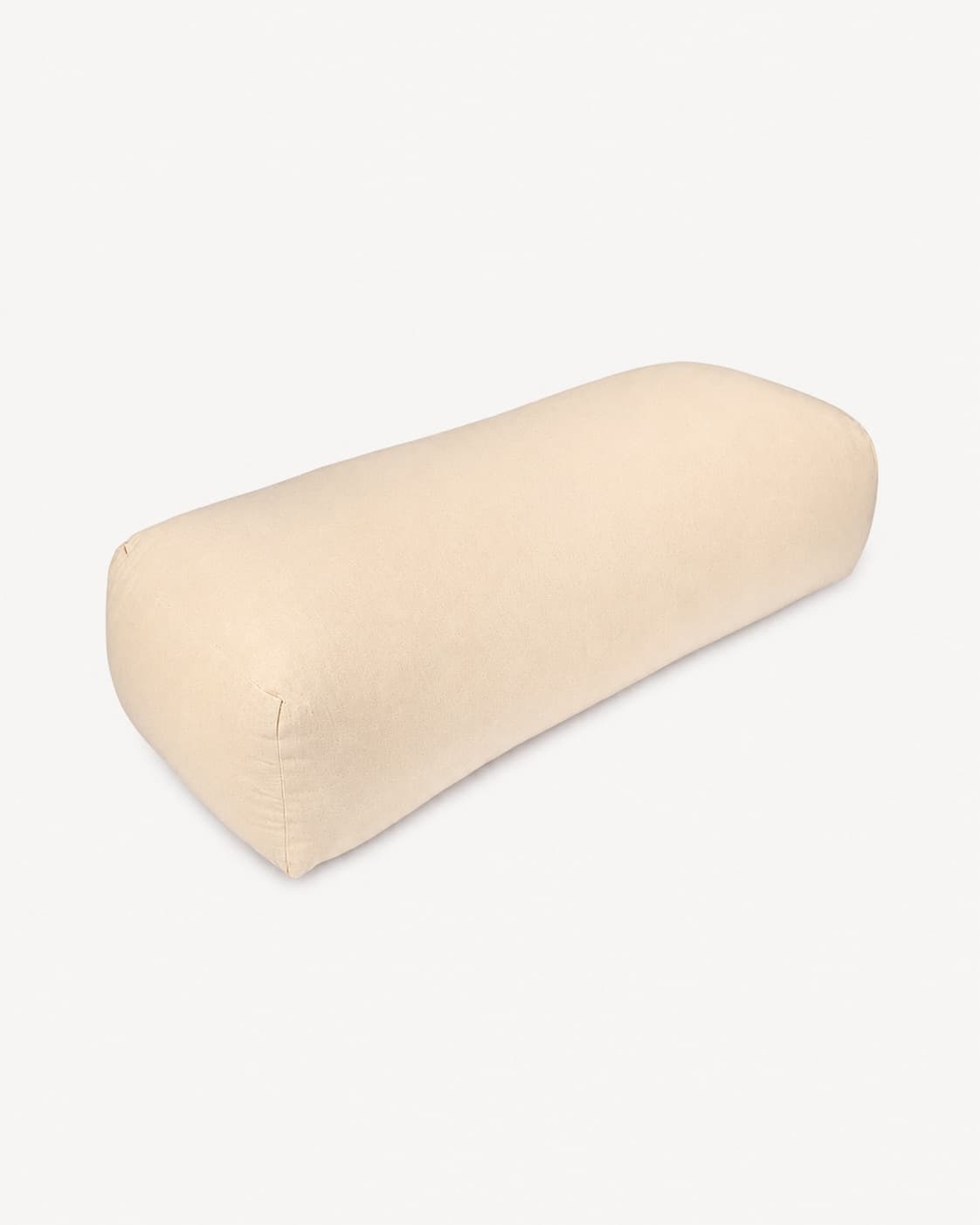
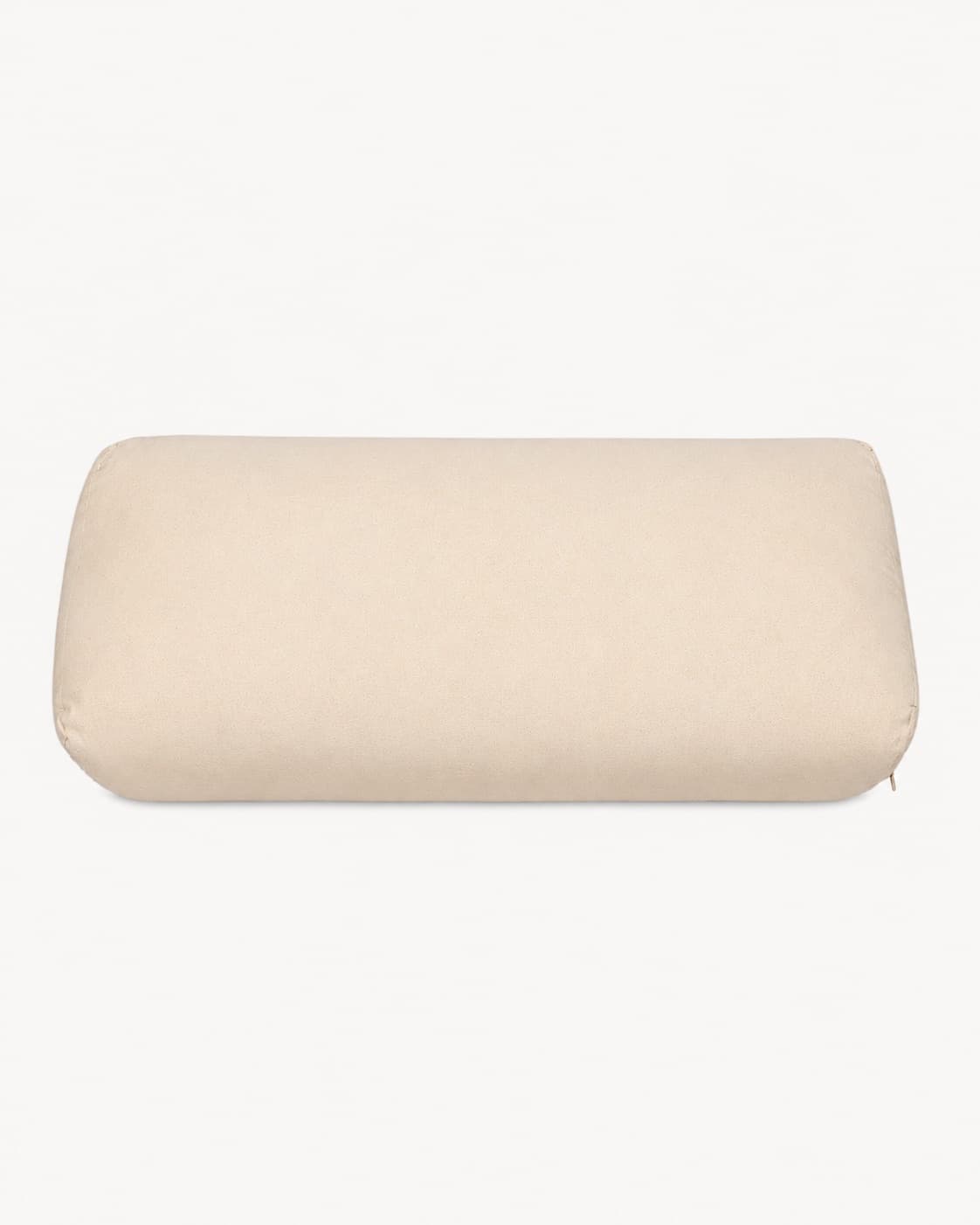
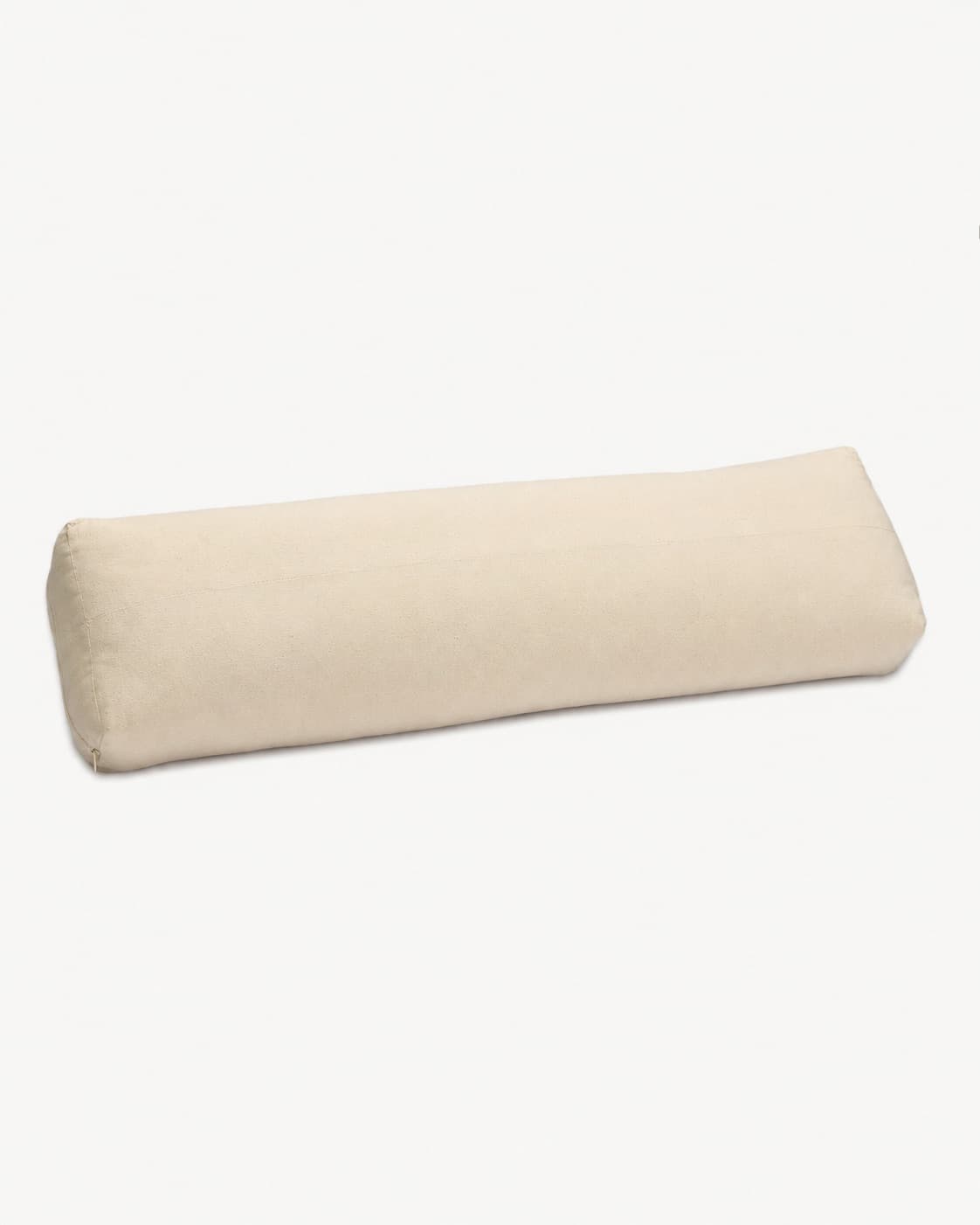
A bolster: kapok. You want firm, light, and stable at height. Foam-cored is acceptable and less pleasant against the body. Cotton batting alone will sag.
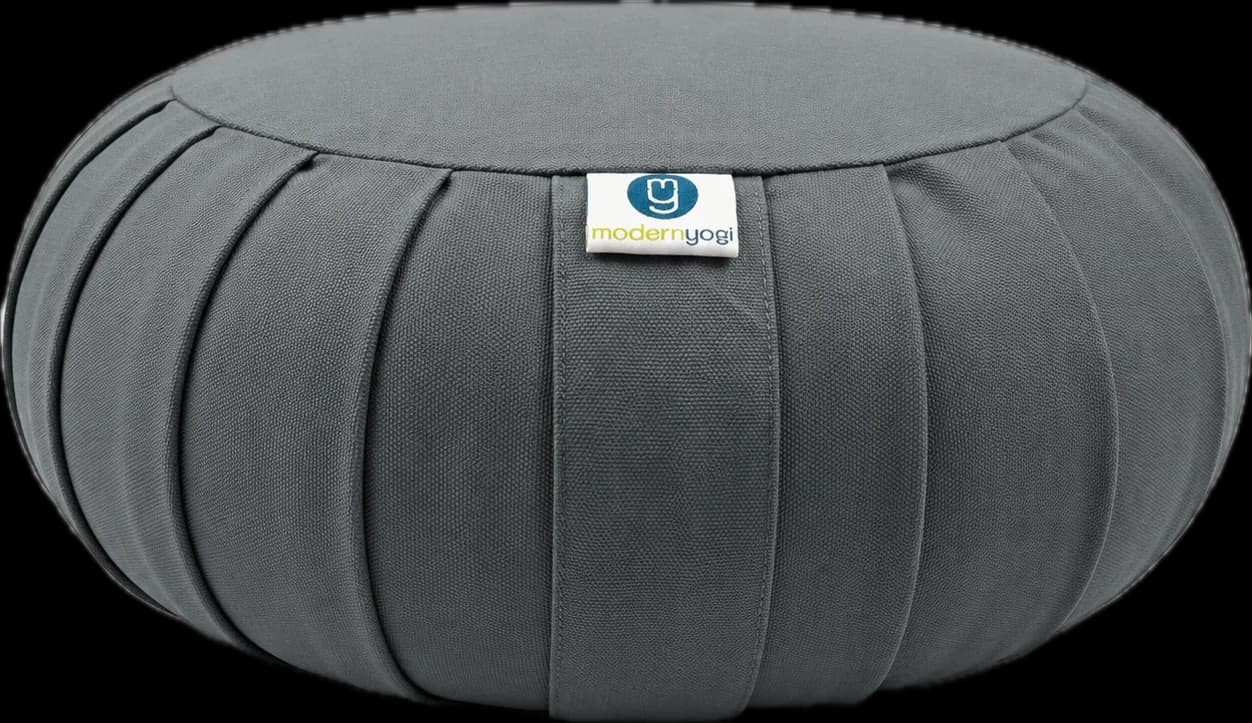
A meditation cushion: buckwheat if you sit for a long time and never carry it; kapok if you want it lighter and simpler. Both work. Polyester fibre does not.
An eye pillow: flaxseed. Fine-grained, conforms to the face, and holds the right weight in a small volume. Rice works and is coarser.
A block: cork for weight-bearing, foam for comfort. Not a fill question.
The test to run before buying
Press hard into it with your thumb and hold for ten seconds.
It should resist, and it should return most of the way when you let go.
If your thumb sinks in easily, it will not support your body weight for five minutes. If it does not return, it has already taken a set and it will keep doing so.
This test eliminates a lot of what is on sale, and it takes ten seconds.
Care
Never wash the inner. Any of them. Kapok clumps, buckwheat rots, batting compacts, flaxseed swells and goes rancid.
Every prop worth owning has a removable cover. That is what gets washed. A cushion or bolster without a zip is a cushion or bolster with a limited life, because it will eventually need cleaning and you will not be able to clean it.
Air the inner occasionally in the shade, particularly in a humid climate.
Vacuum lightly if dust accumulates.
Re-fluff kapok and cotton by beating and kneading it. It recovers some of its loft.
Replace flaxseed every few years. It eventually goes rancid and acquires a faintly oily smell.