



NotesPractice
Hamstrings
Why two years of forward folds has not lengthened them, and what changes when you stop treating the problem as a stretching problem.
Sommaire
Two years of forward folds and nothing has changed. This is the most common complaint in yoga and there are three reasons for it, only one of which is about the hamstrings.
What they are
Three muscles running from the sitting bones down the back of the thigh to just below the knee. They cross two joints — the hip and the knee — which is the single most important fact about them and explains most of the confusion.
Because they cross two joints, their length depends on the position of both. A hamstring is at its longest when the hip is flexed and the knee is straight. Bend the knee and you take slack out at the bottom; tip the pelvis backwards and you take slack out at the top.
Reason one: the movement is not reaching them
Covered at length elsewhere, but the short version.
A forward fold should be the pelvis rotating over the femur heads. If the pelvis does not tip, the spine rounds instead, you get closer to your feet, and the hamstrings never lengthen — because the sitting bones, where they attach, never went anywhere.
How to tell: sit on the floor with your legs straight. If your lower back is already rounded before you have folded at all, everything you do from there is spine.
The fix: sit on a folded blanket, bend the knees, and learn to tip the pelvis. Then work with a straight-leg supine version where the floor stops you cheating.
Reason two: they are not short, they are protective
This is the one that surprises people, and it is a large fraction of cases.
Range of motion is set by the nervous system as much as by tissue length. If the nervous system does not trust a position — because it is unfamiliar, or because you have no strength there, or because you have been forced into it repeatedly — it limits the range by increasing muscle tension. You experience that as tightness.
Two signs this is you:
Your range varies a lot day to day. Tissue length does not change overnight. Nervous-system tone does.
Stretching works for two hours. You gain range in a session, and by the next day it is gone. That is a temporary reduction in protective tension, not a change in tissue.
What helps: strength through range, not more stretching. Load the hamstrings in a lengthened position and the nervous system stops guarding, because you have given it a reason to trust the range.
Practically: single-leg deadlift patterns, bridges with the feet far from the body, and long holds where you actively engage rather than passively hang.
Reason three: they are genuinely short
The least common of the three, but real, especially in people who run or cycle a lot and never work through range.
What helps: frequency more than intensity. Tissue responds to repeated, moderate, long-duration exposure. Two minutes a side, most days, at an intensity of about five out of ten, beats a punishing ten-minute session once a week by a wide margin.
The position that actually works
Supine, with a strap.
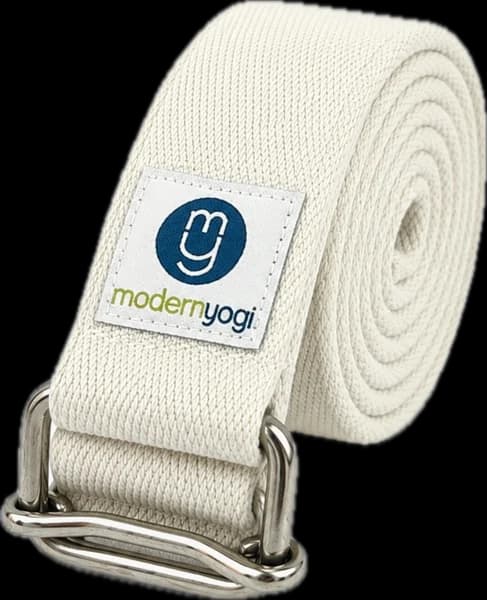
Lie on your back. Loop a strap around the arch of one foot and take that leg towards the ceiling. Keep the other leg either bent with the foot on the floor, or straight along the ground — bent is easier on the lower back.
Straighten the lifted leg as much as you can while keeping the lower back on the floor. Hold the strap with straight arms and let the shoulders rest on the ground.
Two to three minutes per side. Daily, or near enough.
Why this beats the seated version: the floor holds your pelvis and spine, so nothing can round to cheat. The hamstring is the only thing available to lengthen. And the position is comfortable enough to hold for three minutes, which the seated version generally is not.
Progressions from here: take the strap in the opposite hand and let the leg cross the body — different fibres. Take it out to the side — inner hamstring and adductor. Flex and point the foot slowly through the hold.
Adding the strength component
Once you have some range, load it.
Active hold. In the supine position, once you have found your edge, press the lifted leg back against the strap for five seconds — a real contraction, maybe half effort — then release and see if the leg goes further. Repeat three or four times. This is a well-established method and it produces immediate and, more importantly, lasting change.
Single-leg deadlift. Standing on one leg, hinge at the hip with a flat back, other leg extending behind. No weight needed at first. Ten a side.
Bridge with the feet far away. Feet a long way from your buttocks, lift the hips. Puts the hamstrings under load in a lengthened position.
What to stop doing
Bouncing. It triggers the stretch reflex, which contracts the muscle you are trying to lengthen.
Straight-leg seated folds with a rounded back. The most-performed hamstring stretch in yoga, and it mostly loads the lumbar ligaments.
Pushing to eight out of ten. Discomfort at that level activates the protective response. Five to six is the productive range, held longer.
Stretching before strength work. A stretched muscle is temporarily weaker. Do strength first, length after.
The timeline
Weeks one to three: noticeable change, most of it nervous-system.
Months two to four: real change in the position of the pelvis in a seated fold, which is the honest measure.
Six months to a year: tissue change, if you have been consistent.
Measure the right thing: the height of the blanket you need to sit on with a neutral pelvis, and how straight your knee is in the supine version with your lower back flat. Not how close your nose is to your knee.