


NotesVie
Practising in Heat
What high temperature does and does not do to tissue, why heated rooms feel like progress, and how to practise in one without harm.
Sommaire
Heated rooms feel like progress. Understanding why they feel that way, and what is actually happening, is what lets you use heat sensibly rather than being misled by it.
What heat actually does
It raises tissue temperature, which does increase compliance. Warm muscle and connective tissue deform more readily under a given load. This is real and it is why every tradition warms up before demanding work.
It reduces the sensation of stretch. This is the part that matters and the part nobody mentions. Heat raises the threshold at which you perceive discomfort, so at any given depth of a shape, you feel less. You interpret that as being more flexible.
It does not increase the tolerance of the tissue. The strength of a tendon or ligament does not change because the room is warm. So heat widens the gap between what you can feel and what you can withstand — and that gap is where injuries live.
It raises heart rate substantially. In a hot room, a moderate practice produces a cardiovascular load closer to a hard one, because a large share of the circulation is diverted to the skin for cooling.
It causes fluid and electrolyte loss. A serious hot class can produce well over a litre of sweat, taking sodium and other electrolytes with it.
The illusion of progress
You go to a hot class and touch your toes for the first time. It feels like a breakthrough.
What happened: your discomfort threshold rose and the tissue temporarily deformed further under the same load. The next morning you are back where you were, plus some soreness.
That is not to say nothing is gained. Repeated exposure to a range does produce lasting change. But the depth available in a hot room is not your range, and treating it as a new baseline is how people end up with a hamstring injury at the sitting bone that takes eight months to settle.
Practising in heat sensibly
Do not go to your maximum depth. Deliberately hold back — perhaps eighty percent of what feels available. This is counterintuitive and it is the single most important rule.
Watch the end-range shapes specifically. Standing poses and strength work are largely fine. It is deep forward folds, deep backbends, splits and anything at the outer limit of a joint where the reduced sensation is dangerous.
Hydrate before, not just during. Drinking half a litre in the twenty minutes before a class does very little; the water has not been absorbed and distributed. Drink through the day.
Replace electrolytes after a heavy session. Water alone after losing a litre of sweat can leave you worse off. Salt in food, or an electrolyte drink.
Leave if you feel unwell. Dizziness, nausea, chills, or stopping sweating are signals to get out of the room. Chills and stopping sweating in particular are signs of heat illness and are not something to work through. Nobody in a well-run studio will mind.
Do not do it every day. The cumulative fluid and cardiovascular load is significant.
Who should be careful
- Pregnancy. Heated practice is generally advised against, particularly in the first trimester.
- Cardiovascular conditions. The cardiovascular load is real. Ask someone qualified.
- Low blood pressure or a tendency to faint.
- Anyone on medication affecting fluid balance or heat regulation — including some blood pressure medications, diuretics and antihistamines.
- Hypermobile people. You already have more range than you can control. Heat gives you more.
- Anyone recovering from illness.
Practising in natural heat
Different problem: a hot summer, or a hot climate, without the controlled conditions.
Practise early or late. The physiological argument for morning practice weakens in a heat wave; the practical argument for it strengthens considerably.
Reduce the intensity. A sequence that is moderate in twenty degrees is hard in thirty-five. Cut the volume, not the quality.
Choose the sequence for heat. Standing poses and sun salutations generate a lot of internal heat. Seated work, twists, forward folds and restorative shapes generate much less.
Use the cooling breaths. Sitali and Sitkari — drawing air over a wet tongue — genuinely lower the temperature of the air entering the airway, and they are a traditional response to exactly this problem.
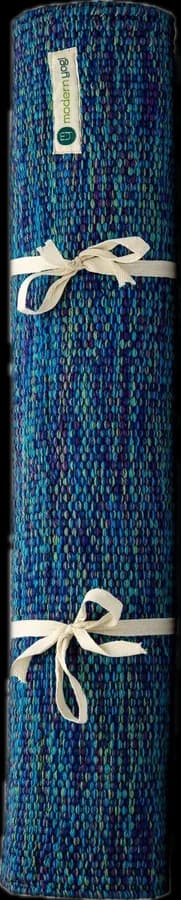
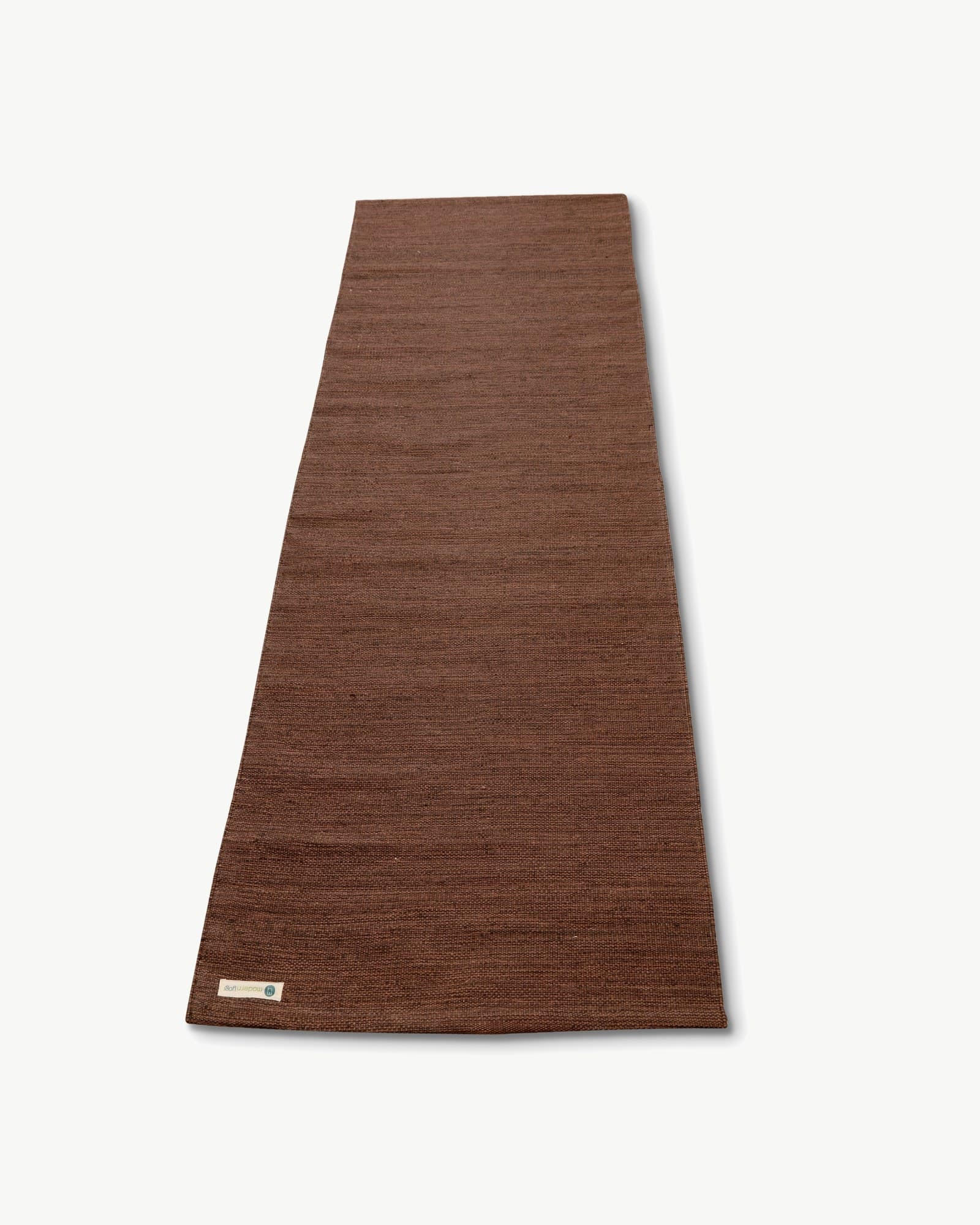
Cotton over synthetic, and less of it. A cotton mat is also markedly more pleasant than a rubber one in heat; rubber gets tacky and unpleasant against skin at high temperature.
Legs up the wall at the end, which helps with the pooling and heaviness that heat produces in the legs.
Practising in cold
The reverse problem, and it has a simpler answer.
Warm up longer. Double the warm-up. In a cold room, ten minutes is not enough — twenty is closer.
Do not go to end range early. Cold tissue is less compliant and less tolerant, and it does not tell you it is cold.
Keep layers on longer than feels necessary. Take them off when you are genuinely warm, not at the start because you expect to warm up.
Put layers back on for the floor work and Savasana. Body temperature drops fast during stillness, and this is where cold practice actually fails — a shivering Savasana achieves nothing.
Lean towards a stronger practice. Cold rooms suit standing work and sun salutations, and suit long passive holds badly.
The summary
Heat is a tool that makes you feel more flexible without making you more resilient. Use it knowing that, hold back from your apparent limit, and it is a perfectly good way to practise. Treat the depth it gives you as your real range and it will eventually cost you.