




NotesMaison
The Mat in a Shared House
Practising with other people in the room, around noise, without a door. Practical arrangements that work.
Sommaire
Practising with other people in the room, around noise, without a door. Practical arrangements that work.
The actual problem
It is rarely space. It is being observed, being interrupted, and negotiating for a room.
Each has a different answer, and lumping them together as "I cannot practise at home" is why people give up on it.
Being observed
The most common and the least discussed.
Practising in front of a housemate, a partner, or a teenager feels different from practising alone, and for many people it is enough to stop them.
What helps:
Face away. Set the mat so you are facing a wall or a window rather than the room. Reduces the sense of being on display considerably, and it costs nothing.
Practise when they are occupied, not when they are out. Waiting for an empty house means practising twice a week; practising while someone watches television in another room means practising six times.
Say what you are doing, once. "I'm going to do twenty minutes on the mat, ignore me." Then it is established and does not need renegotiating.
Accept that it becomes normal. The self-consciousness is highest in the first fortnight and it fades. People stop noticing.
Use headphones, even with nothing playing. They signal unavailability and they cut ambient sound.
Being interrupted
Establish a signal. Mat out means unavailable. Simple, visible, no conversation needed each time.
Choose a low-traffic time. Early morning is the reliable answer in most shared households — not because mornings are better physiologically, but because nobody else wants them.
Be genuinely uninterruptible for the duration. If you answer questions mid-practice, the signal means nothing. Twenty minutes is a short time to be unavailable and it holds if you hold it.
Have a fallback. If interruption is guaranteed, do a practice that survives it: a set of independent shapes rather than a sequence with an arc, so being pulled away for two minutes does not ruin it.
Not having a room
You do not need one. Two metres by a metre and a half, with wall access. That fits beside a bed, at the end of a sofa, in a hallway, or in a kitchen after dinner.
Practise in the same spot every time, even if it is a compromise. The routine of it makes setup automatic, and automatic setups do not get skipped.
A bedroom floor beside the bed is the most common answer and it works. It gives you a door, wall access, and no negotiation.
Noise
Some practices survive noise better than others.
Standing poses, strength work, and anything with a physical focus are largely unaffected — the effort occupies enough attention.
Restorative work, breath practice, and meditation are considerably harder in a noisy room.
Practical answers: earplugs for the quiet part. Or move the quiet part to a different time — the breath practice at six in the morning, the physical practice in the evening. Splitting the session is a legitimate arrangement and it is traditional in several lineages.
Do not wait for silence. It is not coming, and a practice that requires it is a practice with a condition you cannot meet.
Your own noise
No jumping if you are above someone. Step back and forward in sun salutations — slower, more controlled, and honestly better for learning the shapes.
Breath practices with sound — ujjayi, bhramari, kapalabhati — carry further than you think in a quiet building. Not a reason to skip them; a reason to do them at a time when it does not matter.
Storage in a shared space
Everything should read as something other than yoga equipment.
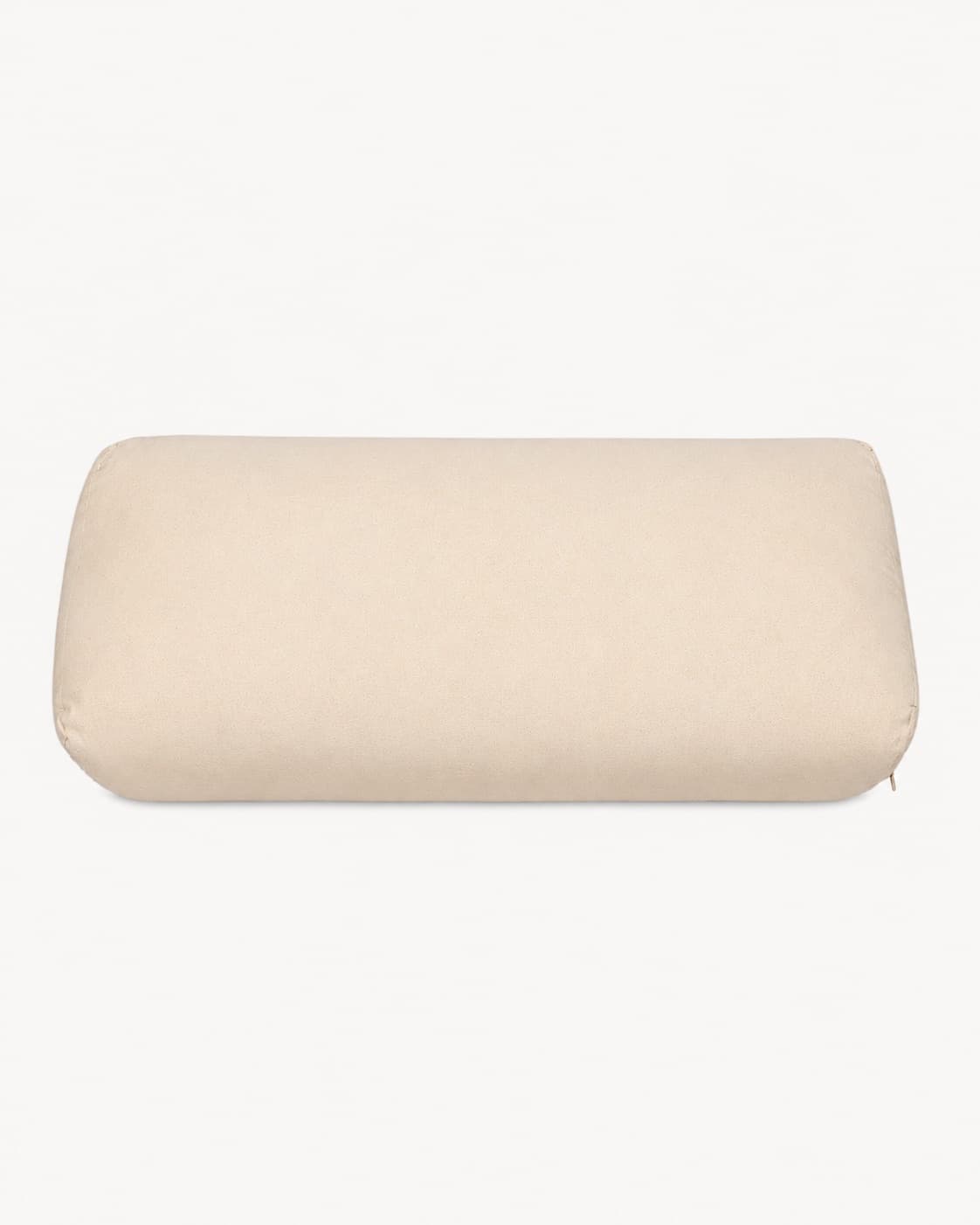
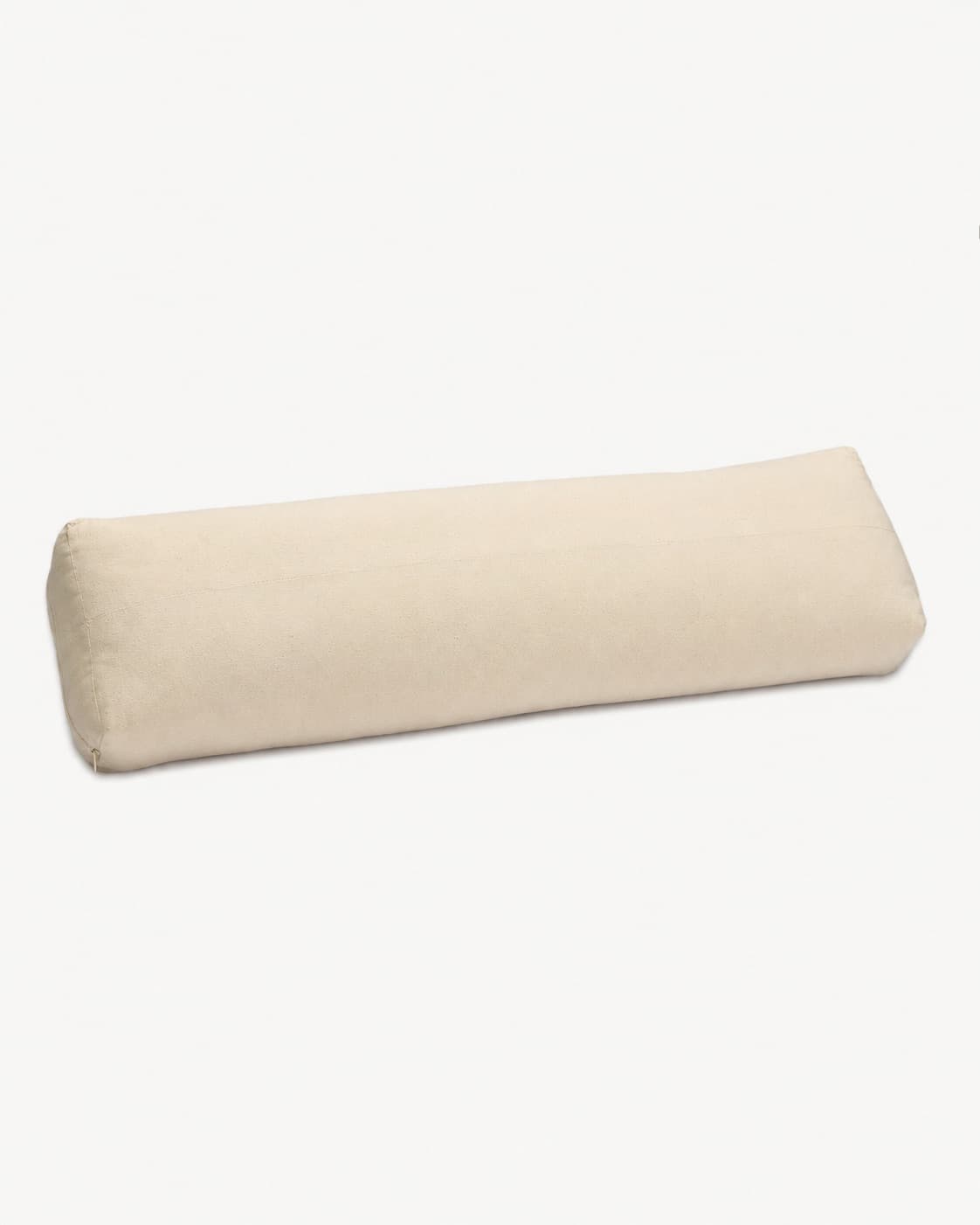
- The bolster is a floor cushion or a sofa cushion.
- The blankets are blankets, folded on the arm of a chair.
- The blocks hold up a plant or prop a door.
- The mat stands rolled behind a door or in a corner.
Nobody objects to a cushion. People object to equipment colonising a shared room, and this is a solvable presentation problem rather than a real one.
Practising with someone else in the room
Sometimes the other person is also practising, or wants to try.
Two mats side by side need about three metres of width, which most living rooms have.
Do not synchronise unless you both want to. Practising alongside someone at your own pace is easier than trying to match.
Do not teach them unless asked. The fastest way to end a shared practice is for one person to start correcting the other.
The one thing that decides it
As always: can the mat come out in under thirty seconds?
In a shared house this usually means one object to move rather than three. A coffee table on castors. The bedroom floor rather than the living room. The side of the room rather than the middle.
Get the friction down to nothing and every other problem on this page becomes smaller, because a practice that starts easily survives interruptions, observation, and noise that a practice requiring eight minutes of setup will not.