


NotesGuides
How to Use Two Mats
Layering a thin cotton mat over a studio mat solves grip, hygiene and padding in one move. When it is worth it.
Sommaire
- The arrangement
- The four situations where it makes sense
- 1. You sweat, and your mat is a sealed surface
- 2. You practise on communal or hotel mats
- 3. You need padding somewhere but stability everywhere
- 4. You want a travel mat that is also useful at home
- What the top mat should be
- What the bottom mat should be
- When it does not make sense
- The alternative to buying two
- Setting it up
Layering a thin mat over a thicker one solves grip, hygiene and padding in a single move. It is a common arrangement among people who practise a lot and it is almost never explained to anyone starting out.
The arrangement
A thicker mat underneath for cushioning and floor grip. A thin, absorbent mat on top for the surface your hands and feet meet.
The top layer does the surface job — grip when wet, something washable between you and the floor. The bottom layer does the base job — padding, and staying put on the floor.
The four situations where it makes sense
1. You sweat, and your mat is a sealed surface
The most common case.
A rubber, PVC or TPE mat loses grip as you sweat, because the sweat forms a film on a surface it cannot enter. The standard remedy is a towel, and a towel bunches, slides, and has to be wet down first.
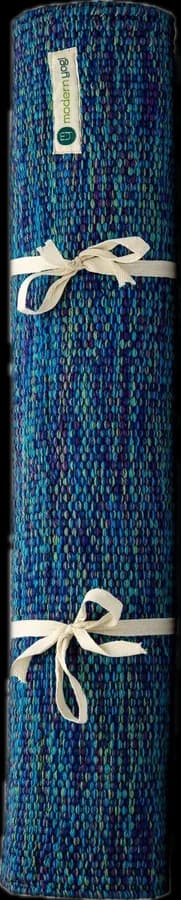
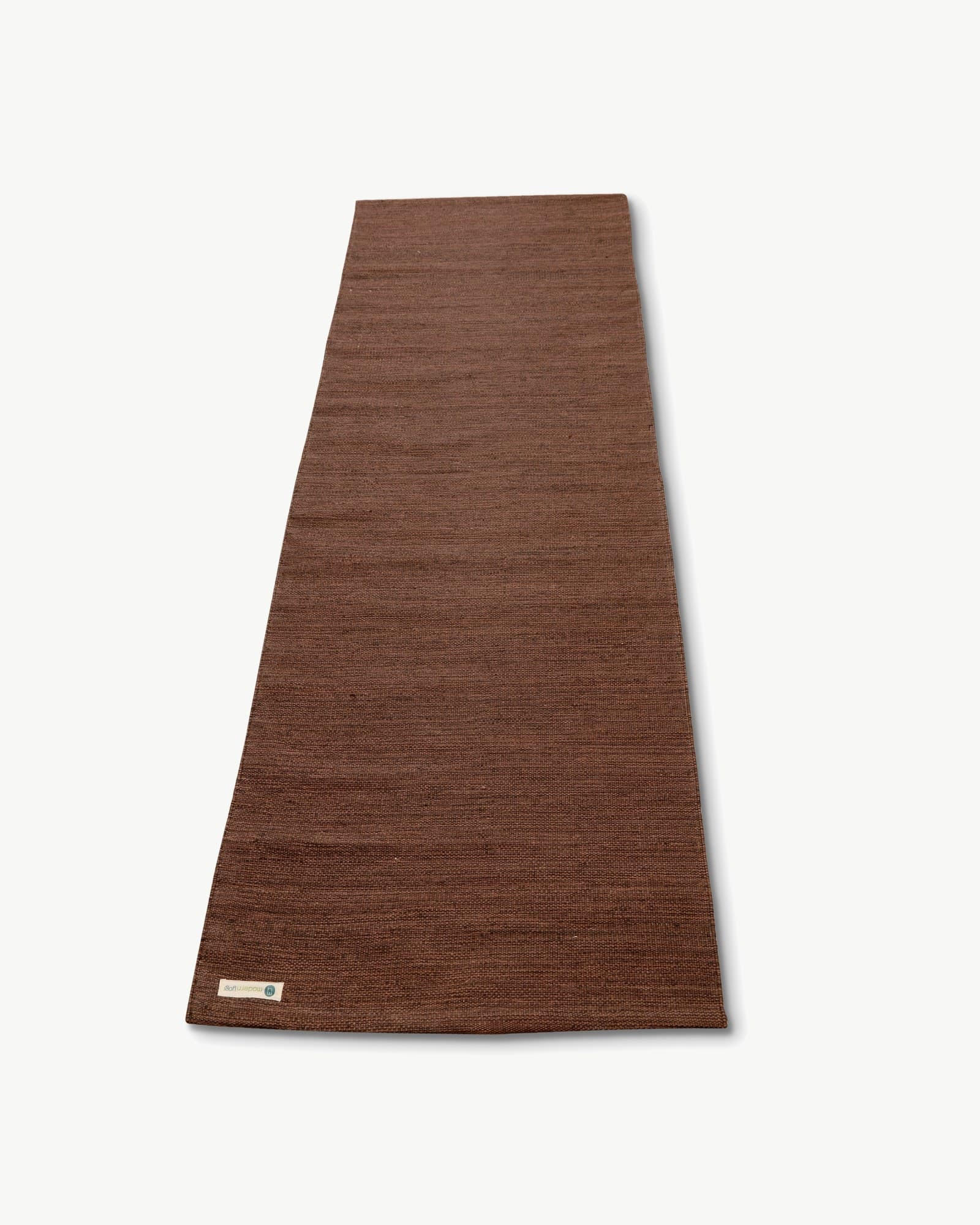
A thin cotton mat does the same job better. It has structure, so it does not bunch. It grips dry as well as wet. And it stays where it is put.
This is why the traditional Mysore practice uses a cotton rug over the mat, and it is not a stylistic preference.
2. You practise on communal or hotel mats
Studio mats are cleaned inconsistently and you are putting your face on them.
A thin mat rolled in a bag weighs about a kilogram, unrolls over any shared surface, and goes in a washing machine.
3. You need padding somewhere but stability everywhere
A thin, stable mat as the base, plus a folded blanket where the knees go, beats a thick mat throughout — because a thick mat destabilises standing poses and gives you cushioning in places where you did not want it.
That is technically a blanket rather than a second mat, and it is the same principle.
4. You want a travel mat that is also useful at home
A thin cotton mat that lives in a bag for studios and travel is the same object that lays over your home mat when you are practising hard. One purchase, two jobs.
What the top mat should be
Thin. 1–3 mm. Any thicker and the two layers together are unstable underfoot.
Absorbent. Cotton. This is the whole point — the layer needs to take the sweat, which a synthetic towel does poorly and a second rubber mat does not do at all.
Washable. Machine washable, because you will be washing it far more often than the bottom mat.
Not slippery on the underside. A cotton mat will hold on a rubber mat by friction. It will not hold on a polished floor, which is what the bottom mat is for.
Full length. A short top layer is worse than none, because you spend the practice noticing the edge.
What the bottom mat should be
Grippy underneath. Rubber base, or whatever anchors on your floor.
Whatever thickness you want, since the top layer adds negligible height.
Not worn out. The bottom mat's surface no longer matters much, which is a good second life for a mat whose top has polished smooth. This is worth knowing — a mat you were about to throw away is often a perfectly good base layer for years.
When it does not make sense
On carpet. The carpet is already the base. One thin mat is enough.
If you do not sweat much and practise in a cool room. A single good mat is simpler.
If you carry your mat daily. Two mats is twice the weight and bulk.
In balance-heavy practice. Two layers, even thin ones, add a small amount of instability. If your focus is standing balance, use one thin mat on a bare floor.
The alternative to buying two
Use a bath towel. Free, and it works. It bunches, it slides, and you have to dampen it to get grip, but it costs nothing and is worth trying before spending money to find out whether the layered arrangement suits you.
Use your old mat as the base. If you are replacing a worn mat, keep it. It is a perfectly good bottom layer, and it means the new purchase can be a thin one.
Setting it up
Lay the bottom mat and let it settle for a minute if it has been rolled.
Lay the top mat directly over it, aligned at the edges. Cotton on rubber holds by friction and does not need anything else.
Check the corners. A curled corner on the top layer is a trip hazard in a standing sequence. Weight them flat for the first few uses, or press them down.
Roll them separately afterwards. The top mat needs to dry and it will not if it is rolled inside the bottom one.