


NotesVie
Yoga With a Desk Job
What eight hours of sitting actually does — it is not what you have been told — and the six shapes that address it.
Sommaire
Eight hours of sitting does something specific, and it is not what the ergonomics posters say. The problem is not that sitting is a bad position. The problem is that it is the only position, held for hours, and tissue adapts to whatever it is held in.
Here is what actually happens and the six shapes that address it.
What sitting does
Hip flexors shorten. The muscles from the front of the spine and pelvis to the top of the thigh are held in a shortened position for hours. They adapt by becoming short. Then, when you stand up, they pull the front of the pelvis down and the lower back into an arch — which is why the lower back aches after a day at a desk, even though you were sitting.
The glutes stop firing. Sat on for hours, they become slow to switch on. Then the hamstrings and lower back take over jobs the glutes should be doing, and get overworked.
The mid-back rounds and stiffens. The thoracic spine is held in flexion. Extension and rotation are lost first, and they are the two movements everything else depends on.
The head goes forward. Following a screen. Every centimetre forward multiplies the load on the neck extensors, which hold it there all day.
The chest shortens. Arms forward on a keyboard for hours, shoulders rolled in.
Breathing gets shallow. A rounded mid-back and a collapsed chest restrict the ribs. The breath moves up into the chest and shortens, which has knock-on effects on how alert and how anxious you feel by four in the afternoon.
Notice that four of the six are shortening at the front and weakening at the back. That is the pattern, and it tells you what the practice needs to do.
The six shapes
Twenty minutes. Do them in this order.
1. Low lunge, two minutes each side.
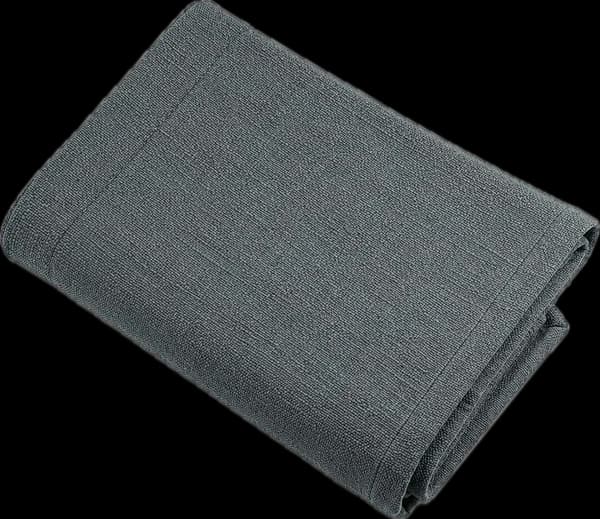
Back knee down on a folded blanket, front foot forward. Now the part everybody misses: tuck the pelvis under — draw the tailbone down and the pubic bone up — before you sink forward. Without that, the stretch goes into the lower back rather than the front of the hip.
You should feel it in the front of the back thigh and the front of the hip. If you feel it in your lower back, you have not tucked.
2. Passive chest opening over a rolled blanket, three minutes.
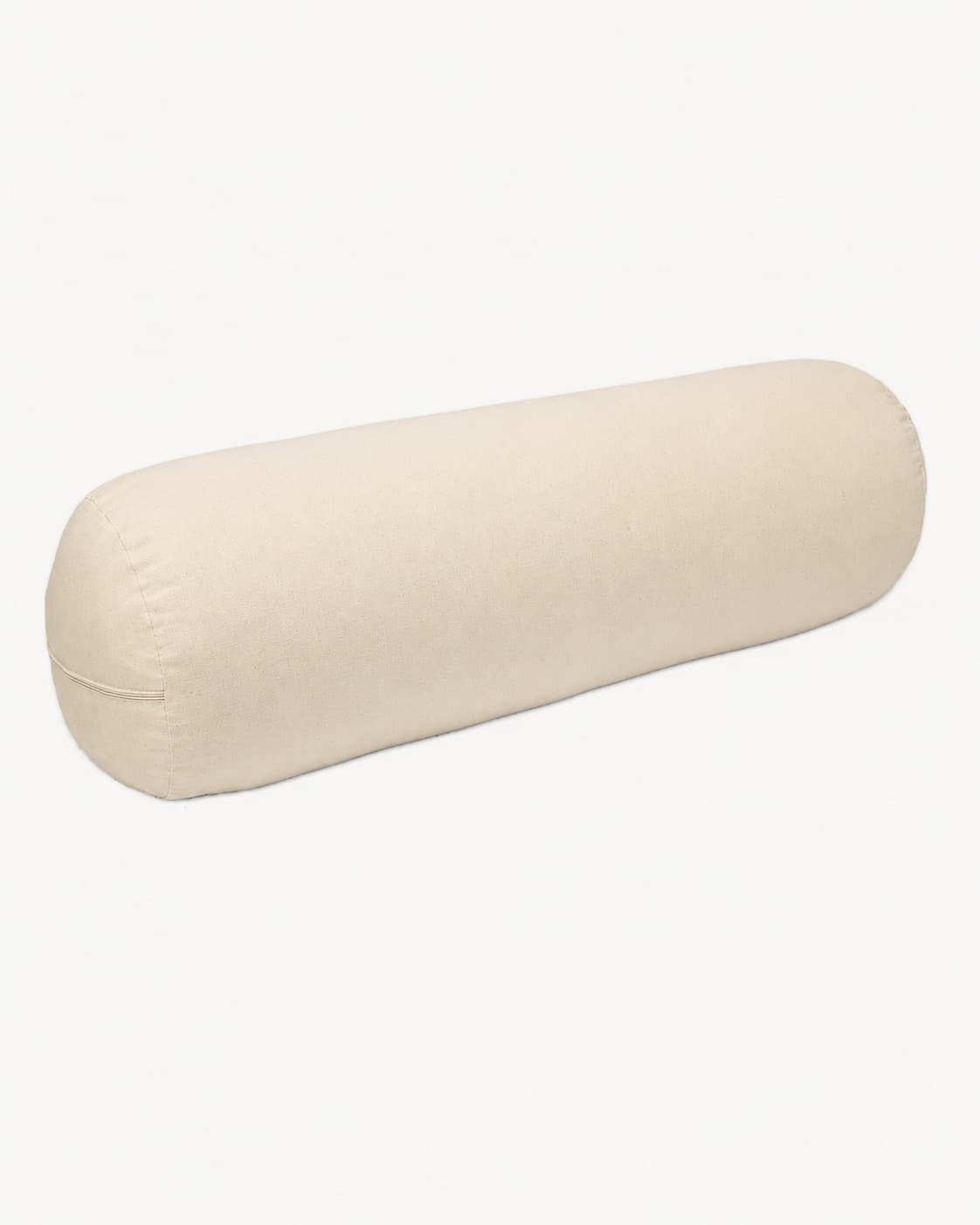
Roll a blanket into a firm cylinder about ten centimetres across. Lie on it lengthwise so it runs the length of your spine, from tailbone to head, with the head supported at the top. Let the arms fall open to the sides.
This is the single most useful thing on the list. It reverses the day's rounding passively, without you doing anything, and it opens the ribs so the breath can move again.
3. Thoracic rotation, ten each side.
On your side, knees bent at ninety degrees and stacked, arms straight out in front, palms together. Keeping the knees down, open the top arm across your body and follow it with your eyes until it reaches the floor behind you. Slowly back.
Rotation is what the mid-back loses first, and it does not come back on its own.
4. Supported bridge, three minutes.
Feet on the floor, hips lifted, block or bolster under the sacrum. Rest completely on the support.
Mild backbend, and the position lengthens the hip flexors passively while asking the glutes to briefly wake up on the way up.
5. Glute activation — side-lying leg raises, 30 seconds each side.
Lie on your side, top leg straight and slightly behind the line of the body, and lift it thirty centimetres. Hold.
This is not a stretch and it is the most important item here. Stretching a weak, inhibited muscle group does nothing. The glutes need to be switched on, and this switches them on.
6. Neck: chin tucks, ten repetitions.
Sitting or standing. Draw the head straight backwards — not tilting, gliding — so the ears come over the shoulders, and hold for three seconds.
This strengthens the deep neck flexors, which are what should hold the head up and which stop working when the head lives forward.
The other half: what to do during the day
The practice above undoes the day. This reduces the damage while it is happening.
Change position every thirty minutes. Not "sit properly" — change. Any position held for hours is the problem, and there is no correct one. Stand, perch, sit differently, walk to get water.
Get the screen up. The single highest-value change. The top of the screen at eye level means the head does not go forward, and the head not going forward removes most of the neck problem at source.
Stand up for phone calls. Free, and it adds up to a substantial amount of standing over a week.
Two minutes of movement every hour. A doorway chest stretch, ten chin tucks, or a walk to the end of the corridor. Frequency beats duration by a wide margin for this.
Sit on the front of the chair sometimes. Off the backrest, feet flat, weight on the sitting bones. It uses the trunk muscles rather than the chair. Ten minutes an hour is plenty; it is tiring at first.
What not to bother with
Stretching the hamstrings. The classic desk-worker response, and mostly wrong. Sitting holds hamstrings in a shortened position at the hip but a lengthened one at the knee, and they usually feel tight because the pelvis is tipped and they are being pulled, not because they are short. Stretching them harder does not help. Fix the pelvis.
Expensive chairs, as a first move. A good chair helps. It helps far less than moving every half hour, and it is a much larger expense than a stack of books under a laptop.
A one-hour class once a week. Useful, but it does not touch this. Eight hours a day, five days a week, is forty hours of adaptation against one hour of correction. The twenty-minute daily sequence above beats it, and the two-minute hourly breaks beat both.