


NotesGuides
Props for Tight Shoulders
A strap, a blanket and a wall will get you further than a year of trying harder. Six setups, in order of how much they ask.
Sommaire
- First, know what you are working on
- 1. Rolled blanket, lengthwise — the daily one
- 2. Strap overhead — for reach
- 3. Strap behind the back — for the chest and front shoulder
- 4. Wall or doorway, forearm on the frame — the precise one
- 5. Puppy pose with a blanket
- 6. Strap around the upper arms — for control, not range
- Putting it together
- Timeline
A strap, a blanket and a wall will get you further than a year of trying harder, because a restricted shoulder cannot be talked into range and it can be positioned into it.
Six setups, in order of how much they ask.
First, know what you are working on
Two different restrictions, and they need different setups.
Overhead reach — arms in line with the ears without the ribs flaring. Restricted by the chest, the lats, and by a mid-back that will not extend.
External rotation — turning the upper arm outward in the socket. Restricted by the front of the shoulder.
Test both before choosing. Lie on your back with the lower back flat and take the arms overhead: if they do not reach the floor, that is overhead reach. Stand with the elbows at your sides bent to ninety degrees and rotate the forearms out: much less than ninety degrees is external rotation.
1. Rolled blanket, lengthwise — the daily one
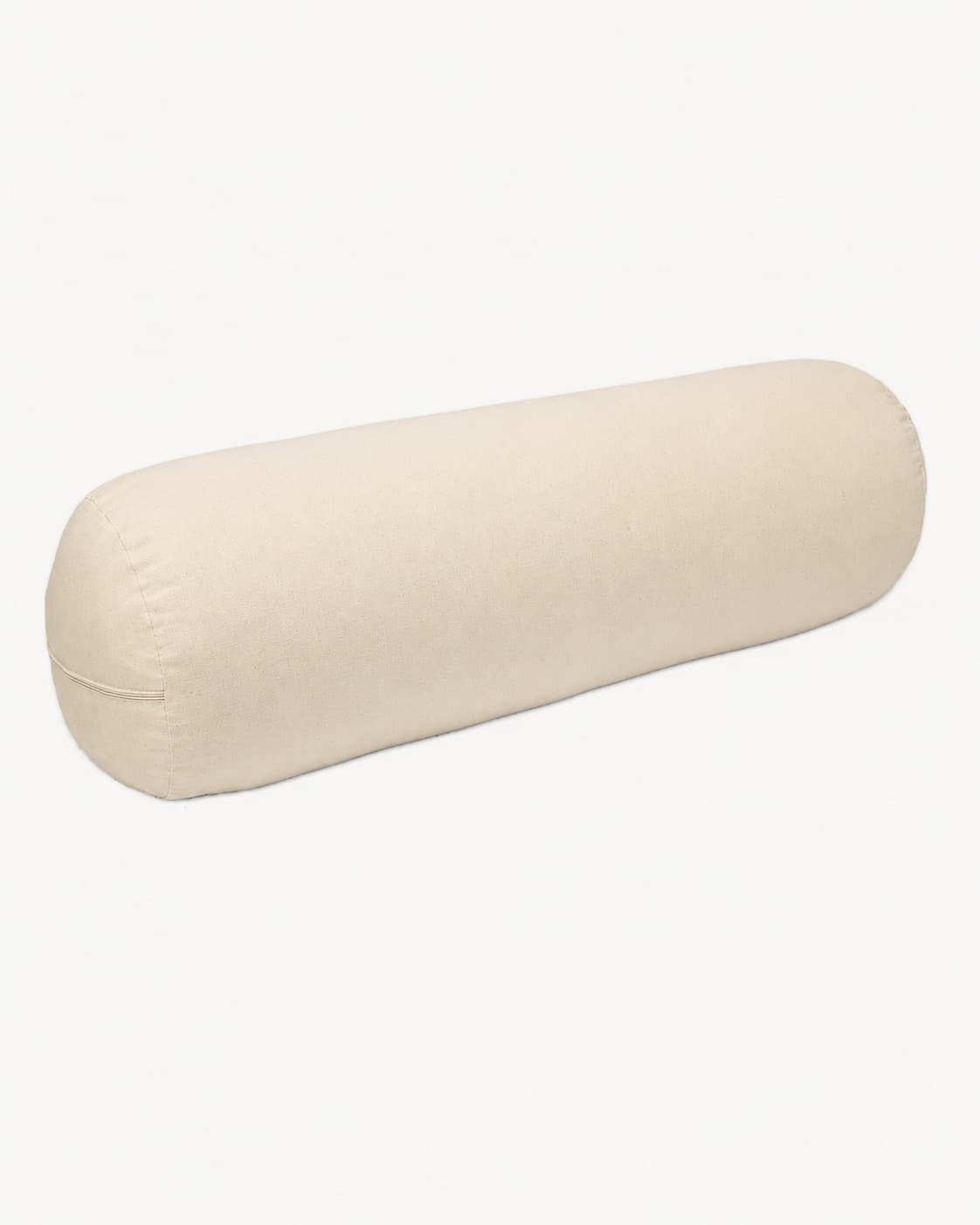
Roll a blanket into a firm cylinder about eight to ten centimetres across. Lie on it so it runs the length of your spine, tailbone to head, with the head supported. Let the arms fall open to the sides, palms up.
Five minutes. Daily.
Why it works: it does not stretch the shoulder at all. It extends the mid-back and lets gravity open the chest, and both of those are what actually limits most shoulders. Nothing else on this list changes as much for as little effort.
Progression: once five minutes is easy, take the arms out to the sides at shoulder height, then overhead — but only as far as the ribs stay down.
2. Strap overhead — for reach
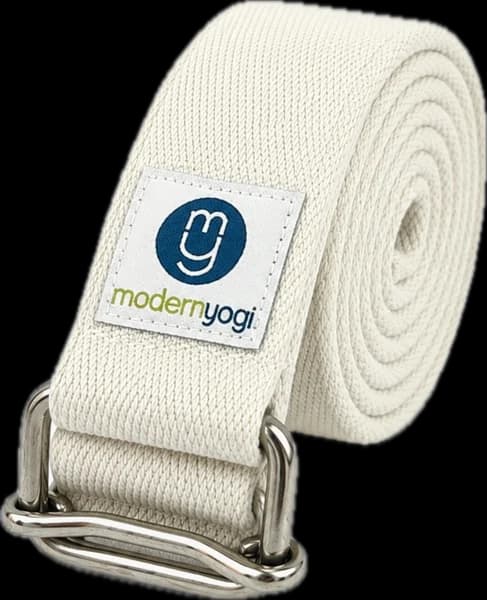
Hold a strap in both hands in front of you, straight arms, wide grip. Keeping the arms straight, take it up and over your head towards your back, then return. Slowly, ten repetitions.
Why the strap: it fixes the distance between your hands, so the shoulders cannot cheat by narrowing, and it lets you measure. The width at which you can do this smoothly is a number, and watching it narrow over months is the clearest feedback available in this whole area.
Rule: if you have to bend the elbows or arch your back, widen the grip. Never force it through.
3. Strap behind the back — for the chest and front shoulder
Hold the strap behind you with both hands, palms facing back, arms straight. Lift the hands away from your body and let the chest open.
Wider than you think. Then narrow by a centimetre every few weeks.
Thirty seconds, three times.
4. Wall or doorway, forearm on the frame — the precise one
Stand beside a door frame. Place one forearm flat against it, elbow bent to ninety degrees and at shoulder height. Turn your body away from the arm.
Why it beats everything else for the front shoulder: you can control the exact angle. Elbow higher targets the lower fibres of the chest, elbow lower targets the upper. Three positions, twenty seconds each, and you have covered the whole front of the shoulder.
Watch: do not let the ribs flare or the shoulder shrug. Small movements.
5. Puppy pose with a blanket
Kneel with the hips over the knees. Walk the hands forward and let the chest sink towards the floor, keeping the hips high. Forehead or chin on the floor, or on a block if it does not reach.
Add the blanket: a folded blanket under the elbows raises them slightly, which for many people turns an uncomfortable shape into one they can hold for two minutes.
Two minutes. The strongest overhead-reach stretch on this list.
6. Strap around the upper arms — for control, not range
Make a loop, shoulder-width, and put it around both upper arms just above the elbows. Now do Dolphin, or a forearm plank, or a shoulderstand.
Why: this is the prop use that gives you something to push against. The elbows cannot splay, so the shoulders have to hold the position, and the position is learned by feel rather than by cue.
Not a stretch. This is the strength half, and if your restriction is control rather than range, it is the important one.
Putting it together
If your shoulders are genuinely short: 1, 2, 4 and 5. Daily for the blanket, three or four times a week for the rest.
If your shoulders are mobile but unstable — you can reach anywhere and nothing feels solid — skip the stretching entirely and do 6, plus Dolphin holds, plus external rotation with a light weight. Stretching a hypermobile shoulder makes it less stable, not more comfortable.
If you are not sure: do 1 daily and 6 twice a week. Both help either way.
Timeline
Weeks one to three: small change, mostly in how the mid-back feels.
Two to three months: measurable. The strap grip narrows. The arms get closer to the floor in the overhead test.
Six months to a year: the shoulders stop being the limiting factor in Downward Dog and overhead shapes.
Measure the strap width monthly. It is the honest number, and it moves slowly enough that you will not notice it any other way.